
Advent 3
Preaching
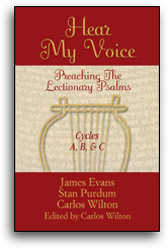
Hear My Voice
Preaching The Lectionary Psalms for Cycles A, B, C
(See Proper 28/Pentecost 26/Ordinary Time 33, Cycle C, for an alternative approach.)
The theme of joy is highlighted in this reading from the prophet Isaiah, which is why the text is frequently employed during Advent. The poet sings, "With joy you will draw water from the wells of salvation" (v. 3) and "Shout aloud and sing for joy ... for great in your midst is the Holy One of Israel" (v. 6). The key to joy is those closing words in verse 6, in which the prophet celebrates the presence of God in the midst of the worshiping community.
Joy is different from happiness. Being happy has to do with circumstances. We are happy when life goes the way we want or expect it to go. We are happy when we get a raise or promotion. We are happy when the diagnostic test for cancer comes back "negative."
We are unhappy when we get downsized. We are unhappy when a loved one dies. We are unhappy when the diagnostic test comes back positive.
But joy is different. Joy is not tied to circumstances. Joy is tied to our awareness and participation in the presence of God. Joy is possible in both the happy and the unhappy moments of life. In fact, joy can be the undercurrent that sustains us in times of great distress and difficulty.
This peculiar aspect of joy can be seen in many areas of life, but perhaps nowhere more clearly than at some funerals. The death of a loved one, no matter what age or circumstance, is never a happy occasion. However, there are instances in which the funeral of certain people, because of the character of their lives -- faith, service to others, longevity, creativity, and so on -- becomes both a time of mourning and a celebration of a life well-lived. The emotion that drives that celebration in the funeral setting is joy.
In the setting of Advent, our joy is in response to the fulfillment of a promise -- the promise of God to send the Messiah. Throughout Advent, as we have disciplined our worship with waiting, anticipating, and preparation, we are ready to engage in vibrant celebration of the gift of God's Son. That calls for joy.
The fact that joy is possible regardless of circumstances becomes particularly important during the Advent season. Regardless of how hard we work or how hard we shop, sometimes happiness eludes us during this time of year. In fact, the season from Thanksgiving to Christmas is for many people one of the most difficult and even bleak times of the entire year. Psychologists call it seasonal depression.
Cultivating a sense of joy that is grounded not in personal circumstances but in faith and a sense of God's presence can provide a powerful remedy for this seasonal depression. Not that we are able to manufacture happiness simply because it's Christmas; rather, we are able to embrace a hope that is deeper and more profound than a mere holiday celebration. Out of this hope comes the possibility of joy.
-- J. E.
The theme of joy is highlighted in this reading from the prophet Isaiah, which is why the text is frequently employed during Advent. The poet sings, "With joy you will draw water from the wells of salvation" (v. 3) and "Shout aloud and sing for joy ... for great in your midst is the Holy One of Israel" (v. 6). The key to joy is those closing words in verse 6, in which the prophet celebrates the presence of God in the midst of the worshiping community.
Joy is different from happiness. Being happy has to do with circumstances. We are happy when life goes the way we want or expect it to go. We are happy when we get a raise or promotion. We are happy when the diagnostic test for cancer comes back "negative."
We are unhappy when we get downsized. We are unhappy when a loved one dies. We are unhappy when the diagnostic test comes back positive.
But joy is different. Joy is not tied to circumstances. Joy is tied to our awareness and participation in the presence of God. Joy is possible in both the happy and the unhappy moments of life. In fact, joy can be the undercurrent that sustains us in times of great distress and difficulty.
This peculiar aspect of joy can be seen in many areas of life, but perhaps nowhere more clearly than at some funerals. The death of a loved one, no matter what age or circumstance, is never a happy occasion. However, there are instances in which the funeral of certain people, because of the character of their lives -- faith, service to others, longevity, creativity, and so on -- becomes both a time of mourning and a celebration of a life well-lived. The emotion that drives that celebration in the funeral setting is joy.
In the setting of Advent, our joy is in response to the fulfillment of a promise -- the promise of God to send the Messiah. Throughout Advent, as we have disciplined our worship with waiting, anticipating, and preparation, we are ready to engage in vibrant celebration of the gift of God's Son. That calls for joy.
The fact that joy is possible regardless of circumstances becomes particularly important during the Advent season. Regardless of how hard we work or how hard we shop, sometimes happiness eludes us during this time of year. In fact, the season from Thanksgiving to Christmas is for many people one of the most difficult and even bleak times of the entire year. Psychologists call it seasonal depression.
Cultivating a sense of joy that is grounded not in personal circumstances but in faith and a sense of God's presence can provide a powerful remedy for this seasonal depression. Not that we are able to manufacture happiness simply because it's Christmas; rather, we are able to embrace a hope that is deeper and more profound than a mere holiday celebration. Out of this hope comes the possibility of joy.
-- J. E.
