
"Amen"
Sermon
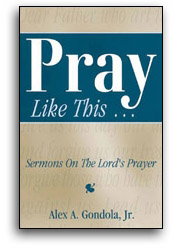
PRAY LIKE THIS ...
Sermons On The Lord's Prayer
(Before preaching I reminded our congregation that - in some traditions - the preacher receives encouragement from an occasional, enthusiastic "Amen!" In some liturgical traditions, like the Roman Catholic or Anglican, prayers are followed by a congregational "Amen." This Sunday I invited them to join the "Amen Corner." Every time they heard me say, "Let the people say, 'Amen,' " they were asked to respond with a loud "Amen!" The "Amen" response was practiced several times.)
"There is too much speaking in the world," wrote author Bruce Barton. "There is too much speaking in the world, and almost all of it is too long." Let the people say, "Amen." ("Amen!") Barton continues, "The Lord's Prayer, the Twenty--third Psalm, Lincoln's Gettysburg Address, are three great literary treasures that will last forever; not one of them is as long as three hundred words." Bruce Barton concludes, "With such striking illustrations of the power of brevity, it is amazing that speakers never learn to be brief." Let the people say, "Amen." ("Amen!")
This is my eleventh sermon on the Lord's Prayer! If I preached all eleven sermons in a row, one after the other (if anyone would listen), it would take more than two--and--a--half hours: not brief. But the topic is important. The Lord's prayer is the only prayer Jesus taught us. So here's one more sermon on the Lord's Prayer. But this series is nearly ended! Let the people say, "Amen." ("Amen!")
"Amen." That's an interesting word, isn't it? It's one four--letter word that's always good to use, like "love" or "gift." "Amen" is used everywhere on earth - and never translated. It's probably the only word ever used that means the same thing everyplace.
This word appears more than fifty times in the Bible. In fact, "Amen" is the last word in God's Word. Look it up: Revelation, chapter 22, verse 21 (NRSV). We know this word. But do we remember its meaning? "Amen" is ancient Hebrew for "so be it" or "let it be so."
"Amen" actually has a long development in scripture. It originally meant assent to a curse. In Deuteronomy (27:15), Moses is depicted as giving instructions to the people of Israel about how they should behave in the Promised Land. Once they get there, says Moses, the Levites, the Priests, are to curse anyone who makes an idol. As the idol--maker is cursed, the people add to the curse by shouting, "Amen."
"Amen" later turns from something negative (a "curse word,") into something positive: a word of agreement. In First Kings (1:36) David decides to make his son Solomon king. On hearing this, one of David's court advisors shouts out an enthusiastic "Amen!"
By the book of Psalms "Amen" evolved into a word of worship. Psalm 72:18--19: "Blessed be the Lord, the God of Israel ... Blessed be his glorious name forever ... Amen and Amen!" (RSV). What started out as an assent to a curse became a way of praising God.
In the New Testament (the Christian Scriptures) "Amen" is elevated again. In Second Corinthians, Paul says we say our "Amens" through Jesus (1:20b). In Revelation (3:14), Jesus himself is depicted as God's "faithful" and "true" "Amen." Jesus, the Word of Life, is the final Word of God.
From part of a curse, to a positive word, to a word of worship, to a name for Jesus, "Amen" becomes richer and richer over time. It's a mighty, ancient word of power and worship that has thousands of years of history behind it. Let all the people say, "Amen." ("Amen!")
Of course, "Amen" wasn't part of the original Lord's Prayer, was it? Like the Benediction, "For thine is the Kingdom and the power, and the glory, forever," it was added later. Still "Amen" is a fitting way to say we agree with what we pray.
Let's do a brief review of the Lord's Prayer. It begins, "Our Father, which art in heaven." Do you remember the word Jesus used for "Father" was "Abba" - and that "Abba" means "Daddy"? Jesus wants us to know that the great God of the universe is our loving Parent. Do you believe that? Can you affirm it? Would you like to affirm it? If you believe God is a Father/Parent who loves you and cares for you, let the people say, "Amen." ("Amen!")
The Lord's Prayer continues by reminding us that God's name should be "hallowed." To "hallow" means to "respect greatly," or to "make holy or set apart." That's the origin of the word "Halloween." "Halloween," the night before "All Saints' Day," November 1, started out as a "hallowed e'en," a "holy evening" for Christians. The church celebrated not ghosts and goblins but God's glorious saints.
Obviously we haven't "hallowed" Halloween, have we? But don't you agree we should hallow God's name? Will we try to honor the name of God by not using it as a curse? Will we honor God's name by living the way God would have us live? God's name deserves to be hallowed. If you agree with that, let the people say, "Amen." ("Amen!")
God invites us into God's rule, God's "Kingdom." Sometimes our lives are like a series of concentric circles. We put ourselves in the center. The needs of our family and friends come next. Next come the needs of our community and our country. The rule of God - if it's anywhere - is somewhere out on the edge.
But to pray, "Thy Kingdom come" - and really mean it - is to reverse that order. It's to put God in the center, the needs of others second, and our needs last. "Thy Kingdom come." Can we pray that and mean it? Can we strive to put God first? Let the people say, "Amen." ("Amen!")
"Thy will be done." That means acknowledging that God (Father) knows best. Sometimes God can be like that (seemingly) strict teacher we had in school, the one who insisted we try harder, who wouldn't allow let us get lazy or do less than our best. God bless you, Mrs. Gladys Sundstrom! I remember you still!
Sometimes God is like that. Sometimes God's lesson plan seems too difficult for us. Sometimes (maybe especially when "The Golden Years" aren't so "golden") we long to quit. But God is good. And God's will for us is always good. Even in the tough lessons of life, can we pray "Thy will be done"? Can we trust that God is a wise and loving Teacher? If so, let the people say, "Amen." ("Amen!")
The first part of the Lord's Prayer lifts up God as our loving Father, worthy of reverence, whose rule is good and whose will should be followed. In the last part of the Lord's Prayer we pray for others and ourselves. We pray for our daily bread, because we need God to feed us daily. Let the people say "Amen." ("Amen!") We pray that God will forgive our sins - and that we can and will forgive. Let the people say, "Amen." ("Amen!")
We pray, "Lead us not into temptation." We know we can resist anything except temptation (Oscar Wilde). Let the people say, "Amen." ("Amen!") We pray, "Deliver us from evil." "Evil" is "live" spelled backwards. Evil is everything that is the enemy of life. Evil is powerful. Evil is around us. Sometimes evil is in us. We need deliverance. Let the people say, "Amen." ("Amen!")
Then we end the Lord's Prayer as we began it, by praising God: "For thine is the Kingdom and the power and the glory forever (and ever). Amen." I grew up in New Hampshire. As a child, I heard a lot about Daniel Webster, the noted New Hampshire orator and statesman. Here's one story I both heard and read. On the night of October 24, 1852, in Marshfield, Massachusetts, Daniel Webster lay dying. His personal physician was at his bed. Dr. Jeffries knew Daniel Webster was a man of deep faith. So to comfort his nearly unconscious patient, the doctor recited verses from a favorite hymn. With his last breaths, in a loud, clear voice, the great orator shouted out, "Amen! Amen! Amen!" Then he died.
After researching this story, I've discovered it's apocryphal. Still, it's a great story, isn't it? If it were true, wouldn't that be Daniel Webster's greatest speech, "Amen"? "Amen!" "Let it be so." "So be it." Can we accept God's gifts and God's goodness and God's grace - and God's will for us - not only at death but also in life? For the Lord's Prayer, just 65 words long, teaches us everything we need to know for a happy, fulfilled life. We prayed, "Lord, teach us to pray." And, Lord, you did it. You responded, "Pray like this." Thank you for the gift of the Lord's Prayer. Now we pray, "Lord, teach us to live it."
Let the people say, "Amen."
"There is too much speaking in the world," wrote author Bruce Barton. "There is too much speaking in the world, and almost all of it is too long." Let the people say, "Amen." ("Amen!") Barton continues, "The Lord's Prayer, the Twenty--third Psalm, Lincoln's Gettysburg Address, are three great literary treasures that will last forever; not one of them is as long as three hundred words." Bruce Barton concludes, "With such striking illustrations of the power of brevity, it is amazing that speakers never learn to be brief." Let the people say, "Amen." ("Amen!")
This is my eleventh sermon on the Lord's Prayer! If I preached all eleven sermons in a row, one after the other (if anyone would listen), it would take more than two--and--a--half hours: not brief. But the topic is important. The Lord's prayer is the only prayer Jesus taught us. So here's one more sermon on the Lord's Prayer. But this series is nearly ended! Let the people say, "Amen." ("Amen!")
"Amen." That's an interesting word, isn't it? It's one four--letter word that's always good to use, like "love" or "gift." "Amen" is used everywhere on earth - and never translated. It's probably the only word ever used that means the same thing everyplace.
This word appears more than fifty times in the Bible. In fact, "Amen" is the last word in God's Word. Look it up: Revelation, chapter 22, verse 21 (NRSV). We know this word. But do we remember its meaning? "Amen" is ancient Hebrew for "so be it" or "let it be so."
"Amen" actually has a long development in scripture. It originally meant assent to a curse. In Deuteronomy (27:15), Moses is depicted as giving instructions to the people of Israel about how they should behave in the Promised Land. Once they get there, says Moses, the Levites, the Priests, are to curse anyone who makes an idol. As the idol--maker is cursed, the people add to the curse by shouting, "Amen."
"Amen" later turns from something negative (a "curse word,") into something positive: a word of agreement. In First Kings (1:36) David decides to make his son Solomon king. On hearing this, one of David's court advisors shouts out an enthusiastic "Amen!"
By the book of Psalms "Amen" evolved into a word of worship. Psalm 72:18--19: "Blessed be the Lord, the God of Israel ... Blessed be his glorious name forever ... Amen and Amen!" (RSV). What started out as an assent to a curse became a way of praising God.
In the New Testament (the Christian Scriptures) "Amen" is elevated again. In Second Corinthians, Paul says we say our "Amens" through Jesus (1:20b). In Revelation (3:14), Jesus himself is depicted as God's "faithful" and "true" "Amen." Jesus, the Word of Life, is the final Word of God.
From part of a curse, to a positive word, to a word of worship, to a name for Jesus, "Amen" becomes richer and richer over time. It's a mighty, ancient word of power and worship that has thousands of years of history behind it. Let all the people say, "Amen." ("Amen!")
Of course, "Amen" wasn't part of the original Lord's Prayer, was it? Like the Benediction, "For thine is the Kingdom and the power, and the glory, forever," it was added later. Still "Amen" is a fitting way to say we agree with what we pray.
Let's do a brief review of the Lord's Prayer. It begins, "Our Father, which art in heaven." Do you remember the word Jesus used for "Father" was "Abba" - and that "Abba" means "Daddy"? Jesus wants us to know that the great God of the universe is our loving Parent. Do you believe that? Can you affirm it? Would you like to affirm it? If you believe God is a Father/Parent who loves you and cares for you, let the people say, "Amen." ("Amen!")
The Lord's Prayer continues by reminding us that God's name should be "hallowed." To "hallow" means to "respect greatly," or to "make holy or set apart." That's the origin of the word "Halloween." "Halloween," the night before "All Saints' Day," November 1, started out as a "hallowed e'en," a "holy evening" for Christians. The church celebrated not ghosts and goblins but God's glorious saints.
Obviously we haven't "hallowed" Halloween, have we? But don't you agree we should hallow God's name? Will we try to honor the name of God by not using it as a curse? Will we honor God's name by living the way God would have us live? God's name deserves to be hallowed. If you agree with that, let the people say, "Amen." ("Amen!")
God invites us into God's rule, God's "Kingdom." Sometimes our lives are like a series of concentric circles. We put ourselves in the center. The needs of our family and friends come next. Next come the needs of our community and our country. The rule of God - if it's anywhere - is somewhere out on the edge.
But to pray, "Thy Kingdom come" - and really mean it - is to reverse that order. It's to put God in the center, the needs of others second, and our needs last. "Thy Kingdom come." Can we pray that and mean it? Can we strive to put God first? Let the people say, "Amen." ("Amen!")
"Thy will be done." That means acknowledging that God (Father) knows best. Sometimes God can be like that (seemingly) strict teacher we had in school, the one who insisted we try harder, who wouldn't allow let us get lazy or do less than our best. God bless you, Mrs. Gladys Sundstrom! I remember you still!
Sometimes God is like that. Sometimes God's lesson plan seems too difficult for us. Sometimes (maybe especially when "The Golden Years" aren't so "golden") we long to quit. But God is good. And God's will for us is always good. Even in the tough lessons of life, can we pray "Thy will be done"? Can we trust that God is a wise and loving Teacher? If so, let the people say, "Amen." ("Amen!")
The first part of the Lord's Prayer lifts up God as our loving Father, worthy of reverence, whose rule is good and whose will should be followed. In the last part of the Lord's Prayer we pray for others and ourselves. We pray for our daily bread, because we need God to feed us daily. Let the people say "Amen." ("Amen!") We pray that God will forgive our sins - and that we can and will forgive. Let the people say, "Amen." ("Amen!")
We pray, "Lead us not into temptation." We know we can resist anything except temptation (Oscar Wilde). Let the people say, "Amen." ("Amen!") We pray, "Deliver us from evil." "Evil" is "live" spelled backwards. Evil is everything that is the enemy of life. Evil is powerful. Evil is around us. Sometimes evil is in us. We need deliverance. Let the people say, "Amen." ("Amen!")
Then we end the Lord's Prayer as we began it, by praising God: "For thine is the Kingdom and the power and the glory forever (and ever). Amen." I grew up in New Hampshire. As a child, I heard a lot about Daniel Webster, the noted New Hampshire orator and statesman. Here's one story I both heard and read. On the night of October 24, 1852, in Marshfield, Massachusetts, Daniel Webster lay dying. His personal physician was at his bed. Dr. Jeffries knew Daniel Webster was a man of deep faith. So to comfort his nearly unconscious patient, the doctor recited verses from a favorite hymn. With his last breaths, in a loud, clear voice, the great orator shouted out, "Amen! Amen! Amen!" Then he died.
After researching this story, I've discovered it's apocryphal. Still, it's a great story, isn't it? If it were true, wouldn't that be Daniel Webster's greatest speech, "Amen"? "Amen!" "Let it be so." "So be it." Can we accept God's gifts and God's goodness and God's grace - and God's will for us - not only at death but also in life? For the Lord's Prayer, just 65 words long, teaches us everything we need to know for a happy, fulfilled life. We prayed, "Lord, teach us to pray." And, Lord, you did it. You responded, "Pray like this." Thank you for the gift of the Lord's Prayer. Now we pray, "Lord, teach us to live it."
Let the people say, "Amen."
