
Can We Celebrate Christmas Now? Death at Christmastime
Sermon
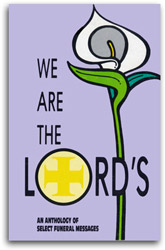
We Are The Lord's
AN ANTHOLOGY OF SELECT FUNERAL MESSAGES
The following meditation is suggested for a family that has lost a loved one near the end of Advent or during Christmastide. The name, "Adam," is employed for the deceased.

It is hard to accept the death of a loved one at anytime. It is especially difficult at Christmas. This is a family time. What is being celebrated now started with Joseph, Mary and Jesus, and has been continued by countless mothers and fathers and their children. No other holiday is so centered in the home as this one. All the festivities - sending cards, decorating the tree, exchanging gifts, singing carols, going to church, and gathering around the table - take on luster, because we join in them at home, with loved ones. How sad it is to be separated from family now. Who here is not stirred by the sentiment of the song, "I'll be home for Christmas, if only in my dreams"?
The pangs of death are acutely sharp now, for all around you are reminders of the love you shared with Adam, the love you have lost. Any holiday activity may stir remorse, trigger self-pity or unleash anger.
You have my sympathy. I know the pain you feel. I buried my father on an icy Christmas Eve.
You may be saying, "I can't celebrate Christmas now." You may doubt if you will ever be able to rejoice in this season as you have before.
But, I have good news for you. By the grace of God, this holiday that now hurts you can also help heal you. Please understand me. You cannot go back to the past. You know that neither Christmas nor any other part of your life will ever be the same again. Adam's death critically changes everything. However, believe me, Christmas can give you joy, peace and hope - and possibly, even in a fuller measure than before.
How?
First, Christmas can help us face reality. It can purge us of naive sentimentalism. For too many of us, this season is an escape from the way things are. Weary of the hardships of life, we seek, as a favorite ditty puts it, "A merry little Christmas": "Let your hearts be light; from now on our troubles will be out of sight." We look back wistfully on the "Silent night, holy night," when "all was calm; all was bright." But to approach Christmas this way does a grave injustice both to the Gospels and to us. It robs the Gospels of their truth. It takes away the connection between the time of Christ's birth and our time. And, in so doing, it deprives us of the healing power of the Good News.
Christ was born in this world - the real world. All was not as calm and bright as we would like to imagine. Everything that we wish to escape from was there then. We only have to open our eyes to see it. Regardless of the angel's salutation to the contrary, Mary must have been frightened by the prospect of having a child outside of wedlock. Joseph, no doubt, was confused, embarrassed, even angry to learn that his fiancee was pregnant. The couple's families must have been ashamed. And, you know, the neighbors gossiped. The burden on the couple was made heavier by taxation, with its required trip out of town, as Mary's term neared completion. There was no room at the inn. In all likelihood, the stable was not the quaint spot that we portray in our art, but a dark, damp, dirty cave. Jesus' birth surely was no less painful than any other. And if the animals were quiet, the baby wasn't for long. Then, before the couple could gain their composure, they were surrounded by smelly shepherds. Later, there came the strange astrologers presenting, among other things, myrrh, a spice used for embalming the dead.
On Christmas Eve, we traditionally stop reading Matthew's Gospel at this point, but the story goes on to tell of Herod's lashing out in rage, threatening Jesus' life and slaughtering the children in the region. This account of Christ's birth ends in wailing and loud lamentation:
Rachel weeping for her children; she refused to be consoled, because they were no more.
Matthew 2:18
There are the very feelings you have now. Christmas does not offer you an escape from them. Christmas gives you the assurance that God comes to you even in them. Your healing will come not from your turning away from your pain but from God's coming to be with you in it.
Face the reality of Adam's death. Enter fully into your grief. Allow it to sharpen your perception and appreciation for what this season is really about. Hear the genuine message of Christmas, that God is with us in all our experiences and can use any of these experiences to bring us closer to him and to one another. Receive the gift of God's presence for guidance, for comfort and for strength.
Christmas can also help heal you, because at the heart of it is giving. "Yes, God loved the world so much that he gave his only Son ..." That's what we are celebrating now. Our exchanging of gifts is a reflection of this special gift. But as precious a gift as our Savior is, Jesus is not God's only gift to us. Jesus is the prime example of God's continual generosity. To paraphrase John: God loved the world so much that he gave us life. God loved the world so much that he has given us all that is necessary to sustain life. God so loved the world that he has given us meaning and purpose. And, dear friends, God loved the world so much that he gave us Adam. We did not make Adam. We did not earn Adam. We did nothing to deserve him. We received Adam as a gift from God.
You grieve now, because you no longer have Adam with you. Let that grief remind you of what you have received, of how you have been blessed. Thank God for the unique gift Adam was. Doing that is your key for entering into the celebration of this season. Your gratitude for Adam will turn each festivity of Christmas from being a painful reminder of what you have lost to being a lovely remembrance of what you were given. And, these remembrances will reveal the enduring nature of your relationship with Adam. What you shared together is your prized possession; nothing can ever take it away. The effect he had on you remains with you and may be passed on by you to other generations.
Furthermore, if you focus long enough on what God has given you in and through Adam, your overall vision will improve. You will be able to see more and more gifts in your life.
Finally, never lose sight of the fact that we celebrate the birth of Christ because of his resurrection. Christmas is not complete without Easter. Paul reminds us, "If our hope in Christ has been for this life only, we are the most unfortunate of all people. But Christ has in fact been raised from the dead, the first fruits of all who have fallen asleep." (1 Corinthians 15:19-20, The Jerusalem Bible)
Yes, God so loved the world that he gave his only Son, so that everyone who believes in him may not be lost but may have eternal life.
Some years ago, I participated in the funeral of the United Methodist minister who was responsible for my becoming a member of this Conference. At the close of the service, all of his colleagues gathered beside the casket in front of the chance!. As we sang "For All the Saints," I was deeply moved by the sight of his widow. There she stood in the front pew, with her children, tears flowing down her cheeks - and heartily singing every word of the hymn! That's what the Christmas-Easter faith can do for you. Cry, for you have been separated from Adam. And sing, for he has eternal life. You will be reunited with him. Face reality. Accept your grief. Celebrate Christmas. Receive God's gift of eternal life.
It is hard to accept the death of a loved one at anytime. It is especially difficult at Christmas. This is a family time. What is being celebrated now started with Joseph, Mary and Jesus, and has been continued by countless mothers and fathers and their children. No other holiday is so centered in the home as this one. All the festivities - sending cards, decorating the tree, exchanging gifts, singing carols, going to church, and gathering around the table - take on luster, because we join in them at home, with loved ones. How sad it is to be separated from family now. Who here is not stirred by the sentiment of the song, "I'll be home for Christmas, if only in my dreams"?
The pangs of death are acutely sharp now, for all around you are reminders of the love you shared with Adam, the love you have lost. Any holiday activity may stir remorse, trigger self-pity or unleash anger.
You have my sympathy. I know the pain you feel. I buried my father on an icy Christmas Eve.
You may be saying, "I can't celebrate Christmas now." You may doubt if you will ever be able to rejoice in this season as you have before.
But, I have good news for you. By the grace of God, this holiday that now hurts you can also help heal you. Please understand me. You cannot go back to the past. You know that neither Christmas nor any other part of your life will ever be the same again. Adam's death critically changes everything. However, believe me, Christmas can give you joy, peace and hope - and possibly, even in a fuller measure than before.
How?
First, Christmas can help us face reality. It can purge us of naive sentimentalism. For too many of us, this season is an escape from the way things are. Weary of the hardships of life, we seek, as a favorite ditty puts it, "A merry little Christmas": "Let your hearts be light; from now on our troubles will be out of sight." We look back wistfully on the "Silent night, holy night," when "all was calm; all was bright." But to approach Christmas this way does a grave injustice both to the Gospels and to us. It robs the Gospels of their truth. It takes away the connection between the time of Christ's birth and our time. And, in so doing, it deprives us of the healing power of the Good News.
Christ was born in this world - the real world. All was not as calm and bright as we would like to imagine. Everything that we wish to escape from was there then. We only have to open our eyes to see it. Regardless of the angel's salutation to the contrary, Mary must have been frightened by the prospect of having a child outside of wedlock. Joseph, no doubt, was confused, embarrassed, even angry to learn that his fiancee was pregnant. The couple's families must have been ashamed. And, you know, the neighbors gossiped. The burden on the couple was made heavier by taxation, with its required trip out of town, as Mary's term neared completion. There was no room at the inn. In all likelihood, the stable was not the quaint spot that we portray in our art, but a dark, damp, dirty cave. Jesus' birth surely was no less painful than any other. And if the animals were quiet, the baby wasn't for long. Then, before the couple could gain their composure, they were surrounded by smelly shepherds. Later, there came the strange astrologers presenting, among other things, myrrh, a spice used for embalming the dead.
On Christmas Eve, we traditionally stop reading Matthew's Gospel at this point, but the story goes on to tell of Herod's lashing out in rage, threatening Jesus' life and slaughtering the children in the region. This account of Christ's birth ends in wailing and loud lamentation:
Rachel weeping for her children; she refused to be consoled, because they were no more.
Matthew 2:18
There are the very feelings you have now. Christmas does not offer you an escape from them. Christmas gives you the assurance that God comes to you even in them. Your healing will come not from your turning away from your pain but from God's coming to be with you in it.
Face the reality of Adam's death. Enter fully into your grief. Allow it to sharpen your perception and appreciation for what this season is really about. Hear the genuine message of Christmas, that God is with us in all our experiences and can use any of these experiences to bring us closer to him and to one another. Receive the gift of God's presence for guidance, for comfort and for strength.
Christmas can also help heal you, because at the heart of it is giving. "Yes, God loved the world so much that he gave his only Son ..." That's what we are celebrating now. Our exchanging of gifts is a reflection of this special gift. But as precious a gift as our Savior is, Jesus is not God's only gift to us. Jesus is the prime example of God's continual generosity. To paraphrase John: God loved the world so much that he gave us life. God loved the world so much that he has given us all that is necessary to sustain life. God so loved the world that he has given us meaning and purpose. And, dear friends, God loved the world so much that he gave us Adam. We did not make Adam. We did not earn Adam. We did nothing to deserve him. We received Adam as a gift from God.
You grieve now, because you no longer have Adam with you. Let that grief remind you of what you have received, of how you have been blessed. Thank God for the unique gift Adam was. Doing that is your key for entering into the celebration of this season. Your gratitude for Adam will turn each festivity of Christmas from being a painful reminder of what you have lost to being a lovely remembrance of what you were given. And, these remembrances will reveal the enduring nature of your relationship with Adam. What you shared together is your prized possession; nothing can ever take it away. The effect he had on you remains with you and may be passed on by you to other generations.
Furthermore, if you focus long enough on what God has given you in and through Adam, your overall vision will improve. You will be able to see more and more gifts in your life.
Finally, never lose sight of the fact that we celebrate the birth of Christ because of his resurrection. Christmas is not complete without Easter. Paul reminds us, "If our hope in Christ has been for this life only, we are the most unfortunate of all people. But Christ has in fact been raised from the dead, the first fruits of all who have fallen asleep." (1 Corinthians 15:19-20, The Jerusalem Bible)
Yes, God so loved the world that he gave his only Son, so that everyone who believes in him may not be lost but may have eternal life.
Some years ago, I participated in the funeral of the United Methodist minister who was responsible for my becoming a member of this Conference. At the close of the service, all of his colleagues gathered beside the casket in front of the chance!. As we sang "For All the Saints," I was deeply moved by the sight of his widow. There she stood in the front pew, with her children, tears flowing down her cheeks - and heartily singing every word of the hymn! That's what the Christmas-Easter faith can do for you. Cry, for you have been separated from Adam. And sing, for he has eternal life. You will be reunited with him. Face reality. Accept your grief. Celebrate Christmas. Receive God's gift of eternal life.

