
Helping Hands
Children's sermon
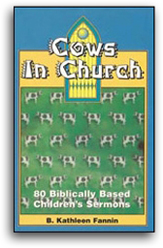
Cows In Church
80 Biblically Based Children's Sermons
Object:
None
It's one of those Sundays on which I have decided to risk doing something different with the children in order to illustrate the point of the message. So, after the youngsters have gathered on the chancel steps, I turn my back to them and begin speaking. "Well, I guess everyone's here. Good morning."
Not surprisingly, none of them respond. Still facing away from the children, I continue, "Did none of you hear me? I said, 'Good morning.' "
This time one boy answers brightly, "Good morning!"
With his response, I turn around. Now facing the youngsters, I ask them, "How did you feel when I turned my back on you?"
"I don't know," one child replies.
"It didn't matter," says another, eliciting laughter from the congregation.
"At first you didn't answer me," I point out. "Was that because I wasn't looking at you and you weren't sure if I was even talking to you?" Their little heads nod agreement.
"One time when Jesus was out in the countryside, a large crowd gathered to hear him speak. In fact, there were more than 5,000 people there. Do you suppose he turned his back when he talked to them?" The thought of this makes the children grin as they shake their heads to indicate no.
"Well, by the time Jesus got through talking to the crowd, the disciples and all the people were getting hungry. The disciples asked Jesus to send the people away to go find food for themselves. But Jesus told the disciples, 'No, don't send them away. You give them something to eat.' In other words, Jesus said, 'Don't turn your back on them; it's up to you to help them out.'
" 'How can we?' the disciples asked him. 'There are thousands of people here and we only have five loaves of bread and two fish.'
"Do you know what Jesus did then?" I ask the children. My question is greeted by silent, expectant stares, so I continue.
"Jesus said for the disciples to bring him the loaves and the fish. And then he gave some to each of the disciples and said for them to distribute it among the crowd. And you know, there was enough for everyone there. In fact, after everyone had eaten, the disciples gathered up the leftovers -- twelve baskets full!
"This story tells us that God needs our help sometimes in order to get things done. Sometimes, our hands are all that God has to use -- just as Jesus needed the disciples to feed the people. Do you know anyone right now who might need something to eat?"
Since we were talking about all this the Sunday after the record Midwestern flood in the summer of 1993, the children immediately suggested the flood victims.
"What else might they need besides food?" I ask.
"Shelter ... cleaning supplies ..."
The children pause then, thinking.
"What are you wearing?" I ask to prod their thoughts.
"Oh! Clothes! They probably need clothes too!" the children answer.
"That's right," I agree. "And it may seem with so many people needing so many things that helping out is a big job. But another thing this story tells us is that God has a way of taking whatever we have and making it enough, even though it may not seem like enough to us. All that God asks is that we share whatever we have.
"So, there are three things we've learned from this story:
1. God doesn't ever turn his back on us.
2. God takes whatever we have and makes it enough, just as Jesus did with the two fish and the five loaves.
3. God needs us to give help and love to one another. A long time ago, a very wise lady named Teresa of Avila said, 'God has no hands but our hands.' What she meant was that God needs us to accomplish God's work. We often talk about how we need God. It's important to remember that God needs us too."
Not surprisingly, none of them respond. Still facing away from the children, I continue, "Did none of you hear me? I said, 'Good morning.' "
This time one boy answers brightly, "Good morning!"
With his response, I turn around. Now facing the youngsters, I ask them, "How did you feel when I turned my back on you?"
"I don't know," one child replies.
"It didn't matter," says another, eliciting laughter from the congregation.
"At first you didn't answer me," I point out. "Was that because I wasn't looking at you and you weren't sure if I was even talking to you?" Their little heads nod agreement.
"One time when Jesus was out in the countryside, a large crowd gathered to hear him speak. In fact, there were more than 5,000 people there. Do you suppose he turned his back when he talked to them?" The thought of this makes the children grin as they shake their heads to indicate no.
"Well, by the time Jesus got through talking to the crowd, the disciples and all the people were getting hungry. The disciples asked Jesus to send the people away to go find food for themselves. But Jesus told the disciples, 'No, don't send them away. You give them something to eat.' In other words, Jesus said, 'Don't turn your back on them; it's up to you to help them out.'
" 'How can we?' the disciples asked him. 'There are thousands of people here and we only have five loaves of bread and two fish.'
"Do you know what Jesus did then?" I ask the children. My question is greeted by silent, expectant stares, so I continue.
"Jesus said for the disciples to bring him the loaves and the fish. And then he gave some to each of the disciples and said for them to distribute it among the crowd. And you know, there was enough for everyone there. In fact, after everyone had eaten, the disciples gathered up the leftovers -- twelve baskets full!
"This story tells us that God needs our help sometimes in order to get things done. Sometimes, our hands are all that God has to use -- just as Jesus needed the disciples to feed the people. Do you know anyone right now who might need something to eat?"
Since we were talking about all this the Sunday after the record Midwestern flood in the summer of 1993, the children immediately suggested the flood victims.
"What else might they need besides food?" I ask.
"Shelter ... cleaning supplies ..."
The children pause then, thinking.
"What are you wearing?" I ask to prod their thoughts.
"Oh! Clothes! They probably need clothes too!" the children answer.
"That's right," I agree. "And it may seem with so many people needing so many things that helping out is a big job. But another thing this story tells us is that God has a way of taking whatever we have and making it enough, even though it may not seem like enough to us. All that God asks is that we share whatever we have.
"So, there are three things we've learned from this story:
1. God doesn't ever turn his back on us.
2. God takes whatever we have and makes it enough, just as Jesus did with the two fish and the five loaves.
3. God needs us to give help and love to one another. A long time ago, a very wise lady named Teresa of Avila said, 'God has no hands but our hands.' What she meant was that God needs us to accomplish God's work. We often talk about how we need God. It's important to remember that God needs us too."
