
Keeping God First in the Polls
Sermon
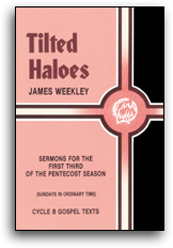
Tilted Haloes
SERMONS FOR THE FIRST THIRD OF THE PENTECOST SEASON
Did you know that a glass of hippopotamus milk contains eighty calories, or that only five percent of people are able to dream in color? Facts are intriguing but, just as quickly, they are easily forgotten. The recent knowledge explosion has had a great impact upon technology. With that technological 'know how,' we thought we had a blank check to the future. Then came the new bullies on the block: environmental pollution and computer impersonalism. The marriage of knowledge and technology were not creating the utopia we had hoped for. The yellow brick road to the future emptied into that old dirt path of breast beating. They didn't break any record for moral progress, either.
Many of us have to agree that any quest for knowledge as a thing in itself can be a dull date. Knowledge must ripen into truth. Okay, but what is the truth? To answer that adequately, we must recall Nicodemus. If ever a man was dead certain of himself, it was the Pharisee. For him all was quiet on the western front until he met Jesus. The Nazarene became the spur under his saddle. His intellectual absolutes shook like jello. His neatly spun web of Jewish theology slowly began to unravel. Their confrontation brewed at midnight. In it all Nicodemus could not follow where Jesus was coming from. His mind was programmed to compare apples to apples. As it turned out, Jesus thought Spirit, Nicodemus thought flesh.
Nowhere else in the gospels is Jesus any more astute than in his dialogue with the Jewish scholar. Always a step ahead of Nicodemus, Jesus shot back this ammunition again and again, "Rebirth ... you must be born again." Convinced of the power of the Spirit, he discovered the truth about Truth.
The question also resounds in our mind's ear. What is this rare commodity which generally falls between the cracks of culture? Does the discovery of Nicodemus hold water for us today? Does this Jesus-styled truth out it amid the knowledge crisis of our time? Actually, is there any other option available? Poetically, Fredrick B. Speakman writes,
Lilies don't argue, they bloom.
Springtime doesn't argue; it comes.
Music doesn't argue; it sings.
Beauty doesn't argue; it beckons.
Love doesn't argue; it outlives our griefs.
Truth doesn't argue either. It stands with the stars.
As Nicodemus discovered in his encounter with Jesus, truth wasn't on the far side or "out of touch." It was on our side, sticking like molasses. It had a "God with us" quality, flowing in our blood line. "And the Word became flesh and dwelt among us, full of grace and truth." (John 1:14) God's truth was fashioned into a human species - capable of joy and pain. He lived among us. He died among us. He came back to be with us again.
So Jesus had taken his turn at redemption. Out of the tomb he passes the baton to us. Now it is our turn to take a turn for him. He has left us a pattern for the race. There is the story of a boy who was learning his trade in a machine shop. His instructions were to drill holes in iron bars. He was given an original bar from which all other bars were to be copied. Using it as a guide, all other bars could be drilled precisely in place. One day he misplaced the master bar. He thought he could use the other bars that had been drilled. The problem was that the other bars were drilled with a slight variation. The more he drilled the worse it became. At the end of the day his supervisor examined his work and found that over two hundred bars had to be discarded. They were not copied precisely from the original. The baton had not been passed.
Through the life of Jesus, God gave us the example for living. Jesus was the unbroken mirror of God's compassion and caring. "In him was life, and the life was the light of men." (John 1:4) His Spirit absorbs us into his Life Source; his Spirit zaps us from our midnight zone of doubt; his Spirit ferments our battered soul in the ascending star of hope. He brings us alive. The tang of living is there if we would only toast it with the Host of the Resurrection.
What this comes down to is that this Christ connection frees "us" to be "us," the intended, potential "us." After discarding the fat and feathers, we uncover the real truth about ourselves. Recall the comtemporary slogan: "What you are is God's gift to you. What you make of yourself is your gift to God." Religion not only earns its salt by getting our teeth into God, but by sinking our molars into ourselves. Everyone expected the carpenter's Son to be a man about God. Few ever anticipated him being a man about man. That's what got him into trouble. For many, religion is acceptable as long as we beam in all energies on God-worship. But when the spotlight swings to personal growth, things get uncomfortable. God's truth is not always perfumed acceptable. Winning a popularity contest has never been at the top of his agenda.
In his Habitation of Dragons, Keith Miller shares an experience about a conference he conducted for the deacons of a large church. He brought along two of his friends who had guilt problems with adultery. They opened the discussion on the topic of difficulties that come with extramarital sex, and how they were driven to a deeper relationship with God.
That evening the minister of the church was disturbed over the topic of discussion. "I'm afraid you have the wrong group, Mr. Miller. These men I brought here are converted Christians ... If you keep dealing with these kinds of personal problems, I'm afraid you will lose our group's attention altogether." Before going to bed that evening Keith prayed with his friends about the problem. Shortly, there was a knock on his door. One of the deacons came by to counsel about his personal sexual difficulties. Within the next few hours others came by to talk about similar problems. Having shared the millstone of guilt with one who was open and caring, truth was hatched.
"... you will know the truth, and the truth will make you free." (John 8:32) The scalpel of the gospel slices into our pretensions with a know-thyself mandate. Once we go that far with his honest truth - allowing him to expose us as we are - he opens us up to, well, our real selves. Once we go that far with his caring truth, our understanding of love switches from self-gratifying "me" to self-emptying "others." Once we journey that far with his microscopic truth, he releases us from the guilt closets of the past. Then he releases us for faith possibilities in the present, for hope possibilities of the future. Dag Hammarskjold writes in his Markings: "We are not permitted to choose the frame of our destiny. But what we put into it is ours. He who wills adventure will experience it -according to the measure of his courage."
Are you ready to take on the highest challenge of your lifetime?
Many of us have to agree that any quest for knowledge as a thing in itself can be a dull date. Knowledge must ripen into truth. Okay, but what is the truth? To answer that adequately, we must recall Nicodemus. If ever a man was dead certain of himself, it was the Pharisee. For him all was quiet on the western front until he met Jesus. The Nazarene became the spur under his saddle. His intellectual absolutes shook like jello. His neatly spun web of Jewish theology slowly began to unravel. Their confrontation brewed at midnight. In it all Nicodemus could not follow where Jesus was coming from. His mind was programmed to compare apples to apples. As it turned out, Jesus thought Spirit, Nicodemus thought flesh.
Nowhere else in the gospels is Jesus any more astute than in his dialogue with the Jewish scholar. Always a step ahead of Nicodemus, Jesus shot back this ammunition again and again, "Rebirth ... you must be born again." Convinced of the power of the Spirit, he discovered the truth about Truth.
The question also resounds in our mind's ear. What is this rare commodity which generally falls between the cracks of culture? Does the discovery of Nicodemus hold water for us today? Does this Jesus-styled truth out it amid the knowledge crisis of our time? Actually, is there any other option available? Poetically, Fredrick B. Speakman writes,
Lilies don't argue, they bloom.
Springtime doesn't argue; it comes.
Music doesn't argue; it sings.
Beauty doesn't argue; it beckons.
Love doesn't argue; it outlives our griefs.
Truth doesn't argue either. It stands with the stars.
As Nicodemus discovered in his encounter with Jesus, truth wasn't on the far side or "out of touch." It was on our side, sticking like molasses. It had a "God with us" quality, flowing in our blood line. "And the Word became flesh and dwelt among us, full of grace and truth." (John 1:14) God's truth was fashioned into a human species - capable of joy and pain. He lived among us. He died among us. He came back to be with us again.
So Jesus had taken his turn at redemption. Out of the tomb he passes the baton to us. Now it is our turn to take a turn for him. He has left us a pattern for the race. There is the story of a boy who was learning his trade in a machine shop. His instructions were to drill holes in iron bars. He was given an original bar from which all other bars were to be copied. Using it as a guide, all other bars could be drilled precisely in place. One day he misplaced the master bar. He thought he could use the other bars that had been drilled. The problem was that the other bars were drilled with a slight variation. The more he drilled the worse it became. At the end of the day his supervisor examined his work and found that over two hundred bars had to be discarded. They were not copied precisely from the original. The baton had not been passed.
Through the life of Jesus, God gave us the example for living. Jesus was the unbroken mirror of God's compassion and caring. "In him was life, and the life was the light of men." (John 1:4) His Spirit absorbs us into his Life Source; his Spirit zaps us from our midnight zone of doubt; his Spirit ferments our battered soul in the ascending star of hope. He brings us alive. The tang of living is there if we would only toast it with the Host of the Resurrection.
What this comes down to is that this Christ connection frees "us" to be "us," the intended, potential "us." After discarding the fat and feathers, we uncover the real truth about ourselves. Recall the comtemporary slogan: "What you are is God's gift to you. What you make of yourself is your gift to God." Religion not only earns its salt by getting our teeth into God, but by sinking our molars into ourselves. Everyone expected the carpenter's Son to be a man about God. Few ever anticipated him being a man about man. That's what got him into trouble. For many, religion is acceptable as long as we beam in all energies on God-worship. But when the spotlight swings to personal growth, things get uncomfortable. God's truth is not always perfumed acceptable. Winning a popularity contest has never been at the top of his agenda.
In his Habitation of Dragons, Keith Miller shares an experience about a conference he conducted for the deacons of a large church. He brought along two of his friends who had guilt problems with adultery. They opened the discussion on the topic of difficulties that come with extramarital sex, and how they were driven to a deeper relationship with God.
That evening the minister of the church was disturbed over the topic of discussion. "I'm afraid you have the wrong group, Mr. Miller. These men I brought here are converted Christians ... If you keep dealing with these kinds of personal problems, I'm afraid you will lose our group's attention altogether." Before going to bed that evening Keith prayed with his friends about the problem. Shortly, there was a knock on his door. One of the deacons came by to counsel about his personal sexual difficulties. Within the next few hours others came by to talk about similar problems. Having shared the millstone of guilt with one who was open and caring, truth was hatched.
"... you will know the truth, and the truth will make you free." (John 8:32) The scalpel of the gospel slices into our pretensions with a know-thyself mandate. Once we go that far with his honest truth - allowing him to expose us as we are - he opens us up to, well, our real selves. Once we go that far with his caring truth, our understanding of love switches from self-gratifying "me" to self-emptying "others." Once we journey that far with his microscopic truth, he releases us from the guilt closets of the past. Then he releases us for faith possibilities in the present, for hope possibilities of the future. Dag Hammarskjold writes in his Markings: "We are not permitted to choose the frame of our destiny. But what we put into it is ours. He who wills adventure will experience it -according to the measure of his courage."
Are you ready to take on the highest challenge of your lifetime?
