
Knowing the signs of the Lord's return
Preaching
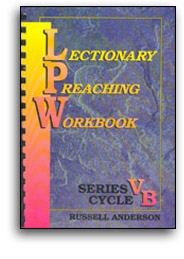
Lectionary Preaching Workbook
Series V, Cycle B
Theme For The Day: Knowing the signs of the Lord's return.
BRIEF COMMENTARY ON THE LESSONS
Lesson 1: 1 Samuel 1:4-20 (C)
Elkanah and his wives went up to Shiloh annually to offer sacrifice to the Lord. He would give each one a portion of the offering based on the number of children each had. Hannah was barren and the other wife would rub this fact into her face, particularly at the time of their pilgrimage. Being barren was considered a great curse. Hannah became depressed, refusing even to eat. Elkanah was an understanding husband who gently consoled his wife. She decided to take her troubles to the Lord in prayer. As she prayed in the temple, her mouth was moving but no words came forth. Eli, the priest, accused her of being drunk. She relayed her concern and he prayed that her request would be answered. Her spirit lifted and she went home. In due time, she became pregnant. After she weaned her child (Samuel), she brought him to Levi, together with the appropriate sacrifices. Samuel stayed with Levi and became the last of the judges and a great prophet.
Lesson 1: Daniel 12:1-3 (RC); Daniel 12:1-4a (5-13) (E)
Lesson 2: Hebrews 10:11-14 (15-18) 19-25 (C); Hebrews 10:11-14, 18 (RC)
The text continues to hammer home the same point that we have dealt with the past several weeks. Christ's priestly ministry is superior to that of the Jewish faith. The sacrifices in the temple needed to be repeated daily but Christ's priestly ministry was accomplished once and for all, by his all-sufficient sacrificial death. Because of his sacrifice, we are bold to approach the throne of God. The author reminds the Church of three ways God offers us to draw near to him: (1) faith and worship (v. 22, 25), (2) witness to Jesus (v. 22) and (3) service of one another (v. 24). The awareness of the nearness of Christ's return serves as our source of motivation.
Lesson 2: Hebrews 10:31-39 (E)
Gospel: Mark 13:1-8 (C); Mark 13:14-23 (E); Mark 13:24-32 (RC)
The chapter is called the "Little Apocalypse" and deals with the signs of the end time. The teaching on the subject results from an observation by the disciples about the beauty and grandeur of the temple. Jesus replies that it will become a pile of rubble, even though it was not yet completed at that time. The disciples then ask what the signs of the end will be. The Lord then suggests a number of things that will occur before the end. Many will pretend to be the Messiah; there will be wars, earthquakes and the like. The Gospel selections for the Episcopal and Roman Catholic lectionary set forth the same theme presented in the first eight verses.
The Episcopal lectionary lifts up the desolation sacrilege (v. 14). To understand this reference one must be knowledgeable of the book of Daniel, which was composed during a period when gentile practices were imposed in the Jewish temple. This intrusion was a shock to the spiritual soul of the nation. A similar intrusion was forced on the Jews with the sack of Jerusalem in 70 A.D.
The Roman Catholic lectionary further speaks of the time just before the end as a cosmic upheaval, when constellations are forced from their orbits. Then, the Son of Man will appear from the heavens and gather the elect. The lection concludes with the statement that no one knows the exact day or hour of the apocalypse, only the Father (v. 32).
Psalm Of The Day
Psalm 16 (C, E) -- "I bless the Lord who gives me counsel" (v. 7).
Psalm 15 (RC)
Prayer Of The Day
God of glory, make us deeply sensitive to the brevity of our existence here on earth, and to the fact that we must render an account before you. May this truth not fill our hearts with fear, but with a resolve to employ all our strength in service of you. In the merciful name of Jesus. Amen.
THEOLOGICAL REFLECTION ON THE LESSONS
Lesson 1: 1 Samuel 1:4-20
Faith and fertility. The theme of bareness appears frequently in the Bible; in addition to the story of Hannah in this text, there are the stories of Sarah (Genesis 17:16-19), Rebekah (Genesis 25:21-26), Rachel (Genesis 29), the mother of Samson (Judges 13:2-5), and Elizabeth (Luke 1:5-17). All of them became mothers as a result of God's grace, through faith in God's promise.
God and fertility (v. 6). God was believed to be the source of fertility or the lack thereof. He was accused of closing up Hannah's womb. We now know that there are some genetic factors and that every birth is not a direct manifestation of God's will. Nevertheless, it's still safe to say that God is the giver of all life. When God brings a new life into this world it is both a gift and a blessing.
Love without strings (vv. 5, 8). For much of the history of humankind, women have been judged according to how well they fulfilled their role as mothers. A childless woman was like a parched spring or a fruitless vine. In spite of this, Elkanah loved Hannah for who she was, not what she could produce. His love was without strings. He consoled his wife by saying: "Am I not more to you than ten sons?" (v. 8). Their love was precious in and of itself.
She moved from sulking to supplication (vv. 8-11). Peninnah, Hannah's rival, really got under Hannah's skin, so much so that she went into a major sulk. Her husband's loving response brought her out of her sulk. From that point, Hannah rightly determined that supplication in the house of the Lord would be the more creative route to take. Her sincere supplication led to life for her and many other people as well.
Lesson 2: Hebrews 10:10-14 (15-18) 19-25
The single sacrifice for sins (v. 12). The text maintains that Christ offered in his body the single sacrifice that atones for the sins of all who have faith. What does that imply? That we don't have to spend our energies on useless efforts to justify ourselves in God's sight. Thus, we are free to serve and love him in our neighbor.
Offering for salvation, not for sin (v. 18). "Where there is forgiveness...there is no longer any offering for sin." God does not call us to offer up our lives in atonement for sins but to offer up our lives in grateful service for the gift of salvation.
Confidence (v. 19). "...since we have confidence...by the blood of Christ...." Millions of people have taken the Dale Carnegie course, which essentially aims at building confidence in people so that they might be successful in social relationships and in business. The writer of Hebrews wants those who read his letter to have confidence, not deriving from self but from God. The Christian way of building confidence is through the cross.
Gospel: Mark 13:1-32
Sign language (v. 4). Some of Jesus' disciples asked for the signs of the destruction of the temple (vv. 1-2). Some people hold that all these signs apply to the end of time and the world. If so, how does one reconcile Jesus' words: "Truly, I say to you, this generation will not pass away before all these things take place" (v. 30)? The destruction of the temple and the city of Jerusalem by the Romans is the original apocalypse that Jesus predicted. However, added to this is material concerning the end of the age and the last judgment. Reading God's sign language is not easy, especially for those who have not studied.
Sacrilege (v. 14). The reference to the desolating sacrilege has roots in the Jewish experience in the post-Alexandrian period, when Antiochus Epiphanies instituted heathen sacrifices in the temple. This led eventually to the Maccabean revolt. This sacrilege left a deep wound on the Jewish psyche. The destruction of the temple by the Romans was the sacrilege that Jesus referred to. It seems that we live in a sacrilegious age but the sacrileges seem to offend only a few. Yes, a few people were offended by an image created by a New York artist of a crucifix in a bottle of urine but that's the exception. Sacrilege no longer offends because we have lost our sense of the Holy.
Christ and crisis. This entire lection lists a host of crises that are to presage Christ's rule in power and glory. To name a few: religious breakdown (v. 2); nationalistic antagonisms (v. 8); breakdown of the family (v. 12).
Day and Date (v. 32). Countless believers have gotten themselves and other people in trouble by claiming to have access to God's appointment calendar. Jesus warned that nobody knows the day or the hour of God's visitation, not even the Son. This means that instead of looking for some calendar or the clock in the Bible, we should live and love in a constant state of expectancy.
SERMON APPROACHES WITH ILLUSTRATIONS
Lesson 1: 1 Samuel 1:4-20
Sermon Title: Dealing With Disappointment
Sermon Angle: Hannah faced one of the gravest disappointments for a woman in her day. She was not able to bear a child. Her rival would rub her face in it, which led to depression and withdrawal from life. For a time she wept and would not eat. Her husband wisely reassured her that she still had great worth, even if she was childless. That helped Hannah to deal constructively with her disappointment by taking it to the Lord in prayer and worship.
Outline:
1. Hannah's great disappointment was in not having a child.
2. This led to withdrawal from life and a sense of helplessness (v. 7).
3. Her husband reminded her of her worth (v. 8).
4. She then prayed in the temple and was assured that God heard her (v. 17).
5. After worship the next day, she went happily back home (v. 18).
Sermon Title: Pathway To Peace
Sermon Angle: The house of Elkanah was rocked by conflict between his two wives. Peninnah was able to have children and that pleased her husband but Hannah was the wife that he especially loved. Peninnah was able to really agitate her rival. It's hard to imagine how domestic tranquility could exist here. When the conflict came to a head, Hannah poured out the vexation of her spirit in prayer to the Lord. Honestly confessing our problems is the first step to tranquility. In her prayer, she didn't just ask the Lord for favors but also promised to give back to the Lord. When she was finished praying and worshipping, she had the faith to believe that God had indeed heard her. Since she was assured of her worth and of God's love for her, Peninnah would not be able to irritate her anymore. The prayer of submission is the pathway to peace.
Lesson 2: Hebrews 10:10-14 (15-18) 19-25
Sermon Title: Free Access To The Almighty
Sermon Angle: Christ has opened a new and wonderful way to approach God, through the sacrifice of the cross. The fact that Christ, our great high priest, has opened the curtain (symbolic of blocked access to the Most Holy Place in the temple) (v. 20) calls us to exercise our freedom as outlined below:
Outline:
1. To confidently draw near to God in faith (v. 22).
2. To continue public witness to our faith (v. 23).
3. To encourage one another through service and love (v. 24).
Sermon Title: The Right Way To Stir Up The Church
Sermon Angle: Too many congregations have been adversely stirred through negativism, criticism and gossip. However, there is a right way to stir up the church. To employ an analogy from cooking, if you don't stir up the pot on the stove, the ingredients will settle to the bottom, stick to the pot and eventually transform into a mass of charred gunk. Therefore, stirring not only keeps the goodness from settling to the bottom but also serves to blend a dish that is savory, delicious and nourishing. Through love, we are to stir up one another and encourage one another to do good works (v. 24).
Outline:
1. Give an example of a congregation that was stirred to conflict.
2. Assert that stirring can be done in a positive way (the cooking analogy).
3. Ask if their involvement in the church might be described as a settling to the bottom of the pot.
4. Charge them to stir one another up to love and good works (v. 24).
5. Remind them that to keep the pot cooking, we need to be regular in worship (v. 25).
Gospel: Mark 13:1-32
Sermon Title: Birthpangs!
Sermon Angle: A baby does not normally make her appearance into the world unless the mother passes through periods of sickness, even retching and vomiting. At the very end, the labor starts; the pain gradually crescendos to a point that can be described as excruciating. There is no birth without birthpangs. Jesus states that wars, earthquakes and various other unpleasant experiences are but the beginning of the birthpangs for the world as we know it (vv. 6-8). Yet these words contain hope. The more intense the pain, the nearer the birth of Christ's kingdom. Just when we think that we can take it no longer, the Christ will come with his glorious kingdom (vv. 26-27).
Outline:
1. Try to get a mother's description of a mother giving birth -- the pain and the joy.
2. Explain that the pain and sorrow of this world are birthpangs.
3. Jesus describes the translation from this world to the kingdom as birthpangs (vv. 6-8).
4. Keep faith and the birthpangs will give way to new life in Christ's kingdom (v. 13).
Sermon Title: Christ In Conflict With Culture
Sermon Angle: All of the signs that point to the end/beginning have to do with conflict. The power of God is in conflict with the powers that hold sway on this earth. Christians will be brought into court to answer to the appointed officials (v. 11). Family members will deal with their believing brothers and sisters with treachery and violence (v. 12). Worship of the true God will be profaned (v. 14). Charles Colson speaks passionately about the culture wars in our country. While I don't quite agree with some of his stands, I do believe that he has a valid point. Christ and culture are in conflict. Christendom is dead but not Christianity.
Outline:
1. This passage states that increasing conflict between Christ and culture will signal the end of the age. (Give examples.)
2. Some churches avoid the battle, while other relish the fight (most are the former).
3. Christ calls us to take stands, based on the gospel. Being a Christian entails conflict with falsehood and the gods of the age.
Sermon Title: The Great Gathering
Sermon Angle: When Christ comes again and the world as we know passes away, Christ will gather his chosen ones (the elect). Then, Christ will send his angels to gather in the elect from the corners of the earth (vv. 26-27). Those who belong to Christ do not come from one race or one location, but are scattered throughout the world. Christ will not forsake his own. His word and promise are secure. "Heaven and earth will pass away but my word will not pass away."
Outline:
1. The persecutions described in vv. 9-13 scatter the elect of God.
2. At the end of this world and the beginning of the next, God will gather his own (vv. 26-27).
3. Live in anticipation of the great gathering into the community of God's grace.
__________
As I was completing this chapter, the mail woman deposited our mail. One of the letters was from Bill Bright, of Campus Crusade For Christ. He was soliciting funds for the teams going throughout the world showing the Jesus film. The purpose of the film is to present Jesus in such a compelling way that those seeing it will want to confess Jesus as Savior and Lord. He was particularly lifting up their work in some predominantly Moslem countries. The story he told seemed to coincide with the passage I was currently trying to shed light on. Here's the story:
In a closed Muslim nation, which is far more antagonistic to the gospel than communism, a Campus Crusade couple invited a Muslim husband and wife to their home to watch a video of Jesus. Even though they were fervently committed to Islam, they agreed. During the film, everything in the room began to shake. Yet they were so gripped by the video they just kept watching!
Before Jesus ended, unknown to the other, each prayed and received Christ. Fearful of the other's reaction, they returned home, not saying a word about their decisions. The next morning, they couldn't stand it any longer. At great risk, they each told the other what they had done. They wept as they discovered they had both received Christ as their Savior and Lord.
When they revisited the Campus Crusade couple, they shared how they had both "felt the room shaking with great power." Even though they were the only ones who felt this "divine earthquake," they agreed that at the moment the shaking began, each knew it was a sign from God -- his affirming to them the truth contained in the film. Today, these once fervent Muslims are helping to translate training materials for Campus Crusade.
Our Lord's teaching about earthquakes (v. 8) and concerning the fact that the gospel must first be preached to all nations (v. 10) came to my mind. I am of a somewhat skeptical bent; yet, I believe in miracles. Was this a sign for me? I was about to get out my checkbook when I read on the pledge card: "I understand that, on average, for every $100 I send, 100 more people will likely indicate decisions for Christ." Now there was a price on souls, a cheap price at that. Red flags started waving all over the place. My Lutheran history came to my rescue. A vision of Tetzel preaching to the peasants: "As soon as your coin in the coffer rings, a soul from purgatory springs." Whew, that was close! (Note: I'm not suggesting dishonest motives on Bright's part or putting him on par with Tetzel.)
BRIEF COMMENTARY ON THE LESSONS
Lesson 1: 1 Samuel 1:4-20 (C)
Elkanah and his wives went up to Shiloh annually to offer sacrifice to the Lord. He would give each one a portion of the offering based on the number of children each had. Hannah was barren and the other wife would rub this fact into her face, particularly at the time of their pilgrimage. Being barren was considered a great curse. Hannah became depressed, refusing even to eat. Elkanah was an understanding husband who gently consoled his wife. She decided to take her troubles to the Lord in prayer. As she prayed in the temple, her mouth was moving but no words came forth. Eli, the priest, accused her of being drunk. She relayed her concern and he prayed that her request would be answered. Her spirit lifted and she went home. In due time, she became pregnant. After she weaned her child (Samuel), she brought him to Levi, together with the appropriate sacrifices. Samuel stayed with Levi and became the last of the judges and a great prophet.
Lesson 1: Daniel 12:1-3 (RC); Daniel 12:1-4a (5-13) (E)
Lesson 2: Hebrews 10:11-14 (15-18) 19-25 (C); Hebrews 10:11-14, 18 (RC)
The text continues to hammer home the same point that we have dealt with the past several weeks. Christ's priestly ministry is superior to that of the Jewish faith. The sacrifices in the temple needed to be repeated daily but Christ's priestly ministry was accomplished once and for all, by his all-sufficient sacrificial death. Because of his sacrifice, we are bold to approach the throne of God. The author reminds the Church of three ways God offers us to draw near to him: (1) faith and worship (v. 22, 25), (2) witness to Jesus (v. 22) and (3) service of one another (v. 24). The awareness of the nearness of Christ's return serves as our source of motivation.
Lesson 2: Hebrews 10:31-39 (E)
Gospel: Mark 13:1-8 (C); Mark 13:14-23 (E); Mark 13:24-32 (RC)
The chapter is called the "Little Apocalypse" and deals with the signs of the end time. The teaching on the subject results from an observation by the disciples about the beauty and grandeur of the temple. Jesus replies that it will become a pile of rubble, even though it was not yet completed at that time. The disciples then ask what the signs of the end will be. The Lord then suggests a number of things that will occur before the end. Many will pretend to be the Messiah; there will be wars, earthquakes and the like. The Gospel selections for the Episcopal and Roman Catholic lectionary set forth the same theme presented in the first eight verses.
The Episcopal lectionary lifts up the desolation sacrilege (v. 14). To understand this reference one must be knowledgeable of the book of Daniel, which was composed during a period when gentile practices were imposed in the Jewish temple. This intrusion was a shock to the spiritual soul of the nation. A similar intrusion was forced on the Jews with the sack of Jerusalem in 70 A.D.
The Roman Catholic lectionary further speaks of the time just before the end as a cosmic upheaval, when constellations are forced from their orbits. Then, the Son of Man will appear from the heavens and gather the elect. The lection concludes with the statement that no one knows the exact day or hour of the apocalypse, only the Father (v. 32).
Psalm Of The Day
Psalm 16 (C, E) -- "I bless the Lord who gives me counsel" (v. 7).
Psalm 15 (RC)
Prayer Of The Day
God of glory, make us deeply sensitive to the brevity of our existence here on earth, and to the fact that we must render an account before you. May this truth not fill our hearts with fear, but with a resolve to employ all our strength in service of you. In the merciful name of Jesus. Amen.
THEOLOGICAL REFLECTION ON THE LESSONS
Lesson 1: 1 Samuel 1:4-20
Faith and fertility. The theme of bareness appears frequently in the Bible; in addition to the story of Hannah in this text, there are the stories of Sarah (Genesis 17:16-19), Rebekah (Genesis 25:21-26), Rachel (Genesis 29), the mother of Samson (Judges 13:2-5), and Elizabeth (Luke 1:5-17). All of them became mothers as a result of God's grace, through faith in God's promise.
God and fertility (v. 6). God was believed to be the source of fertility or the lack thereof. He was accused of closing up Hannah's womb. We now know that there are some genetic factors and that every birth is not a direct manifestation of God's will. Nevertheless, it's still safe to say that God is the giver of all life. When God brings a new life into this world it is both a gift and a blessing.
Love without strings (vv. 5, 8). For much of the history of humankind, women have been judged according to how well they fulfilled their role as mothers. A childless woman was like a parched spring or a fruitless vine. In spite of this, Elkanah loved Hannah for who she was, not what she could produce. His love was without strings. He consoled his wife by saying: "Am I not more to you than ten sons?" (v. 8). Their love was precious in and of itself.
She moved from sulking to supplication (vv. 8-11). Peninnah, Hannah's rival, really got under Hannah's skin, so much so that she went into a major sulk. Her husband's loving response brought her out of her sulk. From that point, Hannah rightly determined that supplication in the house of the Lord would be the more creative route to take. Her sincere supplication led to life for her and many other people as well.
Lesson 2: Hebrews 10:10-14 (15-18) 19-25
The single sacrifice for sins (v. 12). The text maintains that Christ offered in his body the single sacrifice that atones for the sins of all who have faith. What does that imply? That we don't have to spend our energies on useless efforts to justify ourselves in God's sight. Thus, we are free to serve and love him in our neighbor.
Offering for salvation, not for sin (v. 18). "Where there is forgiveness...there is no longer any offering for sin." God does not call us to offer up our lives in atonement for sins but to offer up our lives in grateful service for the gift of salvation.
Confidence (v. 19). "...since we have confidence...by the blood of Christ...." Millions of people have taken the Dale Carnegie course, which essentially aims at building confidence in people so that they might be successful in social relationships and in business. The writer of Hebrews wants those who read his letter to have confidence, not deriving from self but from God. The Christian way of building confidence is through the cross.
Gospel: Mark 13:1-32
Sign language (v. 4). Some of Jesus' disciples asked for the signs of the destruction of the temple (vv. 1-2). Some people hold that all these signs apply to the end of time and the world. If so, how does one reconcile Jesus' words: "Truly, I say to you, this generation will not pass away before all these things take place" (v. 30)? The destruction of the temple and the city of Jerusalem by the Romans is the original apocalypse that Jesus predicted. However, added to this is material concerning the end of the age and the last judgment. Reading God's sign language is not easy, especially for those who have not studied.
Sacrilege (v. 14). The reference to the desolating sacrilege has roots in the Jewish experience in the post-Alexandrian period, when Antiochus Epiphanies instituted heathen sacrifices in the temple. This led eventually to the Maccabean revolt. This sacrilege left a deep wound on the Jewish psyche. The destruction of the temple by the Romans was the sacrilege that Jesus referred to. It seems that we live in a sacrilegious age but the sacrileges seem to offend only a few. Yes, a few people were offended by an image created by a New York artist of a crucifix in a bottle of urine but that's the exception. Sacrilege no longer offends because we have lost our sense of the Holy.
Christ and crisis. This entire lection lists a host of crises that are to presage Christ's rule in power and glory. To name a few: religious breakdown (v. 2); nationalistic antagonisms (v. 8); breakdown of the family (v. 12).
Day and Date (v. 32). Countless believers have gotten themselves and other people in trouble by claiming to have access to God's appointment calendar. Jesus warned that nobody knows the day or the hour of God's visitation, not even the Son. This means that instead of looking for some calendar or the clock in the Bible, we should live and love in a constant state of expectancy.
SERMON APPROACHES WITH ILLUSTRATIONS
Lesson 1: 1 Samuel 1:4-20
Sermon Title: Dealing With Disappointment
Sermon Angle: Hannah faced one of the gravest disappointments for a woman in her day. She was not able to bear a child. Her rival would rub her face in it, which led to depression and withdrawal from life. For a time she wept and would not eat. Her husband wisely reassured her that she still had great worth, even if she was childless. That helped Hannah to deal constructively with her disappointment by taking it to the Lord in prayer and worship.
Outline:
1. Hannah's great disappointment was in not having a child.
2. This led to withdrawal from life and a sense of helplessness (v. 7).
3. Her husband reminded her of her worth (v. 8).
4. She then prayed in the temple and was assured that God heard her (v. 17).
5. After worship the next day, she went happily back home (v. 18).
Sermon Title: Pathway To Peace
Sermon Angle: The house of Elkanah was rocked by conflict between his two wives. Peninnah was able to have children and that pleased her husband but Hannah was the wife that he especially loved. Peninnah was able to really agitate her rival. It's hard to imagine how domestic tranquility could exist here. When the conflict came to a head, Hannah poured out the vexation of her spirit in prayer to the Lord. Honestly confessing our problems is the first step to tranquility. In her prayer, she didn't just ask the Lord for favors but also promised to give back to the Lord. When she was finished praying and worshipping, she had the faith to believe that God had indeed heard her. Since she was assured of her worth and of God's love for her, Peninnah would not be able to irritate her anymore. The prayer of submission is the pathway to peace.
Lesson 2: Hebrews 10:10-14 (15-18) 19-25
Sermon Title: Free Access To The Almighty
Sermon Angle: Christ has opened a new and wonderful way to approach God, through the sacrifice of the cross. The fact that Christ, our great high priest, has opened the curtain (symbolic of blocked access to the Most Holy Place in the temple) (v. 20) calls us to exercise our freedom as outlined below:
Outline:
1. To confidently draw near to God in faith (v. 22).
2. To continue public witness to our faith (v. 23).
3. To encourage one another through service and love (v. 24).
Sermon Title: The Right Way To Stir Up The Church
Sermon Angle: Too many congregations have been adversely stirred through negativism, criticism and gossip. However, there is a right way to stir up the church. To employ an analogy from cooking, if you don't stir up the pot on the stove, the ingredients will settle to the bottom, stick to the pot and eventually transform into a mass of charred gunk. Therefore, stirring not only keeps the goodness from settling to the bottom but also serves to blend a dish that is savory, delicious and nourishing. Through love, we are to stir up one another and encourage one another to do good works (v. 24).
Outline:
1. Give an example of a congregation that was stirred to conflict.
2. Assert that stirring can be done in a positive way (the cooking analogy).
3. Ask if their involvement in the church might be described as a settling to the bottom of the pot.
4. Charge them to stir one another up to love and good works (v. 24).
5. Remind them that to keep the pot cooking, we need to be regular in worship (v. 25).
Gospel: Mark 13:1-32
Sermon Title: Birthpangs!
Sermon Angle: A baby does not normally make her appearance into the world unless the mother passes through periods of sickness, even retching and vomiting. At the very end, the labor starts; the pain gradually crescendos to a point that can be described as excruciating. There is no birth without birthpangs. Jesus states that wars, earthquakes and various other unpleasant experiences are but the beginning of the birthpangs for the world as we know it (vv. 6-8). Yet these words contain hope. The more intense the pain, the nearer the birth of Christ's kingdom. Just when we think that we can take it no longer, the Christ will come with his glorious kingdom (vv. 26-27).
Outline:
1. Try to get a mother's description of a mother giving birth -- the pain and the joy.
2. Explain that the pain and sorrow of this world are birthpangs.
3. Jesus describes the translation from this world to the kingdom as birthpangs (vv. 6-8).
4. Keep faith and the birthpangs will give way to new life in Christ's kingdom (v. 13).
Sermon Title: Christ In Conflict With Culture
Sermon Angle: All of the signs that point to the end/beginning have to do with conflict. The power of God is in conflict with the powers that hold sway on this earth. Christians will be brought into court to answer to the appointed officials (v. 11). Family members will deal with their believing brothers and sisters with treachery and violence (v. 12). Worship of the true God will be profaned (v. 14). Charles Colson speaks passionately about the culture wars in our country. While I don't quite agree with some of his stands, I do believe that he has a valid point. Christ and culture are in conflict. Christendom is dead but not Christianity.
Outline:
1. This passage states that increasing conflict between Christ and culture will signal the end of the age. (Give examples.)
2. Some churches avoid the battle, while other relish the fight (most are the former).
3. Christ calls us to take stands, based on the gospel. Being a Christian entails conflict with falsehood and the gods of the age.
Sermon Title: The Great Gathering
Sermon Angle: When Christ comes again and the world as we know passes away, Christ will gather his chosen ones (the elect). Then, Christ will send his angels to gather in the elect from the corners of the earth (vv. 26-27). Those who belong to Christ do not come from one race or one location, but are scattered throughout the world. Christ will not forsake his own. His word and promise are secure. "Heaven and earth will pass away but my word will not pass away."
Outline:
1. The persecutions described in vv. 9-13 scatter the elect of God.
2. At the end of this world and the beginning of the next, God will gather his own (vv. 26-27).
3. Live in anticipation of the great gathering into the community of God's grace.
__________
As I was completing this chapter, the mail woman deposited our mail. One of the letters was from Bill Bright, of Campus Crusade For Christ. He was soliciting funds for the teams going throughout the world showing the Jesus film. The purpose of the film is to present Jesus in such a compelling way that those seeing it will want to confess Jesus as Savior and Lord. He was particularly lifting up their work in some predominantly Moslem countries. The story he told seemed to coincide with the passage I was currently trying to shed light on. Here's the story:
In a closed Muslim nation, which is far more antagonistic to the gospel than communism, a Campus Crusade couple invited a Muslim husband and wife to their home to watch a video of Jesus. Even though they were fervently committed to Islam, they agreed. During the film, everything in the room began to shake. Yet they were so gripped by the video they just kept watching!
Before Jesus ended, unknown to the other, each prayed and received Christ. Fearful of the other's reaction, they returned home, not saying a word about their decisions. The next morning, they couldn't stand it any longer. At great risk, they each told the other what they had done. They wept as they discovered they had both received Christ as their Savior and Lord.
When they revisited the Campus Crusade couple, they shared how they had both "felt the room shaking with great power." Even though they were the only ones who felt this "divine earthquake," they agreed that at the moment the shaking began, each knew it was a sign from God -- his affirming to them the truth contained in the film. Today, these once fervent Muslims are helping to translate training materials for Campus Crusade.
Our Lord's teaching about earthquakes (v. 8) and concerning the fact that the gospel must first be preached to all nations (v. 10) came to my mind. I am of a somewhat skeptical bent; yet, I believe in miracles. Was this a sign for me? I was about to get out my checkbook when I read on the pledge card: "I understand that, on average, for every $100 I send, 100 more people will likely indicate decisions for Christ." Now there was a price on souls, a cheap price at that. Red flags started waving all over the place. My Lutheran history came to my rescue. A vision of Tetzel preaching to the peasants: "As soon as your coin in the coffer rings, a soul from purgatory springs." Whew, that was close! (Note: I'm not suggesting dishonest motives on Bright's part or putting him on par with Tetzel.)
