Plans For Your Welfare
Faith Development
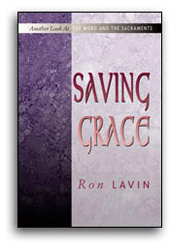
Saving Grace
Another Look At The Word And The Sacraments
Listen to me, you islands;
hear this, you distant nations:
Before I was born the LORD called me;
from my birth he has made mention of my name.
He made my mouth like a sharpened sword,
in the shadow of his hand he hid me;
he made me into a polished arrow
and concealed me in his quiver.
He said to me, "You are my servant,
Israel, in whom I will display my splendor."
But I said, "I have labored to no purpose;
I have spent my strength in vain and for nothing.

Yet what is due me is in the LORD's hand,
and my reward is with my God."
And now the LORD says --
he who formed me in the womb to be his servant
to bring Jacob back to him
and gather Israel to himself,
for I am honored in the eyes of the LORD
and my God has been my strength --
he says:
"It is too small a thing for you to be my servant
to restore the tribes of Jacob
and bring back those of Israel I have kept.
I will also make you a light for the Gentiles,
that you may bring my salvation to the ends of the earth."
-- Isaiah 49:1-6
These two texts provide an excellent example of how the word1 of God takes three forms in our lives. The first form is Jesus himself. In the first chapter of the Gospel of John we read, "The Word2 became flesh and made his dwelling among us" (John 1:14). In the Jeremiah and the Isaiah texts we have prophecy about Israel being restored, but these passages also point beyond their historical setting to the future Redeemer, Jesus Christ. The Gospel of John says, "In him was life, and that life was the light of men" (John 1:4). Jesus said, "I am the light of the world" (John 8:12).
Jesus is the Word through whom all things were made. This pre-existent Word became flesh and blood, son of Mary. At age thirty he left home and started his ministry as the light shining brightly and overcoming the darkness for all kinds of people -- Jews and Gentiles alike.
Saint Paul, the Apostle, writes:
He is the image of the invisible God, the firstborn over all creation. For by him all things were created: things in heaven and on earth, visible and invisible, whether thrones or powers or rulers or authorities; all things were created by him and for him. He is before all things, and in him all things hold together. -- Colossians 1:15-17
In other words, Jesus, the Word of God, enlightens the entire world (people of all colors and kinds) with his light. He is the instrument of creation, and all things find their fulfillment in him. He is the glue that holds all things together. As the Word made flesh, he invites people into a new way of life. "From the fullness of his grace we have all received one blessing after another" (John 1:16). Saving grace is at work in the person of Jesus. First and foremost, Jesus is the Word of God.
The second form of the word of God is Scriptures. For the early Christians what we call the Old Testament was that word. Later, the letters of Paul and others and the four Gospels came to be regarded as Scriptures as well.
When believers read Scriptures, individually or in groups, the word can become alive for them. In other words, Bible passages can lead people to the saving grace of God through faith in Jesus Christ.
If people come to believe that God has plans for their welfare, not their harm, and that they are given a future with hope by the grace of God, they will want others to know about this salvation. They will bring salvation "to the ends of the earth." In the early church, bringing this salvation through Christ to all people everywhere was called preaching. Preaching was not limited to an ordained preacher in a pulpit of a church building on Sunday mornings. All Christians saw themselves as God's witnesses.
The third form the word of God takes is preaching in this larger sense. Declaring and sharing the story of Jesus changes people's lives. Not all of God's people are flaming evangelists. Some are witnesses in everyday life in quieter ways. Some declare; others share more quietly as opportunity presents itself. Jeremiah and Isaiah were declarers, called to be lights for the world. Jesus and his apostles were declarers, called to be lights shining in the world. "Don't hide your light under a bushel basket," Jesus said. He obviously expected all of his followers to do something about the light he had given them. Called Pastors are given the commission to bring light to darkness. When they preach, they are called to declare the good news of salvation through Jesus Christ. In addition, all Christians are called to bring light to the darkness by sharing the Word of God with people as opportunity presents itself.
Grace Livingstone was listening to the pastor of Messiah Lutheran Church talk about these two Old Testament passages. She was at a women's Bible study with her new friend Sarah Williams. After the pastor offered a prayer, Sarah asked Grace how she had done during the study.
"I'm ashamed to say it, but I didn't get what he was saying at all. I don't even know what the Old Testament is. He seems like a nice enough fellow, but he really snowed me with terms like 'Gentile,' 'grace,' 'salvation,' and 'the Word made flesh.' I really feel out of place here. All of you know so much. I don't know anything. If the pastor had called on me, I would have died. I would have run out of the room crying. This Bible study was a real challenge for me. I'm so dumb about religious things."
Just then, one of the women in the Bible study came over to where Grace and Sarah were sitting in the back of the room. "I'd like to introduce myself. I'm Mary Anderson." Looking at Grace's name tag, Mary added, "I see your name is Grace. What a lovely name. Welcome. Can you stay for coffee or tea? I'd like to introduce you to our pastor."
"I'm sorry," Grace said barely above a whisper, "but I have to run along. Thanks for inviting me." Grace rushed out the door.
I don't want to meet the pastor, she thought. I'm feeling all closed in. What am I getting myself in for? I thought I might want to come back to church. Now I don't think so. My life is empty and I need something. I thought it might be God. Maybe not, if I have to learn about Jeremiah and Isaiah. I feel embarrassed. Ashamed. Ignorant. Sarah and her friend Mary are nice. Why should I feel this way?
Mary said to Sarah, "I like your new friend, but I think she's feeling overwhelmed and fearful. When I first came to church, I felt that way, too. Is there anything we can do to help her?"
"I'll phone her later and see if I can help," Sarah replied. "All of us have fears we have to overcome. Maybe she will share some of hers with me."
Questions For Personal Consideration
And/Or Group Discussion
1.
After reading about Grace and Sarah in the prologue and chapter one, how would you describe the kinds of people they are?
Grace
Sarah
______________________
________________________
______________________
________________________
______________________
________________________
2.
If you were Sarah, what would you say to Grace after her negative experience at that Bible study?
3.
If you were the pastor, how could you have presented the material in a more "user friendly" way for a person like Grace?
4.
If you were Grace, how would you feel about Mary's greeting and invitation?
Digging Deeper
1.
Since both Jeremiah 19:11 and Isaiah 49:1-6 were written for the Jews years ago, what are the pros and cons regarding applying them to Christians today?
2.
Name some kinds of people today who are outsiders like the Gentiles in the Bible.
3.
Isaiah 49:6 says that it is a small thing to be a servant and a greater thing to be a light to the Gentiles. In what ways is it a greater thing to be a light to the Gentiles?
4.
Is anyone today called "before they were born" (Isaiah 49:1)?
5.
What is the difference between a declarer and a sharer?
hear this, you distant nations:
Before I was born the LORD called me;
from my birth he has made mention of my name.
He made my mouth like a sharpened sword,
in the shadow of his hand he hid me;
he made me into a polished arrow
and concealed me in his quiver.
He said to me, "You are my servant,
Israel, in whom I will display my splendor."
But I said, "I have labored to no purpose;
I have spent my strength in vain and for nothing.
Yet what is due me is in the LORD's hand,
and my reward is with my God."
And now the LORD says --
he who formed me in the womb to be his servant
to bring Jacob back to him
and gather Israel to himself,
for I am honored in the eyes of the LORD
and my God has been my strength --
he says:
"It is too small a thing for you to be my servant
to restore the tribes of Jacob
and bring back those of Israel I have kept.
I will also make you a light for the Gentiles,
that you may bring my salvation to the ends of the earth."
-- Isaiah 49:1-6
These two texts provide an excellent example of how the word1 of God takes three forms in our lives. The first form is Jesus himself. In the first chapter of the Gospel of John we read, "The Word2 became flesh and made his dwelling among us" (John 1:14). In the Jeremiah and the Isaiah texts we have prophecy about Israel being restored, but these passages also point beyond their historical setting to the future Redeemer, Jesus Christ. The Gospel of John says, "In him was life, and that life was the light of men" (John 1:4). Jesus said, "I am the light of the world" (John 8:12).
Jesus is the Word through whom all things were made. This pre-existent Word became flesh and blood, son of Mary. At age thirty he left home and started his ministry as the light shining brightly and overcoming the darkness for all kinds of people -- Jews and Gentiles alike.
Saint Paul, the Apostle, writes:
He is the image of the invisible God, the firstborn over all creation. For by him all things were created: things in heaven and on earth, visible and invisible, whether thrones or powers or rulers or authorities; all things were created by him and for him. He is before all things, and in him all things hold together. -- Colossians 1:15-17
In other words, Jesus, the Word of God, enlightens the entire world (people of all colors and kinds) with his light. He is the instrument of creation, and all things find their fulfillment in him. He is the glue that holds all things together. As the Word made flesh, he invites people into a new way of life. "From the fullness of his grace we have all received one blessing after another" (John 1:16). Saving grace is at work in the person of Jesus. First and foremost, Jesus is the Word of God.
The second form of the word of God is Scriptures. For the early Christians what we call the Old Testament was that word. Later, the letters of Paul and others and the four Gospels came to be regarded as Scriptures as well.
When believers read Scriptures, individually or in groups, the word can become alive for them. In other words, Bible passages can lead people to the saving grace of God through faith in Jesus Christ.
If people come to believe that God has plans for their welfare, not their harm, and that they are given a future with hope by the grace of God, they will want others to know about this salvation. They will bring salvation "to the ends of the earth." In the early church, bringing this salvation through Christ to all people everywhere was called preaching. Preaching was not limited to an ordained preacher in a pulpit of a church building on Sunday mornings. All Christians saw themselves as God's witnesses.
The third form the word of God takes is preaching in this larger sense. Declaring and sharing the story of Jesus changes people's lives. Not all of God's people are flaming evangelists. Some are witnesses in everyday life in quieter ways. Some declare; others share more quietly as opportunity presents itself. Jeremiah and Isaiah were declarers, called to be lights for the world. Jesus and his apostles were declarers, called to be lights shining in the world. "Don't hide your light under a bushel basket," Jesus said. He obviously expected all of his followers to do something about the light he had given them. Called Pastors are given the commission to bring light to darkness. When they preach, they are called to declare the good news of salvation through Jesus Christ. In addition, all Christians are called to bring light to the darkness by sharing the Word of God with people as opportunity presents itself.
Grace Livingstone was listening to the pastor of Messiah Lutheran Church talk about these two Old Testament passages. She was at a women's Bible study with her new friend Sarah Williams. After the pastor offered a prayer, Sarah asked Grace how she had done during the study.
"I'm ashamed to say it, but I didn't get what he was saying at all. I don't even know what the Old Testament is. He seems like a nice enough fellow, but he really snowed me with terms like 'Gentile,' 'grace,' 'salvation,' and 'the Word made flesh.' I really feel out of place here. All of you know so much. I don't know anything. If the pastor had called on me, I would have died. I would have run out of the room crying. This Bible study was a real challenge for me. I'm so dumb about religious things."
Just then, one of the women in the Bible study came over to where Grace and Sarah were sitting in the back of the room. "I'd like to introduce myself. I'm Mary Anderson." Looking at Grace's name tag, Mary added, "I see your name is Grace. What a lovely name. Welcome. Can you stay for coffee or tea? I'd like to introduce you to our pastor."
"I'm sorry," Grace said barely above a whisper, "but I have to run along. Thanks for inviting me." Grace rushed out the door.
I don't want to meet the pastor, she thought. I'm feeling all closed in. What am I getting myself in for? I thought I might want to come back to church. Now I don't think so. My life is empty and I need something. I thought it might be God. Maybe not, if I have to learn about Jeremiah and Isaiah. I feel embarrassed. Ashamed. Ignorant. Sarah and her friend Mary are nice. Why should I feel this way?
Mary said to Sarah, "I like your new friend, but I think she's feeling overwhelmed and fearful. When I first came to church, I felt that way, too. Is there anything we can do to help her?"
"I'll phone her later and see if I can help," Sarah replied. "All of us have fears we have to overcome. Maybe she will share some of hers with me."
Questions For Personal Consideration
And/Or Group Discussion
1.
After reading about Grace and Sarah in the prologue and chapter one, how would you describe the kinds of people they are?
Grace
Sarah
______________________
________________________
______________________
________________________
______________________
________________________
2.
If you were Sarah, what would you say to Grace after her negative experience at that Bible study?
3.
If you were the pastor, how could you have presented the material in a more "user friendly" way for a person like Grace?
4.
If you were Grace, how would you feel about Mary's greeting and invitation?
Digging Deeper
1.
Since both Jeremiah 19:11 and Isaiah 49:1-6 were written for the Jews years ago, what are the pros and cons regarding applying them to Christians today?
2.
Name some kinds of people today who are outsiders like the Gentiles in the Bible.
3.
Isaiah 49:6 says that it is a small thing to be a servant and a greater thing to be a light to the Gentiles. In what ways is it a greater thing to be a light to the Gentiles?
4.
Is anyone today called "before they were born" (Isaiah 49:1)?
5.
What is the difference between a declarer and a sharer?