Proper 27
Preaching
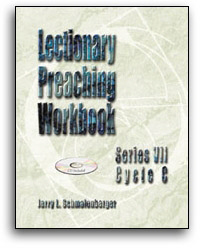
Lectionary Preaching Workbook
Series VII Cycle C
Seasonal Theme
Jesus' acts of compassion and teaching ministry.
Theme For The Day
We need not fear our death, as God has worked it all out for us to be secure in his eternal heaven.
Old Testament Lesson
Haggai 1:15b--2:9
The Future Glory Of The Temple
Haggai was a prophet who pressed the people to rebuild the Temple in Jerusalem. He preached the results of disobedience and the blessings of obedience. If the people give their loyalty to God and God's Temple, blessings will be the result.

There were a few who knew Solomon's Temple before it was destroyed. Haggai at nearly eighty years of age could remember its splendor and wanted it rebuilt again even more glorious (v. 9). The people are reminded of the covenant with Israel in verse 5 when they came out of Egypt.
In verse 9 the word prosperity can also be translated "peace," so we need not limit it to great wealth. The shaking in verses 6 and 7 is used other places to describe God's judgment in political turmoil. See Judges 5:4-5, Nahum 1:2-5, and Hebrews 12:25-29.
Verse 5b seems to me to be central in this passage for preaching: God is with us, so we need not be afraid. May it still be so!
New Testament Lesson
2 Thessalonians 2:1-5, 13-17
The Overcoming Of Evil
In the first part of this very difficult passage we have Paul writing his belief that there would be a final battle in which that power which is opposed to God would be destroyed. All this would take place after a growing rebellion against God. Even though this seems difficult to interpret to our people now, there are some things we are taught.
1. There is an organized power which opposes God in this world.
2. Still, somehow God is in control.
3. God will ultimately win out.
We have in verses 13-17 then a kind of summary of our life in Christ. We are chosen by God; our call brings with it a task; God and godly people help us with our responsibilities as one of the called; and we are thus set apart for God here and saved for eternity. What we may have to suffer here is small potatoes compared with eternity planned for us.
Verse 17 seems to conclude this passage with a benediction you might use this Sunday in place of your customary one.
The Gospel
Luke 20:27-38
About The Resurrection
The Pharisees believed in the resurrection and the Sadducees did not. The Pharisees believed in fate and the Sadducees in free-will. So the question was supposed to make resurrection of the body look silly. Jesus' answer will serve us well in many realms of our beliefs about God. We cannot think of eternity in the terms of this age and earth. Jesus took his answer a step further and pointed out that God was the God of Abraham, Isaac, and Jacob (Exodus 3:1-6). God would not be a God of the dead. Jesus uses here an argument all could understand in language which all could comprehend as well.
Luke's source here is Mark 12:18-27. This account comes from what was called "levirate marriage" which is described in Deuteronomy 25:5-10 and was meant to keep the family alive by having sons. If a man died without having any sons, his wife was expected to marry her husband's brother. Any sons produced by that marriage were considered to be sons of the first husband.
Preaching Possibilities
A. We could use all three readings to address what we Christians believe about "last things."
1. Jesus teaches in the Gospel for today that eternity will not be like it is here on earth.
2. Paul teaches in the Second Reading that evil must be defeated and God will ultimately win out.
3. Haggai tells us that whatever comes, we ought not be afraid because God is with us.
B. If you want to deal with the devil and the presence of evil in our world this Sunday, you can do it using the Second Reading. See the three truths listed in the comments on the scripture and also the Possible Metaphors And Stories.
C. The Old Testament is a lovely story of an old man who still remembers the glory of Solomon's Temple and is urging the people to rebuild. We could talk about the importance of God's house in our community as a place of remembering all God has done for us, a place where we are the body of the alive Christ in the world, and a place of Good News and God's presence through God's sacraments.
Possible Outline Of Sermon Moves
Let's deal with eschatology today without using the word or words so few know!
A. Begin by stating your first ideas about what happens to us when we die.
B. Move to the question asked by the Sadducees of Jesus.
C. Explain why they asked such a question and the idea of levirate marriage in the Jewish law of that day.
D. Move to what we Christians believe about eternal life:
1. Jesus has prepared a place for us there.
2. It is a very different existence than on earth.
3. We have a resurrection of our spiritual bodies like Jesus had a resurrection as the first example.
4. We gain eternal life with God only by God's grace through our Holy Spirit-aided faith.
E. Move to what we ought do about this:
1. Plan our funeral as a witness to what we believe.
2. Do stewardship estate planning now for after we have died.
3. Relax and not worry about our eternity. Jesus paid our admission fee on the cross and has promised to escort us there so we are ready anytime it comes.
F. Frame by returning to how your early idea of heaven and eternity has changed.
Prayer For The Day
Be with us, O God, when we die and take us to the place you have prepared for your disciples. Give us the confidence of your love that we need not fear our death or grieve the death of our baptized loved ones. And help us always to celebrate the presence of your spirit with us to overcome the power of evil which is always after us. In Jesus Christ's name. Amen.
Possible Metaphors And Stories
I preached in Wozi, Liberia, one night through an interpreter into the Loma language. Wozi is in the center of animism. They had laid a vine around the entire village to keep me out. During my preaching the "Lion" came to town to try to scare my young listeners away from hearing the gospel. They also played drums and danced outside the building to drown out the gospel proclamation. But through all the fear and superstition we were heard, and the Holy Spirit moved some to believe. What noise competes with the gospel where you live and worship?
At the airport, there was a limo driver holding up a sign: "Katz." Others recognized family members right away. They hugged and kissed and some even brought flowers to welcome them home. When we come home to God, we will be known. And the family of God will recognize us and welcome us there.
Tom Skinner at an Evangelical Outreach conference told us: "God's intention is that the church shall establish itself in an alien territory so people can see what heaven is like. We pray it in the Lord's Prayer. It's like when the English came to Africa and Africans could see what living in England is like." So each day let us live that others might glimpse into a vision of heaven.
I watched them say good-bye for the last time. They were two old evangelists way up in the bush in Liberia, Africa, where I had transported Old Man Mopolu to see Mama "Gannah" (Amanda Gardner). She wagged her finger in his face and said, "Now, ol' man, don't you give up on this God business. And when we get to heaven all the people goin' to be there to greet us and give us a big hand clap." Might the same be said of all of us.
Jesus' acts of compassion and teaching ministry.
Theme For The Day
We need not fear our death, as God has worked it all out for us to be secure in his eternal heaven.
Old Testament Lesson
Haggai 1:15b--2:9
The Future Glory Of The Temple
Haggai was a prophet who pressed the people to rebuild the Temple in Jerusalem. He preached the results of disobedience and the blessings of obedience. If the people give their loyalty to God and God's Temple, blessings will be the result.
There were a few who knew Solomon's Temple before it was destroyed. Haggai at nearly eighty years of age could remember its splendor and wanted it rebuilt again even more glorious (v. 9). The people are reminded of the covenant with Israel in verse 5 when they came out of Egypt.
In verse 9 the word prosperity can also be translated "peace," so we need not limit it to great wealth. The shaking in verses 6 and 7 is used other places to describe God's judgment in political turmoil. See Judges 5:4-5, Nahum 1:2-5, and Hebrews 12:25-29.
Verse 5b seems to me to be central in this passage for preaching: God is with us, so we need not be afraid. May it still be so!
New Testament Lesson
2 Thessalonians 2:1-5, 13-17
The Overcoming Of Evil
In the first part of this very difficult passage we have Paul writing his belief that there would be a final battle in which that power which is opposed to God would be destroyed. All this would take place after a growing rebellion against God. Even though this seems difficult to interpret to our people now, there are some things we are taught.
1. There is an organized power which opposes God in this world.
2. Still, somehow God is in control.
3. God will ultimately win out.
We have in verses 13-17 then a kind of summary of our life in Christ. We are chosen by God; our call brings with it a task; God and godly people help us with our responsibilities as one of the called; and we are thus set apart for God here and saved for eternity. What we may have to suffer here is small potatoes compared with eternity planned for us.
Verse 17 seems to conclude this passage with a benediction you might use this Sunday in place of your customary one.
The Gospel
Luke 20:27-38
About The Resurrection
The Pharisees believed in the resurrection and the Sadducees did not. The Pharisees believed in fate and the Sadducees in free-will. So the question was supposed to make resurrection of the body look silly. Jesus' answer will serve us well in many realms of our beliefs about God. We cannot think of eternity in the terms of this age and earth. Jesus took his answer a step further and pointed out that God was the God of Abraham, Isaac, and Jacob (Exodus 3:1-6). God would not be a God of the dead. Jesus uses here an argument all could understand in language which all could comprehend as well.
Luke's source here is Mark 12:18-27. This account comes from what was called "levirate marriage" which is described in Deuteronomy 25:5-10 and was meant to keep the family alive by having sons. If a man died without having any sons, his wife was expected to marry her husband's brother. Any sons produced by that marriage were considered to be sons of the first husband.
Preaching Possibilities
A. We could use all three readings to address what we Christians believe about "last things."
1. Jesus teaches in the Gospel for today that eternity will not be like it is here on earth.
2. Paul teaches in the Second Reading that evil must be defeated and God will ultimately win out.
3. Haggai tells us that whatever comes, we ought not be afraid because God is with us.
B. If you want to deal with the devil and the presence of evil in our world this Sunday, you can do it using the Second Reading. See the three truths listed in the comments on the scripture and also the Possible Metaphors And Stories.
C. The Old Testament is a lovely story of an old man who still remembers the glory of Solomon's Temple and is urging the people to rebuild. We could talk about the importance of God's house in our community as a place of remembering all God has done for us, a place where we are the body of the alive Christ in the world, and a place of Good News and God's presence through God's sacraments.
Possible Outline Of Sermon Moves
Let's deal with eschatology today without using the word or words so few know!
A. Begin by stating your first ideas about what happens to us when we die.
B. Move to the question asked by the Sadducees of Jesus.
C. Explain why they asked such a question and the idea of levirate marriage in the Jewish law of that day.
D. Move to what we Christians believe about eternal life:
1. Jesus has prepared a place for us there.
2. It is a very different existence than on earth.
3. We have a resurrection of our spiritual bodies like Jesus had a resurrection as the first example.
4. We gain eternal life with God only by God's grace through our Holy Spirit-aided faith.
E. Move to what we ought do about this:
1. Plan our funeral as a witness to what we believe.
2. Do stewardship estate planning now for after we have died.
3. Relax and not worry about our eternity. Jesus paid our admission fee on the cross and has promised to escort us there so we are ready anytime it comes.
F. Frame by returning to how your early idea of heaven and eternity has changed.
Prayer For The Day
Be with us, O God, when we die and take us to the place you have prepared for your disciples. Give us the confidence of your love that we need not fear our death or grieve the death of our baptized loved ones. And help us always to celebrate the presence of your spirit with us to overcome the power of evil which is always after us. In Jesus Christ's name. Amen.
Possible Metaphors And Stories
I preached in Wozi, Liberia, one night through an interpreter into the Loma language. Wozi is in the center of animism. They had laid a vine around the entire village to keep me out. During my preaching the "Lion" came to town to try to scare my young listeners away from hearing the gospel. They also played drums and danced outside the building to drown out the gospel proclamation. But through all the fear and superstition we were heard, and the Holy Spirit moved some to believe. What noise competes with the gospel where you live and worship?
At the airport, there was a limo driver holding up a sign: "Katz." Others recognized family members right away. They hugged and kissed and some even brought flowers to welcome them home. When we come home to God, we will be known. And the family of God will recognize us and welcome us there.
Tom Skinner at an Evangelical Outreach conference told us: "God's intention is that the church shall establish itself in an alien territory so people can see what heaven is like. We pray it in the Lord's Prayer. It's like when the English came to Africa and Africans could see what living in England is like." So each day let us live that others might glimpse into a vision of heaven.
I watched them say good-bye for the last time. They were two old evangelists way up in the bush in Liberia, Africa, where I had transported Old Man Mopolu to see Mama "Gannah" (Amanda Gardner). She wagged her finger in his face and said, "Now, ol' man, don't you give up on this God business. And when we get to heaven all the people goin' to be there to greet us and give us a big hand clap." Might the same be said of all of us.