
Proper 28 (C, E)
Preaching
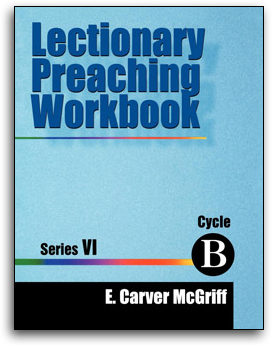
Lectionary Preaching Workbook
Series VI, Cycle B
COMMENTARY ON THE LESSONS
Lesson 1: 1 Samuel 1:4-20 (C)
This is a strangely beautiful story. A kind and loving husband, a dutiful, sacrificial wife, deep personal faith, and the blessing of God in answered prayer. ThatÍs a lovely scenario. We must remember, however, that the scientific approach to biblical study is of comparative recent vintage. At the time of this writing, most stories such as this are folk tales designed to explain higher truths. We could get involved in questions like the merit of HannahÍs request, inasmuch as many women are childless. We could question the implied bribery, asking God for a child and then promising to dedicate the child to GodÍs service. Besides, in that culture, a mother would not have the authority to do that, not with a male child. But this is to miss the point. LetÍs set aside concerns about the literal accuracy of this story, and letÍs not get too involved in theological niceties, like does God really answer prayers like this. Suffice it that whoever wrote this believed that God did „ or does. If we are to preach on this passage (and I probably wouldnÍt unless the occasion specifically required it), I would take the story at face value as a reflection of the thinking of the time and view Hannah as an unhappy woman suffering feelings of failure and rejection. In that ancient culture, for a woman to fail to have children, especially male children, was an unforgivable failure. It awakened the suspicion that if God really liked her, she would get pregnant.
I would also view Elkanah as a good guy, sensitive to his wifeÍs sadness. Again, in that culture, a man could divorce his wife for failure to bear children. Yet Elkanah not only kept Hannah as his wife, he was generous with her in an effort to comfort her. She, in turn, sought to bear a child for many reasons. We must assume that had this story been a real live report, the woman would have experienced many mixed motives. She would have appreciated her husbandÍs fidelity and wanted to please him. She would have envied other women and desperately wanted to earn their acceptance. She would have wished for a child to love. And she would have subscribed to a religious belief which thought God could be „ shall we say bribed? „ into granting her request. Mixed motives if I ever heard them.
Lesson 1: Daniel 12:1-3 (RC); Daniel 12:1-4a (5-13) (E)
Lesson 2: Hebrews 10:11-14 (15-18) 19-25 (C); Hebrews 10:11-14, 18 (RC)
The writer continues to use the comparison of JesusÍ sacrifice to that of the priest in the synagogue. While that analogy worked much better for the people of the time than for us, we can certainly understand what was being said. It only needed to happen once. Nothing will or need ever happen again; there is no follow-up plan. JesusÍ suffering and death have once and for all accomplished GodÍs purpose of eradicating sin, of purifying you and me of our sin. Of course, since IÍm a very long way from having been purified from sin, and yet I wholeheartedly accept Jesus Christ as my savior, I have to think thereÍs a lot more to be said than that.
Let me use one faltering analogy. LetÍs say your family have always valued their reputation for integrity and public service. Your grandfather was a man of unimpeachable reputation, your mother was widely known for her good spirit and her good works, your father was a humble, kindly man who was generous to everyone. Then you came along. At about five years old, you broke the neighborÍs window. When you were seven, you went out on Halloween and dumped over my familyÍs garbage can. In other words, you were a typical kid. So your dad took you in and gave you a little lecture. It went like this: ñYour whole family, son/daughter, have worked for generations to be good people. We have never lied or cheated, or hurt anyone. We trust you to be a worthy part of our family....'' See where IÍm going? YouÍre still a little brat just like your folks probably were at that age, and so was Grandpa. Now youÍre on the way to becoming a steadfast and admirable adult. But thereÍs a growth process, a process of learning and experiencing by mistakes, before youÍll be there. But the blood runs through your veins, and youÍll one day be just like those wonderful family members who have gone ahead. So with you and me as Christians. I do things Jesus would never, ever do. But heÍs my model. HeÍs the one I am destined to be like if I possibly can. I must grow. I must learn by my mistakes. I will experience guilt, and remorse, and embarrassment. I will have a struggle getting there. But because Jesus has already arrived, and I am one with him, I shall also. As Paul said, ñIt does not appear what we shall be, but we shall be like him.''
Lesson 2: Hebrews 10:31-39 (E)
Gospel: Mark 13:1-8 (C); Mark 13:14-23 (E)
Mark was writing after some of these things had happened, and we canÍt know for sure whether Jesus literally foresaw them or was basing his predictions on his knowledge of human nature. No matter. His point was that between now (then) and the fulfillment of the Kingdom, many battles of various sorts remain to be fought. In 70 A.D. Jerusalem was sacked, the temple destroyed. The people to whom Jesus spoke would have found this hard to believe, but it happened. This entire chapter is somewhat troublesome to our Gentile thinking, not to mention our contemporary view of things. However, for me, it reminds us that between my present moment and the culmination of the promise of my faith and the fulfillment of my life there will be devastating events. For me, many of those have already taken place. It may be that in preaching on this passage, we would do well to couple it with Romans 8:28, ñWe know that in everything, God works for good with those who love him, who are called according to his purpose.''
Gospel: Mark 13:24-32 (RC)
(See Advent 1)
SERMON SUGGESTIONS
Title: ñMixed Motives''
Text: 1 Samuel 1:4-20
Theme: We all have mixed motives. I used to introduce a discussion in one of our Bible groups by asking the members to discuss this question: ñWhy would you take a bowl of chicken soup over to your single-lady neighbor when sheÍs sick?'' Our first answer was, ñBecause she is in need and I want to do the Christian thing.'' However, after much discussion and some honest soul searching, we also came up with some other reasons: (1) It makes me feel good. (2) IÍll look good to the neighbors. (3) The sick lady will be grateful. (4) My mother would be happy with me if she knew. (5) God will be happy with me. There were some others, but my point is that while we performed our generous action for a laudable reason, some other motivations rumbled around inside us as well. Sooner or later, someone would ask the question: ñDoes this mean weÍre hypocrites, and that we therefore shouldnÍt take the chicken soup?'' Of course the answer to that was, ñTake the soup. The good will be done regardless of the mixed motives.''
1. We are all, as one of my friends recently stated the matter, ambiguous people. Self-centeredness is inescapably part of the human situation.
2. A true Christian is someone who struggles with lifeÍs ambiguity, doing what he or she knows to be right in spite of conflicting motivations.
3. God understands. A poet once wrote:
ÍTwas a thief said the last kind word to Christ.
Christ took the kindness and forgave the theft.
God accepts our best efforts and forgives the selfishness.
Title: ñHope For Tomorrow''
Text: Hebrews 10:11-14
Theme: When Christ is allowed into a personÍs life, that person undergoes a change. One theologian used the analogy of the famous tank battle in Africa during World War II, which the Allies won, thereby turning the tide in the Africa campaign. He said that prior to that battle, it appeared the Axis powers would win the war. From that victory onward, the tide was turned. There were still battles to be won, losses to be incurred. The war was not over by any means. But the outcome was no longer in doubt, and the Allies would win. So with us. Until some external power enters in, a person is in sore danger of destruction. When Christ enters in, though there are still battles to be won, the outcome is no longer in doubt.
1. Christ made it possible for us to be the sons and daughters of God, by adoption. His power for salvation now has begun its work within us.
2. It all takes time. Christians are still capable of hurtful, self-centered conduct. Maybe you remember Gordon GilkeyÍs report of the American prisoners in the civilian concentration camp in China during World War II. Along with many British civilians, these people lived in a camp overseen by the Japanese. They were always on the edge of serious hunger. A Red Cross shipment arrived from America with a parcel for each prisoner. Some of the American prisoners, many of them so-called Christians, argued that since the shipment came from America, only Americans should receive the parcels.
3. ñSalvation'' doesnÍt happen all at once. It is a growth process, growing by fits and starts. Through mistakes, self-discovery, inner honesty, and guilt feelings, we slowly become what we were called to be.
Title: ñBeyond Tragedy''
Text: Mark 13:1-8
Theme: One day I spent more than an hour with a lovely couple whom I have known for years. They finally, after many years of medical tests and prayer, had a baby. He was born last April and appears to be a wonderful little bundle of energy. But he is not healthy. He has a brain defect which will prevent him from normal development. His parents are devastated. I left two fine people in tears as they contemplate the shattering of all their hopes and dreams. What could I tell them? That God has promised that all things will work for good, that he can bless any disaster. But they must wait a while to discover that this is true. For now, they must surround their dear child with love and give their suffering as a gift to him and to God.
Can we believe this? It is the gospel promise. But as bad things happen to good people, our faith is and will be tested. But God is faithful. Nothing will be lost. Meanwhile, Paul assured us that ñsuffering produces endurance, and endurance produces character, and character produces hope, and hope does not disappoint us....'' Out of the ashes of life, then, by the power of the living God, we who suffer can once again stand tall, better men and women by far than we might ever have otherwise been.
1. Suffering is an inescapable part of life.
2. Suffering can break us if weÍre bitter and resentful.
3. Suffering can ennoble us, make us great.
4. God will always share with us in our pain.
5. Midnight will always be followed by the dawn „ because of GodÍs power and love.
ADDITIONAL ILLUSTRATIONS
ñAnd in my dream I stood with an angel on one of the balconies of heaven. And the angel allowed me to lean over and listen. But I could not bear to hear. Sounds of pain came up to me; the cries of widows. children in agony, strong men wounded and mutilated, the burden of the bereaved, the lonely, the bewildered, the frightened. Men crushed women beneath their feet, and starved little children, and hunted their brothers into poverty and unemployment and disease. Even women hurt one another with cruel deeds and malicious words. There were pains of body and mind and soul, which no one on earth could understand and no one could cure. The world seemed full of sorrow and pain, and the sound of it all came up to heaven until my soul was sick.
ñ ïHow can God bear it?Í I cried. I felt angry and frightened and in despair. ïHow can he dwell here in serenity when the sound of manÍs anguish, in unbroken crying, lifts itself to heaven? What means this endless moan of pain?Í
ñIn my dream, the angel turned to me a face which I cannot describe. There was pain in it such as I had never seen before. Yet there was joy too outshining it. There were tears in his eyes. Yet through the tears a triumph shone. And he spoke to me. When he spoke, I knew that there was not a pang of pain on earth that was not shared in heaven. More, I knew that what men suffered on earth was only a faint reflection of the anguish God ... endured on manÍs behalf in heaven. Somehow, it came to me that through all its pain, which he more than shared, God with man was working out the worldÍs redemption, and that there was no other way; that, in a sense, the endless moan of manÍs pain was the song of a world being redeemed, a sad song as yet, but still music, working toward some worthy and wondrous climax beyond all human capability of thought.
ñThe angel spoke to me again. But when, at the sound of his voice, I lifted my face, I could not bear to see the anguish in his eyes. Nor could I understand his words. Yet a great peace enfolded me; a vast, calm silence wrapped round me. I slept.
ñWhen I awakened, the sun was shining through my windows. And GodÍs peace was with me still.''
„ Leslie Weatherhead, in Why Do Men Suffer?
____________
James Stewart quoted E. Stanley JonesÍ report of a man who, happily married, was often away from home. One day he was tempted to have an affair. Afterwards, the man was ashamed, mortified at his offense. When he returned home, he realized he could not live with the shame and guilt. He confessed to his wife what he had done. Stewart wrote this: ñAs the meaning of his words dawned on her, she turned pale as death, staggered against the wall and leaned there with tears on her face, as though she had been struck by a whip. ïIn that moment,Í the husband said, ïI saw the meaning of the cross, saw love crucified by sin.Í And when it was over, and she loved him still and would not leave him but would help him back to a new life, it was conversion „ salvation. As Karl Barth has put it: ïSin scorches us when it comes under the light of forgiveness, not before. Sin scorches us then.Í ''
____________
ñModern man does not regard life as tragic. He thinks that History is the record of the progressive triumph of good over evil. He does not recognize the simple but profound truth that manÍs life remains self-contradictory in its sin, no matter how high human culture rises; that the highest expression of human spirituality, therefore, contains also the subtlest form of human sin.''
„ Reinhold Niebuhr
____________
O Lord, O Lord, I now am free
because my savior died for me.
My sins, so many, break my heart,
When I review them from the start.
____________
Psalm Of The Day
Psalm 16 (C, E) „ ñProtect me, O God....''
Psalm 15 (RC) „ ñO Lord, who may abide in your tent?''
Prayer Of The Day
Is there forgiveness for such as us, O Lord? The subtle nature of our wrongs, the self-righteous judgments, the kindnesses performed for less than worthy reasons, the smiling face behind which was disapproval and superiority „ is there forgiveness for such as us? Forgive us if you can, O Lord. In ChristÍs name we pray. Amen.
Lesson 1: 1 Samuel 1:4-20 (C)
This is a strangely beautiful story. A kind and loving husband, a dutiful, sacrificial wife, deep personal faith, and the blessing of God in answered prayer. ThatÍs a lovely scenario. We must remember, however, that the scientific approach to biblical study is of comparative recent vintage. At the time of this writing, most stories such as this are folk tales designed to explain higher truths. We could get involved in questions like the merit of HannahÍs request, inasmuch as many women are childless. We could question the implied bribery, asking God for a child and then promising to dedicate the child to GodÍs service. Besides, in that culture, a mother would not have the authority to do that, not with a male child. But this is to miss the point. LetÍs set aside concerns about the literal accuracy of this story, and letÍs not get too involved in theological niceties, like does God really answer prayers like this. Suffice it that whoever wrote this believed that God did „ or does. If we are to preach on this passage (and I probably wouldnÍt unless the occasion specifically required it), I would take the story at face value as a reflection of the thinking of the time and view Hannah as an unhappy woman suffering feelings of failure and rejection. In that ancient culture, for a woman to fail to have children, especially male children, was an unforgivable failure. It awakened the suspicion that if God really liked her, she would get pregnant.
I would also view Elkanah as a good guy, sensitive to his wifeÍs sadness. Again, in that culture, a man could divorce his wife for failure to bear children. Yet Elkanah not only kept Hannah as his wife, he was generous with her in an effort to comfort her. She, in turn, sought to bear a child for many reasons. We must assume that had this story been a real live report, the woman would have experienced many mixed motives. She would have appreciated her husbandÍs fidelity and wanted to please him. She would have envied other women and desperately wanted to earn their acceptance. She would have wished for a child to love. And she would have subscribed to a religious belief which thought God could be „ shall we say bribed? „ into granting her request. Mixed motives if I ever heard them.
Lesson 1: Daniel 12:1-3 (RC); Daniel 12:1-4a (5-13) (E)
Lesson 2: Hebrews 10:11-14 (15-18) 19-25 (C); Hebrews 10:11-14, 18 (RC)
The writer continues to use the comparison of JesusÍ sacrifice to that of the priest in the synagogue. While that analogy worked much better for the people of the time than for us, we can certainly understand what was being said. It only needed to happen once. Nothing will or need ever happen again; there is no follow-up plan. JesusÍ suffering and death have once and for all accomplished GodÍs purpose of eradicating sin, of purifying you and me of our sin. Of course, since IÍm a very long way from having been purified from sin, and yet I wholeheartedly accept Jesus Christ as my savior, I have to think thereÍs a lot more to be said than that.
Let me use one faltering analogy. LetÍs say your family have always valued their reputation for integrity and public service. Your grandfather was a man of unimpeachable reputation, your mother was widely known for her good spirit and her good works, your father was a humble, kindly man who was generous to everyone. Then you came along. At about five years old, you broke the neighborÍs window. When you were seven, you went out on Halloween and dumped over my familyÍs garbage can. In other words, you were a typical kid. So your dad took you in and gave you a little lecture. It went like this: ñYour whole family, son/daughter, have worked for generations to be good people. We have never lied or cheated, or hurt anyone. We trust you to be a worthy part of our family....'' See where IÍm going? YouÍre still a little brat just like your folks probably were at that age, and so was Grandpa. Now youÍre on the way to becoming a steadfast and admirable adult. But thereÍs a growth process, a process of learning and experiencing by mistakes, before youÍll be there. But the blood runs through your veins, and youÍll one day be just like those wonderful family members who have gone ahead. So with you and me as Christians. I do things Jesus would never, ever do. But heÍs my model. HeÍs the one I am destined to be like if I possibly can. I must grow. I must learn by my mistakes. I will experience guilt, and remorse, and embarrassment. I will have a struggle getting there. But because Jesus has already arrived, and I am one with him, I shall also. As Paul said, ñIt does not appear what we shall be, but we shall be like him.''
Lesson 2: Hebrews 10:31-39 (E)
Gospel: Mark 13:1-8 (C); Mark 13:14-23 (E)
Mark was writing after some of these things had happened, and we canÍt know for sure whether Jesus literally foresaw them or was basing his predictions on his knowledge of human nature. No matter. His point was that between now (then) and the fulfillment of the Kingdom, many battles of various sorts remain to be fought. In 70 A.D. Jerusalem was sacked, the temple destroyed. The people to whom Jesus spoke would have found this hard to believe, but it happened. This entire chapter is somewhat troublesome to our Gentile thinking, not to mention our contemporary view of things. However, for me, it reminds us that between my present moment and the culmination of the promise of my faith and the fulfillment of my life there will be devastating events. For me, many of those have already taken place. It may be that in preaching on this passage, we would do well to couple it with Romans 8:28, ñWe know that in everything, God works for good with those who love him, who are called according to his purpose.''
Gospel: Mark 13:24-32 (RC)
(See Advent 1)
SERMON SUGGESTIONS
Title: ñMixed Motives''
Text: 1 Samuel 1:4-20
Theme: We all have mixed motives. I used to introduce a discussion in one of our Bible groups by asking the members to discuss this question: ñWhy would you take a bowl of chicken soup over to your single-lady neighbor when sheÍs sick?'' Our first answer was, ñBecause she is in need and I want to do the Christian thing.'' However, after much discussion and some honest soul searching, we also came up with some other reasons: (1) It makes me feel good. (2) IÍll look good to the neighbors. (3) The sick lady will be grateful. (4) My mother would be happy with me if she knew. (5) God will be happy with me. There were some others, but my point is that while we performed our generous action for a laudable reason, some other motivations rumbled around inside us as well. Sooner or later, someone would ask the question: ñDoes this mean weÍre hypocrites, and that we therefore shouldnÍt take the chicken soup?'' Of course the answer to that was, ñTake the soup. The good will be done regardless of the mixed motives.''
1. We are all, as one of my friends recently stated the matter, ambiguous people. Self-centeredness is inescapably part of the human situation.
2. A true Christian is someone who struggles with lifeÍs ambiguity, doing what he or she knows to be right in spite of conflicting motivations.
3. God understands. A poet once wrote:
ÍTwas a thief said the last kind word to Christ.
Christ took the kindness and forgave the theft.
God accepts our best efforts and forgives the selfishness.
Title: ñHope For Tomorrow''
Text: Hebrews 10:11-14
Theme: When Christ is allowed into a personÍs life, that person undergoes a change. One theologian used the analogy of the famous tank battle in Africa during World War II, which the Allies won, thereby turning the tide in the Africa campaign. He said that prior to that battle, it appeared the Axis powers would win the war. From that victory onward, the tide was turned. There were still battles to be won, losses to be incurred. The war was not over by any means. But the outcome was no longer in doubt, and the Allies would win. So with us. Until some external power enters in, a person is in sore danger of destruction. When Christ enters in, though there are still battles to be won, the outcome is no longer in doubt.
1. Christ made it possible for us to be the sons and daughters of God, by adoption. His power for salvation now has begun its work within us.
2. It all takes time. Christians are still capable of hurtful, self-centered conduct. Maybe you remember Gordon GilkeyÍs report of the American prisoners in the civilian concentration camp in China during World War II. Along with many British civilians, these people lived in a camp overseen by the Japanese. They were always on the edge of serious hunger. A Red Cross shipment arrived from America with a parcel for each prisoner. Some of the American prisoners, many of them so-called Christians, argued that since the shipment came from America, only Americans should receive the parcels.
3. ñSalvation'' doesnÍt happen all at once. It is a growth process, growing by fits and starts. Through mistakes, self-discovery, inner honesty, and guilt feelings, we slowly become what we were called to be.
Title: ñBeyond Tragedy''
Text: Mark 13:1-8
Theme: One day I spent more than an hour with a lovely couple whom I have known for years. They finally, after many years of medical tests and prayer, had a baby. He was born last April and appears to be a wonderful little bundle of energy. But he is not healthy. He has a brain defect which will prevent him from normal development. His parents are devastated. I left two fine people in tears as they contemplate the shattering of all their hopes and dreams. What could I tell them? That God has promised that all things will work for good, that he can bless any disaster. But they must wait a while to discover that this is true. For now, they must surround their dear child with love and give their suffering as a gift to him and to God.
Can we believe this? It is the gospel promise. But as bad things happen to good people, our faith is and will be tested. But God is faithful. Nothing will be lost. Meanwhile, Paul assured us that ñsuffering produces endurance, and endurance produces character, and character produces hope, and hope does not disappoint us....'' Out of the ashes of life, then, by the power of the living God, we who suffer can once again stand tall, better men and women by far than we might ever have otherwise been.
1. Suffering is an inescapable part of life.
2. Suffering can break us if weÍre bitter and resentful.
3. Suffering can ennoble us, make us great.
4. God will always share with us in our pain.
5. Midnight will always be followed by the dawn „ because of GodÍs power and love.
ADDITIONAL ILLUSTRATIONS
ñAnd in my dream I stood with an angel on one of the balconies of heaven. And the angel allowed me to lean over and listen. But I could not bear to hear. Sounds of pain came up to me; the cries of widows. children in agony, strong men wounded and mutilated, the burden of the bereaved, the lonely, the bewildered, the frightened. Men crushed women beneath their feet, and starved little children, and hunted their brothers into poverty and unemployment and disease. Even women hurt one another with cruel deeds and malicious words. There were pains of body and mind and soul, which no one on earth could understand and no one could cure. The world seemed full of sorrow and pain, and the sound of it all came up to heaven until my soul was sick.
ñ ïHow can God bear it?Í I cried. I felt angry and frightened and in despair. ïHow can he dwell here in serenity when the sound of manÍs anguish, in unbroken crying, lifts itself to heaven? What means this endless moan of pain?Í
ñIn my dream, the angel turned to me a face which I cannot describe. There was pain in it such as I had never seen before. Yet there was joy too outshining it. There were tears in his eyes. Yet through the tears a triumph shone. And he spoke to me. When he spoke, I knew that there was not a pang of pain on earth that was not shared in heaven. More, I knew that what men suffered on earth was only a faint reflection of the anguish God ... endured on manÍs behalf in heaven. Somehow, it came to me that through all its pain, which he more than shared, God with man was working out the worldÍs redemption, and that there was no other way; that, in a sense, the endless moan of manÍs pain was the song of a world being redeemed, a sad song as yet, but still music, working toward some worthy and wondrous climax beyond all human capability of thought.
ñThe angel spoke to me again. But when, at the sound of his voice, I lifted my face, I could not bear to see the anguish in his eyes. Nor could I understand his words. Yet a great peace enfolded me; a vast, calm silence wrapped round me. I slept.
ñWhen I awakened, the sun was shining through my windows. And GodÍs peace was with me still.''
„ Leslie Weatherhead, in Why Do Men Suffer?
____________
James Stewart quoted E. Stanley JonesÍ report of a man who, happily married, was often away from home. One day he was tempted to have an affair. Afterwards, the man was ashamed, mortified at his offense. When he returned home, he realized he could not live with the shame and guilt. He confessed to his wife what he had done. Stewart wrote this: ñAs the meaning of his words dawned on her, she turned pale as death, staggered against the wall and leaned there with tears on her face, as though she had been struck by a whip. ïIn that moment,Í the husband said, ïI saw the meaning of the cross, saw love crucified by sin.Í And when it was over, and she loved him still and would not leave him but would help him back to a new life, it was conversion „ salvation. As Karl Barth has put it: ïSin scorches us when it comes under the light of forgiveness, not before. Sin scorches us then.Í ''
____________
ñModern man does not regard life as tragic. He thinks that History is the record of the progressive triumph of good over evil. He does not recognize the simple but profound truth that manÍs life remains self-contradictory in its sin, no matter how high human culture rises; that the highest expression of human spirituality, therefore, contains also the subtlest form of human sin.''
„ Reinhold Niebuhr
____________
O Lord, O Lord, I now am free
because my savior died for me.
My sins, so many, break my heart,
When I review them from the start.
____________
Psalm Of The Day
Psalm 16 (C, E) „ ñProtect me, O God....''
Psalm 15 (RC) „ ñO Lord, who may abide in your tent?''
Prayer Of The Day
Is there forgiveness for such as us, O Lord? The subtle nature of our wrongs, the self-righteous judgments, the kindnesses performed for less than worthy reasons, the smiling face behind which was disapproval and superiority „ is there forgiveness for such as us? Forgive us if you can, O Lord. In ChristÍs name we pray. Amen.
