
Proper 4 / Pentecost 2 / Ordinary Time 9
Devotional
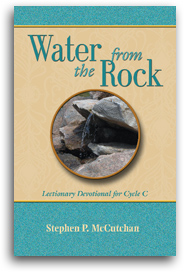
Water From the Rock
Lectionary Devotional for Cycle C
Object:
How long will you go limping with two different opinions? If the Lord is God, follow him; but if Baal, then follow him.
-- 1 Kings 18:21b
This story is so dramatic that it is easy to get caught up in the details that we escape hearing the critical issue. This was a clash of cultures that was depicted in a single contest between the prophets of Baal and the prophet Elijah. In the particular drama, Ahab's wife, Jezebel, had been politically adept at undermining the faith of Israel and replacing it with her own religion. The worship of Baal was very appealing to these essentially agricultural people because Baal was a fertility god. Prior to this event, Israel had experienced a drought, and people would be very vulnerable to the appeal of any help that was offered.
The story becomes our story when we recognize the tension between any philosophy of success challenging a faith that often calls for sacrifice. Undoubtedly the people of Israel had not really rejected the worship of Yahweh but simply blended elements of Baalism with the practice of their faith. Christians are always struggling with the blending of their faith with elements of nationalism, commercialism, and a variety of self-help philosophies. In many cases, we justify such approaches as harmless efforts to speak to the culture around us. Rarely is the choice put so bluntly as Elijah does in this story. Occasionally, however, we need a prophet to confront us with the many little compromises that we have made. There comes a moment in which we have to decide whom or what we really trust for our future. In the story, Elijah clearly has some fun with the contest as he taunts the prophets of Baal. "Cry aloud! Surely he is a god; either he is meditating, or he has wandered away, or he is on a journey, or perhaps he is asleep and must be awakened."
When it comes Elijah's turn, the clear sense of the story is that all possibility of trickery or even chance was removed. His offering and the wood for it is so thoroughly soaked in water that no one but God could consume it with fire. In contrast to the strenuous efforts of the priests of Baal, Elijah simply voiced his prayer to God that God would respond as a clear testimony to the truth of his prophet. For our contemporary society, the contest may best be engaged with humor rather than demonstrations of intense religious fervor. When we turn to God in trust, we do not need special techniques of prayer but only the simple trust that the God of our ancestors will continue to be faithful to us.
-- 1 Kings 18:21b
This story is so dramatic that it is easy to get caught up in the details that we escape hearing the critical issue. This was a clash of cultures that was depicted in a single contest between the prophets of Baal and the prophet Elijah. In the particular drama, Ahab's wife, Jezebel, had been politically adept at undermining the faith of Israel and replacing it with her own religion. The worship of Baal was very appealing to these essentially agricultural people because Baal was a fertility god. Prior to this event, Israel had experienced a drought, and people would be very vulnerable to the appeal of any help that was offered.
The story becomes our story when we recognize the tension between any philosophy of success challenging a faith that often calls for sacrifice. Undoubtedly the people of Israel had not really rejected the worship of Yahweh but simply blended elements of Baalism with the practice of their faith. Christians are always struggling with the blending of their faith with elements of nationalism, commercialism, and a variety of self-help philosophies. In many cases, we justify such approaches as harmless efforts to speak to the culture around us. Rarely is the choice put so bluntly as Elijah does in this story. Occasionally, however, we need a prophet to confront us with the many little compromises that we have made. There comes a moment in which we have to decide whom or what we really trust for our future. In the story, Elijah clearly has some fun with the contest as he taunts the prophets of Baal. "Cry aloud! Surely he is a god; either he is meditating, or he has wandered away, or he is on a journey, or perhaps he is asleep and must be awakened."
When it comes Elijah's turn, the clear sense of the story is that all possibility of trickery or even chance was removed. His offering and the wood for it is so thoroughly soaked in water that no one but God could consume it with fire. In contrast to the strenuous efforts of the priests of Baal, Elijah simply voiced his prayer to God that God would respond as a clear testimony to the truth of his prophet. For our contemporary society, the contest may best be engaged with humor rather than demonstrations of intense religious fervor. When we turn to God in trust, we do not need special techniques of prayer but only the simple trust that the God of our ancestors will continue to be faithful to us.
