
Sixteenth Sunday After Pentecost
Preaching
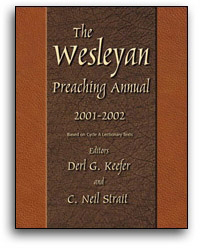
THE WESLEYAN PREACHING ANNUAL 2001--2002
WORSHIP HELPS
CALL TO WORSHIP
Leader: We will never regret running to God for life.
People: Help us entertain your promises today.
Leader: Your door swings open wide.
People: We enter Your fortress - You are our salvation.
All: Praise be to our God.
OFFERING THOUGHT
Give to the needy with sacrifice and see what God gives in return.
BENEDICTION
"Now unto Him that is able to do exceeding abundantly above all that we ask or think, according to the power that worketh in us, unto Him be glory in the church by Christ Jesus throughout all ages, world without end. Amen." (Ephesians 3:20--21)
SERMON BRIEFS
Do What You Want To Do
Romans 13:8--14
Can you imagine being told to do whatever you want to do? To a teenager that injunction would sound like some kind of utopia. No constraints. No rules. No external forces (such as parents or teachers) dictating your life to you. Why it sounds too good to be true.
To a person in authority that advice sounds like a prescription for disaster! You can't tell people that! Our whole society would crumble. There must be laws - enforceable laws - to keep people from doing what they want to do.
Let's alter that imperative. What if we said, "Love your fellow man and do what you want to do"? Wouldn't that make it better? Not really. Then it just comes off sounding like some old mantra from the '60s. The strains of the Beatles singing, "All you need is love" come to mind. There was a lot of talk about "loving" back then, but the behavior that accompanied that sentiment was self--destructive and destructive of our society. No, you need more guidance than "love your fellow man."
What if we said, "Love God and do what you want?" Then you end up sounding like some preacher who only wants to tickle the ears. It sounds like the fluffy theology of someone who is afraid to offend his hearers with the demands of the gospel. It sounds like a person whom only wants to water down the truth selling out.
Actually the person who said that wasn't a sellout. It was Augustine. Augustine? Yes. It was Augustine who said, "Love God and do what you will."
If the freedom in Augustine's thought is a little threatening to us, it simply means that we have a small view of what is conveyed by the words, "love God." Augustine believed, and so should we, that our love for God could be so great that His desires become our desires. His Spirit can so possess our being that we no longer fight the battle that Paul describes in Romans 7 when he says that he can't seem to get his desires and his actions in sync. Our desires and our actions can be so given to God that when we do what we want to do we are doing what God wants us to do.
Whenever someone says that love isn't enough to guide our actions, they are showing that they don't see love in the manner that Jesus spoke of it. He said, " 'Love the Lord our God with all your heart and with all your soul and with all our mind.' This is the first and greatest commandment. And the second is like it: 'Love your neighbor as yourself.' All the Law and the Prophets hang on these two commandments" (Matthew 22:37--40).
Paul reiterated that second commandment by saying, "The commandments, 'Do not commit adultery,' 'Do not murder,' 'Do not steal,' 'Do not covet,' and whatever other commandment there may be, are summed up in this one rule: 'Love your neighbor as yourself.' Love does no harm to its neighbor. Therefore love is the fulfillment of the law" (vv. 9--10). Paul is so emphatic about this that he makes some incredibly bold statements telling us that we have no need of law when this kind of love is present. He told the Galatians that "we are no longer under the supervision of the law" (Galatians 3:25).
If he is saying that all you need to do is love your fellow man, then how is the Apostle Paul any different from Paul McCartney? Almost everyone in our culture would agree that love should be our highest ideal.
The difference, of course, is in the nature of love. This love that Jesus and Paul proclaimed is a love that is so total (heart, soul and mind) that one is willing to give up everything and is even willing to have a change in identity. Just a few verses later Paul would describe this loving, giving of ourselves to Him as being "clothed" with the Lord Jesus Christ (v. 14).
This new garment, this new identity, conforms our desires to His. Is it any wonder that Paul continually talks about our freedom in Christ? I think Paul would say that our brother, Augustine, understood it perfectly when he said, "Love God and do what you will."
Phillip Stout
Real Praise
Psalm 149
Is it authentic? That was the question the pastor of an East Coast church asked himself about the painting found in the attic. Many said it was a copy of a valuable masterpiece. Finally, after the tests were applied, it was proven to be genuine. The treasurer and pastor were pleased!
We hear a lot about praise these days in the church. But God is not looking for just praise. He is looking for real praise. In Psalm 149 we are given a checklist to help us determine if we are giving real praise to God.
I. Real praise invigorates the imagination. (v. 1)
As the psalmist praises God, we see that his imagination is stirred. It is so stirred that he is going to sing a new song. The mind begins to compose a song never before heard on this planet.
Real praise invigorates the imagination. It stirs the heart and mind. It helps to see things we have never seen before. We catch a new vision of God. We see our shortcomings and our possibilities. In real praise we are like John the Revelator who was lifted beyond himself to someone greater.
Real praise invigorates the imagination.
II. Real praise is God directed. (v. 2)
Real praise always finds itself being directed toward God. The psalmist calls the people to praise God their Maker and King. He knew that praise was not about lifting up an earthly pastor or people. It was about lifting up their God.
Often in our worship services the completion of the singing of a special song ends with applause. Whenever this happens, a question comes to mind. Are they applauding the one who sang or are they applauding God? If they are applauding God, then let the hands make a joyful noise! If they are applauding the singer, it seems out of place in light of verse 2.
Real praise is God directed. In which direction does your praise flow?
III. Real praise finds outward expression. (v. 3)
The psalmist models for us that real praise somehow finds its way out of their heart and into the open. There is singing. The harp is strummed and the tambourine is smacked. We see that even dancing is employed to bring praise to God.
Contrast that with the dreary worship found in many churches. Cobwebs form on the end of pious noses as they intone worn--out melodies of the past. The "worshippers" sit in their pews with themselves tightly under control. They even watch to make sure the pastor is not tapping his feet to the beat!
God longs for the praise on the inside to get on the outside. Real praise finds outward expression.
IV. Real praise delights God. (vv. 4--5)
God is delighted when His people give Him genuine praise. Have you ever wondered what God must think as He looks down on some praise services? If the happiness of God depended upon the quality of your praise, how happy would He be?
Ask God through prayer if your praise pleases Him. Do not go to Him with any preconceived idea of the answer. Allow Him to speak for Himself. If you discover that He is not pleased with your praise, make a commitment to do something about it.
V. Real praise prepares us for service. (vv. 6--9)
Praise is not designed to make us feel good. Real praise, as the text shows, prepares God's people for service. As the people of God praise Him, they are ready to do whatever it is that God wants them to do.
Isaiah experienced a similar reality as he stood before God. He found himself volunteering to do whatever God wanted him to do. He learned there is something about being in the presence of God that motivates us into ministry!
Does your praise nudge you into doing ministry for Him? The exit sign at the end of the church driveway read, "Now the service begins." How true! Service follows real praise.
There are times when imitations are sufficient. Imitation flowers and sweetener all have their place. But there is no place in the Kingdom for anything other than real praise. Make sure you are offering up to God real praise.
Randall Hartman
CALL TO WORSHIP
Leader: We will never regret running to God for life.
People: Help us entertain your promises today.
Leader: Your door swings open wide.
People: We enter Your fortress - You are our salvation.
All: Praise be to our God.
OFFERING THOUGHT
Give to the needy with sacrifice and see what God gives in return.
BENEDICTION
"Now unto Him that is able to do exceeding abundantly above all that we ask or think, according to the power that worketh in us, unto Him be glory in the church by Christ Jesus throughout all ages, world without end. Amen." (Ephesians 3:20--21)
SERMON BRIEFS
Do What You Want To Do
Romans 13:8--14
Can you imagine being told to do whatever you want to do? To a teenager that injunction would sound like some kind of utopia. No constraints. No rules. No external forces (such as parents or teachers) dictating your life to you. Why it sounds too good to be true.
To a person in authority that advice sounds like a prescription for disaster! You can't tell people that! Our whole society would crumble. There must be laws - enforceable laws - to keep people from doing what they want to do.
Let's alter that imperative. What if we said, "Love your fellow man and do what you want to do"? Wouldn't that make it better? Not really. Then it just comes off sounding like some old mantra from the '60s. The strains of the Beatles singing, "All you need is love" come to mind. There was a lot of talk about "loving" back then, but the behavior that accompanied that sentiment was self--destructive and destructive of our society. No, you need more guidance than "love your fellow man."
What if we said, "Love God and do what you want?" Then you end up sounding like some preacher who only wants to tickle the ears. It sounds like the fluffy theology of someone who is afraid to offend his hearers with the demands of the gospel. It sounds like a person whom only wants to water down the truth selling out.
Actually the person who said that wasn't a sellout. It was Augustine. Augustine? Yes. It was Augustine who said, "Love God and do what you will."
If the freedom in Augustine's thought is a little threatening to us, it simply means that we have a small view of what is conveyed by the words, "love God." Augustine believed, and so should we, that our love for God could be so great that His desires become our desires. His Spirit can so possess our being that we no longer fight the battle that Paul describes in Romans 7 when he says that he can't seem to get his desires and his actions in sync. Our desires and our actions can be so given to God that when we do what we want to do we are doing what God wants us to do.
Whenever someone says that love isn't enough to guide our actions, they are showing that they don't see love in the manner that Jesus spoke of it. He said, " 'Love the Lord our God with all your heart and with all your soul and with all our mind.' This is the first and greatest commandment. And the second is like it: 'Love your neighbor as yourself.' All the Law and the Prophets hang on these two commandments" (Matthew 22:37--40).
Paul reiterated that second commandment by saying, "The commandments, 'Do not commit adultery,' 'Do not murder,' 'Do not steal,' 'Do not covet,' and whatever other commandment there may be, are summed up in this one rule: 'Love your neighbor as yourself.' Love does no harm to its neighbor. Therefore love is the fulfillment of the law" (vv. 9--10). Paul is so emphatic about this that he makes some incredibly bold statements telling us that we have no need of law when this kind of love is present. He told the Galatians that "we are no longer under the supervision of the law" (Galatians 3:25).
If he is saying that all you need to do is love your fellow man, then how is the Apostle Paul any different from Paul McCartney? Almost everyone in our culture would agree that love should be our highest ideal.
The difference, of course, is in the nature of love. This love that Jesus and Paul proclaimed is a love that is so total (heart, soul and mind) that one is willing to give up everything and is even willing to have a change in identity. Just a few verses later Paul would describe this loving, giving of ourselves to Him as being "clothed" with the Lord Jesus Christ (v. 14).
This new garment, this new identity, conforms our desires to His. Is it any wonder that Paul continually talks about our freedom in Christ? I think Paul would say that our brother, Augustine, understood it perfectly when he said, "Love God and do what you will."
Phillip Stout
Real Praise
Psalm 149
Is it authentic? That was the question the pastor of an East Coast church asked himself about the painting found in the attic. Many said it was a copy of a valuable masterpiece. Finally, after the tests were applied, it was proven to be genuine. The treasurer and pastor were pleased!
We hear a lot about praise these days in the church. But God is not looking for just praise. He is looking for real praise. In Psalm 149 we are given a checklist to help us determine if we are giving real praise to God.
I. Real praise invigorates the imagination. (v. 1)
As the psalmist praises God, we see that his imagination is stirred. It is so stirred that he is going to sing a new song. The mind begins to compose a song never before heard on this planet.
Real praise invigorates the imagination. It stirs the heart and mind. It helps to see things we have never seen before. We catch a new vision of God. We see our shortcomings and our possibilities. In real praise we are like John the Revelator who was lifted beyond himself to someone greater.
Real praise invigorates the imagination.
II. Real praise is God directed. (v. 2)
Real praise always finds itself being directed toward God. The psalmist calls the people to praise God their Maker and King. He knew that praise was not about lifting up an earthly pastor or people. It was about lifting up their God.
Often in our worship services the completion of the singing of a special song ends with applause. Whenever this happens, a question comes to mind. Are they applauding the one who sang or are they applauding God? If they are applauding God, then let the hands make a joyful noise! If they are applauding the singer, it seems out of place in light of verse 2.
Real praise is God directed. In which direction does your praise flow?
III. Real praise finds outward expression. (v. 3)
The psalmist models for us that real praise somehow finds its way out of their heart and into the open. There is singing. The harp is strummed and the tambourine is smacked. We see that even dancing is employed to bring praise to God.
Contrast that with the dreary worship found in many churches. Cobwebs form on the end of pious noses as they intone worn--out melodies of the past. The "worshippers" sit in their pews with themselves tightly under control. They even watch to make sure the pastor is not tapping his feet to the beat!
God longs for the praise on the inside to get on the outside. Real praise finds outward expression.
IV. Real praise delights God. (vv. 4--5)
God is delighted when His people give Him genuine praise. Have you ever wondered what God must think as He looks down on some praise services? If the happiness of God depended upon the quality of your praise, how happy would He be?
Ask God through prayer if your praise pleases Him. Do not go to Him with any preconceived idea of the answer. Allow Him to speak for Himself. If you discover that He is not pleased with your praise, make a commitment to do something about it.
V. Real praise prepares us for service. (vv. 6--9)
Praise is not designed to make us feel good. Real praise, as the text shows, prepares God's people for service. As the people of God praise Him, they are ready to do whatever it is that God wants them to do.
Isaiah experienced a similar reality as he stood before God. He found himself volunteering to do whatever God wanted him to do. He learned there is something about being in the presence of God that motivates us into ministry!
Does your praise nudge you into doing ministry for Him? The exit sign at the end of the church driveway read, "Now the service begins." How true! Service follows real praise.
There are times when imitations are sufficient. Imitation flowers and sweetener all have their place. But there is no place in the Kingdom for anything other than real praise. Make sure you are offering up to God real praise.
Randall Hartman
