
Sixth Sunday Of Easter
Preaching
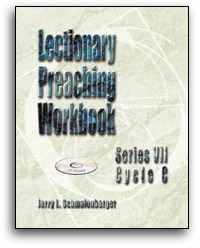
Lectionary Preaching Workbook
Series VII Cycle C
Seasonal Theme
The resurrected Christ becomes a physical presence in the world again.
Theme For The Day
Important words Jesus said before ascending, including the gift of peace, God's love, and the Holy Spirit.
First Lesson
Acts 16:9-15
A Call From Macedonia
On this missionary journey, Paul and Timothy got as far as Troas. After Paul's dream of a man pleading for them to go to Macedonia, the narrative changes to the plural (v. 10) so that it sounds as if the author Luke joined them at this point. Perhaps he was, in fact, the man from Macedonia. Or perhaps Paul had a vision of Alexander the Great, who had conquered much of the world. Now Paul sets out to conquer the world for Christ.
In verses 11 to 15 we have Lydia, the first convert in Europe. Paul went to the riverside because in this Roman colony there would be no synagogue from which to start his evangelism. Lydia was from the upper class. Notice she at once offered hospitality to Paul (v. 15). Paul often described the Christian as one who offered hospitality (see Romans 12:13). Peter stressed this idea as well in 1 Peter 4:9. I wonder if there are not two great transitions here for the Christians faith: 1) it moves into Europe and 2) it moves into the upper class.
Second Lesson
Revelation 21:10, 22--22:5
The New Jerusalem
The author describes a lovely vision of Jerusalem, the holy city (see Ezekiel 40:2). There are some interesting ideas about this new Jerusalem. Because it is where God lives, there is no need for a church (v. 22). There will be no need for a sun or moon -- God's glory will be its source of light (see Isaiah 60:19f). Verse 24 is interesting because we can gain the idea that those dwelling in this holy city will be a blessing to those outside (see Isaiah 60:5ff and Psalm 72:10). Then comes this vision of openness and welcome in verse 25 with gates always opening and the promise that night will no longer inhibit them, as God's shining on them will be continuous (check out Isaiah 60:11).
Homiletically one can imagine what heaven is like from this passage. However, this is still Easter and we ought to talk about being alive and out of the grave. So if we do use this passage, we probably should use it to illustrate the Easter theme of a new day, a new presence of the risen Christ, and a new people of God community.
The Gospel
John 14:23-29
The Advocate Will Come
The monologue of Jesus is in response to a question Judas (not Iscariot) asked of him. In it Jesus gives the disciples some truths they remembered.
1. If they love Jesus, they will follow his teachings.
2. God will come to them and live with them.
3. Jesus' words are not his own but from God.
4. The Advocate (Holy Spirit) will come to them in order to teach them.
5. Jesus blesses them with a peace which means much more than the worldly view of peace, which is the absence of trouble. Here it is a comfort and inner strength for the time they would be under severe pressure and distress.
6. They should celebrate his departure, because in a strange way this is how he will be with them always.
7. Jesus comes from the Father and is one with God.
8. He tells them all this ahead of time so when it happens they can believe it.
Jesus is really saying that he has made a start but there is much more to learn. The Advocate (Holy Spirit) will continue the teaching and take them even further. Christ is really telling them of his legacy for all disciples.
Preaching Possibilities
A. We have another opportunity to talk about after Easter discipleship using all three readings:
1. First Lesson -- All disciples are called to ministry and we invite all economic strata into the kingdom.
2. Second Lesson -- Things are different after Easter. We have a new dwelling place.
3. The Gospel -- We have the risen Easter Christ with us in spirit and we still have a lot to learn in our discipleship.
B. If by now we have well covered the "Easter people" theme, there are a number of individual topical sermon texts today.
The call of God
Acts 16:9
The global mission of the church
Acts 16:15
A likeness of heaven
Revelation 21:22-25
Wide open gates to the church
Revelation 21:25
The coming of the Spirit
John 14:26
The gift of peace
John 14:27
There is more to learn
John 14:26
Possible Outline Of Sermon Moves
Text: John 14:23-29
A. Begin with a story of preparing to leave to travel somewhere.
B. Introduce the Gospel account as Jesus preparing to leave the disciples in bodily form.
C. Make the point that when we know we may not see someone ever again, we choose our words carefully.
D. List what Jesus was communicating which young John wrote down.
1. Those who love Jesus will try to follow his teachings (v. 23) and God will love them.
2. We do not face our discipleship alone. Our help is the Holy Spirit (v. 26).
3. The gift of peace is ours -- a peace different than the world knows (v. 27).
4. We have Jesus' help in believing (v. 29).
E. Use an illustration from below at the end of each of the above moves.
F. Pray after each of the four above teachings. Here are some suggestions:
1. We know you love us, dear God, and we pray today that knowing you love us will help us follow your teachings. Amen.
2. Holy Spirit, continue to inspire and instruct us in our discipleship. It's so good to know you are rooting for us here and in heaven. Amen.
3. We thank you, dear God, for the gift of peace you bestow upon us. And we pray we might be a channel through which others are given peace, as well. Amen.
4. We rejoice in the advance notice you gave the disciples so they could believe; now help us believe, too. Amen.
G. Frame your sermon by returning to your opening story about someone preparing for a departure.
Prayer For The Day
In this Holy Easter season, when we are so mindful of your resurrected presence with us, dear God, help us through your Holy Spirit to hear our call to discipleship and to be part of the global mission of the church. Refresh our vision of the New Jerusalem in our lives and give us your blessed peace. In the risen Easter Christ's name. Amen.
Possible Metaphors And Stories
My daughter Sarah used to live in Washington, D.C. She agreed to meet me where the metro lines meet in the center city. It worked and we found each other. The old song goes: "Meet me in Saint Louis, Louis, meet me at the fair." Where shall we meet as God's people? Where love and consideration for others intersect.
The strip of highly colorful and decorative cloth given as a special gift of friendship by the Bataks of Sumatra is called an ulos. At a wedding reception it is wrapped around the bride and groom, binding them as one. It is symbolic of deep, rich friendships kept warm in the future. Often woven into the cloth is "God's Peace." Like a blanket, it is used to keep warm at night and to carry a baby slung over the shoulder in what is named a parompa.
We have a comfort of peace also and it's sometimes called the Comforter, the Holy Spirit, which keeps us warm in spirit and peace-filled in struggle.
At the installation of a chaplain to the homeless at People's Park in Berkeley, the invitation was extended to offer the peace to each other. A large black dog snapped at a man who kicked it in the teeth.
Peace seems so temporary, artificial, and elusive.
At the Kennedy Space Control Center there are signs which come on telling of the many countdown checks. Then at about fifteen seconds before lift-off the sign reads: "Commit." So too, in landing a plane, there is a time when it's too late to abort the landing and the pilot "commits."
Perhaps there are times like confirmation (affirmation of Baptism) when we are to commit with the help of the Holy Spirit.
The resurrected Christ becomes a physical presence in the world again.
Theme For The Day
Important words Jesus said before ascending, including the gift of peace, God's love, and the Holy Spirit.
First Lesson
Acts 16:9-15
A Call From Macedonia
On this missionary journey, Paul and Timothy got as far as Troas. After Paul's dream of a man pleading for them to go to Macedonia, the narrative changes to the plural (v. 10) so that it sounds as if the author Luke joined them at this point. Perhaps he was, in fact, the man from Macedonia. Or perhaps Paul had a vision of Alexander the Great, who had conquered much of the world. Now Paul sets out to conquer the world for Christ.
In verses 11 to 15 we have Lydia, the first convert in Europe. Paul went to the riverside because in this Roman colony there would be no synagogue from which to start his evangelism. Lydia was from the upper class. Notice she at once offered hospitality to Paul (v. 15). Paul often described the Christian as one who offered hospitality (see Romans 12:13). Peter stressed this idea as well in 1 Peter 4:9. I wonder if there are not two great transitions here for the Christians faith: 1) it moves into Europe and 2) it moves into the upper class.
Second Lesson
Revelation 21:10, 22--22:5
The New Jerusalem
The author describes a lovely vision of Jerusalem, the holy city (see Ezekiel 40:2). There are some interesting ideas about this new Jerusalem. Because it is where God lives, there is no need for a church (v. 22). There will be no need for a sun or moon -- God's glory will be its source of light (see Isaiah 60:19f). Verse 24 is interesting because we can gain the idea that those dwelling in this holy city will be a blessing to those outside (see Isaiah 60:5ff and Psalm 72:10). Then comes this vision of openness and welcome in verse 25 with gates always opening and the promise that night will no longer inhibit them, as God's shining on them will be continuous (check out Isaiah 60:11).
Homiletically one can imagine what heaven is like from this passage. However, this is still Easter and we ought to talk about being alive and out of the grave. So if we do use this passage, we probably should use it to illustrate the Easter theme of a new day, a new presence of the risen Christ, and a new people of God community.
The Gospel
John 14:23-29
The Advocate Will Come
The monologue of Jesus is in response to a question Judas (not Iscariot) asked of him. In it Jesus gives the disciples some truths they remembered.
1. If they love Jesus, they will follow his teachings.
2. God will come to them and live with them.
3. Jesus' words are not his own but from God.
4. The Advocate (Holy Spirit) will come to them in order to teach them.
5. Jesus blesses them with a peace which means much more than the worldly view of peace, which is the absence of trouble. Here it is a comfort and inner strength for the time they would be under severe pressure and distress.
6. They should celebrate his departure, because in a strange way this is how he will be with them always.
7. Jesus comes from the Father and is one with God.
8. He tells them all this ahead of time so when it happens they can believe it.
Jesus is really saying that he has made a start but there is much more to learn. The Advocate (Holy Spirit) will continue the teaching and take them even further. Christ is really telling them of his legacy for all disciples.
Preaching Possibilities
A. We have another opportunity to talk about after Easter discipleship using all three readings:
1. First Lesson -- All disciples are called to ministry and we invite all economic strata into the kingdom.
2. Second Lesson -- Things are different after Easter. We have a new dwelling place.
3. The Gospel -- We have the risen Easter Christ with us in spirit and we still have a lot to learn in our discipleship.
B. If by now we have well covered the "Easter people" theme, there are a number of individual topical sermon texts today.
The call of God
Acts 16:9
The global mission of the church
Acts 16:15
A likeness of heaven
Revelation 21:22-25
Wide open gates to the church
Revelation 21:25
The coming of the Spirit
John 14:26
The gift of peace
John 14:27
There is more to learn
John 14:26
Possible Outline Of Sermon Moves
Text: John 14:23-29
A. Begin with a story of preparing to leave to travel somewhere.
B. Introduce the Gospel account as Jesus preparing to leave the disciples in bodily form.
C. Make the point that when we know we may not see someone ever again, we choose our words carefully.
D. List what Jesus was communicating which young John wrote down.
1. Those who love Jesus will try to follow his teachings (v. 23) and God will love them.
2. We do not face our discipleship alone. Our help is the Holy Spirit (v. 26).
3. The gift of peace is ours -- a peace different than the world knows (v. 27).
4. We have Jesus' help in believing (v. 29).
E. Use an illustration from below at the end of each of the above moves.
F. Pray after each of the four above teachings. Here are some suggestions:
1. We know you love us, dear God, and we pray today that knowing you love us will help us follow your teachings. Amen.
2. Holy Spirit, continue to inspire and instruct us in our discipleship. It's so good to know you are rooting for us here and in heaven. Amen.
3. We thank you, dear God, for the gift of peace you bestow upon us. And we pray we might be a channel through which others are given peace, as well. Amen.
4. We rejoice in the advance notice you gave the disciples so they could believe; now help us believe, too. Amen.
G. Frame your sermon by returning to your opening story about someone preparing for a departure.
Prayer For The Day
In this Holy Easter season, when we are so mindful of your resurrected presence with us, dear God, help us through your Holy Spirit to hear our call to discipleship and to be part of the global mission of the church. Refresh our vision of the New Jerusalem in our lives and give us your blessed peace. In the risen Easter Christ's name. Amen.
Possible Metaphors And Stories
My daughter Sarah used to live in Washington, D.C. She agreed to meet me where the metro lines meet in the center city. It worked and we found each other. The old song goes: "Meet me in Saint Louis, Louis, meet me at the fair." Where shall we meet as God's people? Where love and consideration for others intersect.
The strip of highly colorful and decorative cloth given as a special gift of friendship by the Bataks of Sumatra is called an ulos. At a wedding reception it is wrapped around the bride and groom, binding them as one. It is symbolic of deep, rich friendships kept warm in the future. Often woven into the cloth is "God's Peace." Like a blanket, it is used to keep warm at night and to carry a baby slung over the shoulder in what is named a parompa.
We have a comfort of peace also and it's sometimes called the Comforter, the Holy Spirit, which keeps us warm in spirit and peace-filled in struggle.
At the installation of a chaplain to the homeless at People's Park in Berkeley, the invitation was extended to offer the peace to each other. A large black dog snapped at a man who kicked it in the teeth.
Peace seems so temporary, artificial, and elusive.
At the Kennedy Space Control Center there are signs which come on telling of the many countdown checks. Then at about fifteen seconds before lift-off the sign reads: "Commit." So too, in landing a plane, there is a time when it's too late to abort the landing and the pilot "commits."
Perhaps there are times like confirmation (affirmation of Baptism) when we are to commit with the help of the Holy Spirit.
