
Swift to Hear and Slow to Speak
Worship
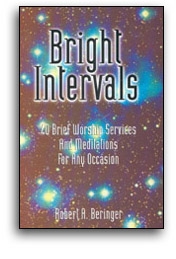
Bright Intervals
40 Brief Worship Services and Meditations for Any Occasion
Object:
Greeting and Call To Worship
The Lord is in God's Holy Temple; let all the earth keep silence before the Lord!
Opening Prayer
Lord, we come into your presence with reverent and believing hearts. Silence the noise and clamor of the world around us, and make our hearts receptive to the voice of your Holy Spirit. Allow us, we pray, to be still and know that you are the Living God. We pray in the name of Jesus our Lord. Amen.
Lord's Prayer
Special Hymn
"I Need Thee Every Hour"
The writer of this hymn was a homemaker going about her daily tasks in April of 1872 when she was filled with a sense of God's presence near to her. Anne Sherwood Hawks was suddenly overwhelmed by the assurance that God was with her both in her times of pain and her times of joy. That day she wrote the poem, "I Need Thee Every Hour," and took it to her pastor, the Reverend Robert Lowry, a noted composer. He recognized the potential of the words and composed the melody we still sing today. Mrs. Hawks wrote many other hymns, but this simple message of relying on God each and every day has proven to be an inspiration to countless Christians over the years.
Scripture Reading
James 1:19-25; 3:1-12
Meditation
Perhaps you recall the old story about the pastor who was so concerned one Sunday morning about his sermon that he cut himself while shaving. He put a large Band-aidr on the cut and went to church. After the service he was standing at the door greeting the parishioners when someone said, "Pastor, what happened to you?" The pastor replied somewhat sheepishly, "I was so concerned about my sermon, I cut myself while shaving this morning." There was a moment of silence and then a voice said, "Next time, do us all a favor, Pastor. Save your face and just cut the sermon!"
It is not only pastors, however, who are accused of talking too much. The writer of the Epistle of James reminds all of us about the importance of speaking and listening. Being able to communicate with other people requires both, and James is very concerned that most of us talk a lot more than we listen. In fact, we are often so intent on what we have to say that we only hear what we want to hear!
Four women were playing bridge in the recreation room of a California retirement center. Suddenly they noticed a rather handsome older gentleman who had just come into the room. One of the women looked up from the bridge table and said, "Hello! You must be new here. I don't recall meeting you." The handsome man responded, "Just moved in this morning." A second lady at the card table asked, "Well, where did you come from?" Without a moment's hesitation, the handsome man replied, "From San Quentin Prison! I have just been released from there after thirty years." "Oh my," said a third lady at the table, "what were you in for?" The older man calmly replied, "I murdered my wife." Whereupon the fourth lady at the bridge table sat up in her chair, and flashing the older man a great big smile, she said, "Oh, that means you must be single!"
Is it not amazing how often we hear only what we want to hear? We are living in a time when we have the technology to listen to a baby while it is still in its mother's womb, or we can listen to the sounds of life on the ocean floor or even on some distant planet. But so very often, we cannot hear the people around us. Even more important, with all our talking and our busyness, we often cannot hear the voice of God.
But the writer of James has yet another caution for us in this matter of speaking and listening. He says to us: "Be sure in your speech that you say what you mean, and mean whatever it is you say." He reminds us that the tongue may be among the smallest parts of the human body, but it is like the tiny spark that ignites a huge forest fire, or the tiny rudder that steers a great ocean liner.
A new pastor was invited to the home of a church officer for dinner. Anxious to make a good impression, the pastor was very complimentary about the dinner that his host served. Then came the dessert. It was a huge piece of rhubarb pie. Now the pastor had learned to eat most everything, but he could not stand rhubarb pie! Believing it was important not to make a fuss, he somehow managed to eat the pie. He seemingly ate it with such joy that he was served another piece! Worst of all, it spread all over the parish that the new pastor's favorite dessert was rhubarb pie! So let us be careful in our daily walk with Christ that we say what we mean and mean what we say.
Closing Prayer
O God, we need your presence with us through each hour of the day. Help us to learn to be better listeners and to let our lives show forth the same truth that we proclaim with our mouths. In Jesus' name. Amen.
Benediction
May the blessing of God Almighty, Father, Son, and Holy Spirit, be with you and remain with you both this day and forever. Amen.
The Lord is in God's Holy Temple; let all the earth keep silence before the Lord!
Opening Prayer
Lord, we come into your presence with reverent and believing hearts. Silence the noise and clamor of the world around us, and make our hearts receptive to the voice of your Holy Spirit. Allow us, we pray, to be still and know that you are the Living God. We pray in the name of Jesus our Lord. Amen.
Lord's Prayer
Special Hymn
"I Need Thee Every Hour"
The writer of this hymn was a homemaker going about her daily tasks in April of 1872 when she was filled with a sense of God's presence near to her. Anne Sherwood Hawks was suddenly overwhelmed by the assurance that God was with her both in her times of pain and her times of joy. That day she wrote the poem, "I Need Thee Every Hour," and took it to her pastor, the Reverend Robert Lowry, a noted composer. He recognized the potential of the words and composed the melody we still sing today. Mrs. Hawks wrote many other hymns, but this simple message of relying on God each and every day has proven to be an inspiration to countless Christians over the years.
Scripture Reading
James 1:19-25; 3:1-12
Meditation
Perhaps you recall the old story about the pastor who was so concerned one Sunday morning about his sermon that he cut himself while shaving. He put a large Band-aidr on the cut and went to church. After the service he was standing at the door greeting the parishioners when someone said, "Pastor, what happened to you?" The pastor replied somewhat sheepishly, "I was so concerned about my sermon, I cut myself while shaving this morning." There was a moment of silence and then a voice said, "Next time, do us all a favor, Pastor. Save your face and just cut the sermon!"
It is not only pastors, however, who are accused of talking too much. The writer of the Epistle of James reminds all of us about the importance of speaking and listening. Being able to communicate with other people requires both, and James is very concerned that most of us talk a lot more than we listen. In fact, we are often so intent on what we have to say that we only hear what we want to hear!
Four women were playing bridge in the recreation room of a California retirement center. Suddenly they noticed a rather handsome older gentleman who had just come into the room. One of the women looked up from the bridge table and said, "Hello! You must be new here. I don't recall meeting you." The handsome man responded, "Just moved in this morning." A second lady at the card table asked, "Well, where did you come from?" Without a moment's hesitation, the handsome man replied, "From San Quentin Prison! I have just been released from there after thirty years." "Oh my," said a third lady at the table, "what were you in for?" The older man calmly replied, "I murdered my wife." Whereupon the fourth lady at the bridge table sat up in her chair, and flashing the older man a great big smile, she said, "Oh, that means you must be single!"
Is it not amazing how often we hear only what we want to hear? We are living in a time when we have the technology to listen to a baby while it is still in its mother's womb, or we can listen to the sounds of life on the ocean floor or even on some distant planet. But so very often, we cannot hear the people around us. Even more important, with all our talking and our busyness, we often cannot hear the voice of God.
But the writer of James has yet another caution for us in this matter of speaking and listening. He says to us: "Be sure in your speech that you say what you mean, and mean whatever it is you say." He reminds us that the tongue may be among the smallest parts of the human body, but it is like the tiny spark that ignites a huge forest fire, or the tiny rudder that steers a great ocean liner.
A new pastor was invited to the home of a church officer for dinner. Anxious to make a good impression, the pastor was very complimentary about the dinner that his host served. Then came the dessert. It was a huge piece of rhubarb pie. Now the pastor had learned to eat most everything, but he could not stand rhubarb pie! Believing it was important not to make a fuss, he somehow managed to eat the pie. He seemingly ate it with such joy that he was served another piece! Worst of all, it spread all over the parish that the new pastor's favorite dessert was rhubarb pie! So let us be careful in our daily walk with Christ that we say what we mean and mean what we say.
Closing Prayer
O God, we need your presence with us through each hour of the day. Help us to learn to be better listeners and to let our lives show forth the same truth that we proclaim with our mouths. In Jesus' name. Amen.
Benediction
May the blessing of God Almighty, Father, Son, and Holy Spirit, be with you and remain with you both this day and forever. Amen.
