Center Yourself In The Lord
Sermon
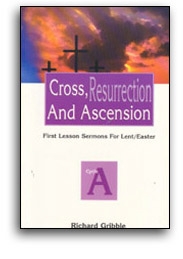
Cross, Resurrection, And Ascension
First Lesson Sermons For Lent/Easter
When Charlie Atlas was a teenager his parents purchased for him a dresser mirror that he placed in his bedroom. Before this, whenever Charlie needed to use a mirror, he went to the bathroom, but there he was only able to see his head and possibly his shoulders. When he got dressed up he used his parents' full-length mirror in their bedroom. Charlie was happy with his new mirror; he spent many hours in front of it.
One day, while standing in front of the mirror, Charlie decided to take off his shirt. He was very disappointed. His chest was scrawny and his biceps were so thin that he could place his hand completely around one. This was an intolerable situation; he did not want to be known as a scrawny weakling. Thus, on that very day Charlie Atlas made a pact with himself. He would work as hard as necessary in order to build up his upper body, so that he would not be embarrassed before the mirror ever again. Thus, Charlie began a rugged daily regimen of exercise. For several hours each and every day he did exercises -- push-ups, pull-ups, and sit-ups. Later he began to lift weights, barbells, and dumbbells. He bought a special machine with weights, pulleys, and springs which allowed him to work out harder. He even used hand grips when he was relaxing to strengthen his forearms.
After several months Charlie again looked in the mirror. There was definite improvement. His chest had grown and his arms were more muscular. The positive results he achieved encouraged him and thus he doubled his efforts. He did more difficult exercises, lifted heavier weights, and now even began to eat only certain foods. He took lots of vitamins as well. After a few years of this strenuous exercise program, Charlie again looked in the mirror. He was quite satisfied, even elated. His chest was huge and taut. His biceps were so large that one could not use two hands in attempting to encircle one; his stomach rippled like the waves on the ocean. As he stood in personal admiration, all of a sudden Charlie collapsed. His parents were quite concerned and rushed him to the doctor. They thought for certain that it was a case of over exertion, but after examining Charlie, the doctor said it was much more simple. Charlie's ankles and legs were too weak, they could not support his massive bulk, thus he collapsed. You see, Charlie could only see his upper body in the mirror and that was all he developed.1
In different ways we are all Charlie Atlases. Few of us spend the time he did in building our bodies, but we do spend lots of time working on the externals in our lives, our physical condition, mind, appearance, and job. In some ways these become the gods which we worship. We live in the here and now and concern ourselves with that which is present before us. But like Charlie Atlas, as well, we fail many times to build up the foundation, that which is most basic in our lives. For we who bear the name Christian, our foundation must be our relationship with God.
Saint Paul, in his travels around the Mediterranean world, encountered Gentiles who practiced idolatry, the worship of false gods. Such had been the practice of the all the great civilizations in human history -- the Egyptians, Babylonians, and now the Greeks and the Romans. Each of these peoples developed their own pantheon with gods "manufactured" by the human mind to explain the created world and the events of daily life. Paul found his opportunity to enter into discussion with the Athenians when he discovered a temple to "an unknown god." Paul used the occasion to point to the fallacy of the Greeks' worship of gods generated and fashioned by human hands. For the Greeks and the other civilizations of the pre-Christian world, gods were made visible in stone or metal, but Paul says that the true God has created us to search for Him. Certainly the God of whom Paul speaks is different than any other god. The true God has fixed a day when the world will be judged by the one appointed to the task, Jesus, who was raised from the dead.
Paul preached against the practice of idolatry, which was the common experience of the people; but his message, at least in this instance, was not well received. There were a few who heard the voice of God in Paul's words and reformed their lives and sought repentance. Contemporary civilization is highly advanced and the thought might be held that idolatry no longer exists. As a sophisticated people and advanced civilization we read the mythology of the Greeks and the Romans for its literary value but wonder how people could have been so blind as to generate a complete system of gods for each and every occasion and need.
As bright, articulate, and advanced as we might perceive ourselves to be, however, many times we practice idolatry and don't even realize it. Our pantheon is filled with contemporary names such as money, material possessions, power, prestige, position, appearance, and name. Like Charlie Atlas, who spent all his time developing the externals of his physical body which he could see in the mirror, we spend much time and energy engaged in the pursuit of excellence and perfection as we search for today's false gods. How much time do we spend in the pursuit of our relationship with the true God, who created all, and His Son, Jesus Christ? Do we realize our need to build up the rock foundation of our life -- our relationship with God?
There is a need to build up the externals of our life. If we do not take the time to cultivate our minds, to gain competence in our field, then the world will pass us by; we will be figuratively "run over" by the competition. If we neglect to care for our bodies then the time we have on this earth will probably be less and of poorer quality. If we are given opportunities to use our talents for the betterment of ourselves and our world and refuse to participate, then we have misused God's gifts. Yet, as important as the externals of our lives are, if we fail to nurture our relationship with God, then most assuredly, like Charlie Atlas, we will stand tall and then one day suddenly collapse without warning.
Idolatry, unfortunately, is alive and well; it did not die with modern society but rather changed the names of its gods. Contemporary life demands much of us -- our time, expertise, and material possessions. The tendency, with all the hurdles of life, is to take the easy, clearly-marked route, the one most traveled. This route, however, many times leads us astray from the goal that we seek. Even worse paths, individuals, ideologies, or events which we choose to solve the problems we face too often become the things that gain our allegiance; they become our own pantheon. This cannot be for those who profess to be disciples of Jesus Christ.
In the maze of life it is easy to get off track and find some dead ends. We need a guide to reach our goal. Jesus is the guide and the goal. He has explained both well as related by Saint Matthew the evangelist in the Sermon on the Mount: "Enter through the narrow gate; for the gate is wide and the road is easy that leads to destruction, and there are many who take it. For the gate is narrow and the road is hard that leads to life, and there are few who find it" (Matthew 7:13-14).
____________
1. Paraphrased from "Charlie Atlas and the Dresser Mirror," in John R. Aurelio Colors! Stories of the Kingdom (New York: The Crossroads Publishing Company, 1993), pp. 26-27.
One day, while standing in front of the mirror, Charlie decided to take off his shirt. He was very disappointed. His chest was scrawny and his biceps were so thin that he could place his hand completely around one. This was an intolerable situation; he did not want to be known as a scrawny weakling. Thus, on that very day Charlie Atlas made a pact with himself. He would work as hard as necessary in order to build up his upper body, so that he would not be embarrassed before the mirror ever again. Thus, Charlie began a rugged daily regimen of exercise. For several hours each and every day he did exercises -- push-ups, pull-ups, and sit-ups. Later he began to lift weights, barbells, and dumbbells. He bought a special machine with weights, pulleys, and springs which allowed him to work out harder. He even used hand grips when he was relaxing to strengthen his forearms.
After several months Charlie again looked in the mirror. There was definite improvement. His chest had grown and his arms were more muscular. The positive results he achieved encouraged him and thus he doubled his efforts. He did more difficult exercises, lifted heavier weights, and now even began to eat only certain foods. He took lots of vitamins as well. After a few years of this strenuous exercise program, Charlie again looked in the mirror. He was quite satisfied, even elated. His chest was huge and taut. His biceps were so large that one could not use two hands in attempting to encircle one; his stomach rippled like the waves on the ocean. As he stood in personal admiration, all of a sudden Charlie collapsed. His parents were quite concerned and rushed him to the doctor. They thought for certain that it was a case of over exertion, but after examining Charlie, the doctor said it was much more simple. Charlie's ankles and legs were too weak, they could not support his massive bulk, thus he collapsed. You see, Charlie could only see his upper body in the mirror and that was all he developed.1
In different ways we are all Charlie Atlases. Few of us spend the time he did in building our bodies, but we do spend lots of time working on the externals in our lives, our physical condition, mind, appearance, and job. In some ways these become the gods which we worship. We live in the here and now and concern ourselves with that which is present before us. But like Charlie Atlas, as well, we fail many times to build up the foundation, that which is most basic in our lives. For we who bear the name Christian, our foundation must be our relationship with God.
Saint Paul, in his travels around the Mediterranean world, encountered Gentiles who practiced idolatry, the worship of false gods. Such had been the practice of the all the great civilizations in human history -- the Egyptians, Babylonians, and now the Greeks and the Romans. Each of these peoples developed their own pantheon with gods "manufactured" by the human mind to explain the created world and the events of daily life. Paul found his opportunity to enter into discussion with the Athenians when he discovered a temple to "an unknown god." Paul used the occasion to point to the fallacy of the Greeks' worship of gods generated and fashioned by human hands. For the Greeks and the other civilizations of the pre-Christian world, gods were made visible in stone or metal, but Paul says that the true God has created us to search for Him. Certainly the God of whom Paul speaks is different than any other god. The true God has fixed a day when the world will be judged by the one appointed to the task, Jesus, who was raised from the dead.
Paul preached against the practice of idolatry, which was the common experience of the people; but his message, at least in this instance, was not well received. There were a few who heard the voice of God in Paul's words and reformed their lives and sought repentance. Contemporary civilization is highly advanced and the thought might be held that idolatry no longer exists. As a sophisticated people and advanced civilization we read the mythology of the Greeks and the Romans for its literary value but wonder how people could have been so blind as to generate a complete system of gods for each and every occasion and need.
As bright, articulate, and advanced as we might perceive ourselves to be, however, many times we practice idolatry and don't even realize it. Our pantheon is filled with contemporary names such as money, material possessions, power, prestige, position, appearance, and name. Like Charlie Atlas, who spent all his time developing the externals of his physical body which he could see in the mirror, we spend much time and energy engaged in the pursuit of excellence and perfection as we search for today's false gods. How much time do we spend in the pursuit of our relationship with the true God, who created all, and His Son, Jesus Christ? Do we realize our need to build up the rock foundation of our life -- our relationship with God?
There is a need to build up the externals of our life. If we do not take the time to cultivate our minds, to gain competence in our field, then the world will pass us by; we will be figuratively "run over" by the competition. If we neglect to care for our bodies then the time we have on this earth will probably be less and of poorer quality. If we are given opportunities to use our talents for the betterment of ourselves and our world and refuse to participate, then we have misused God's gifts. Yet, as important as the externals of our lives are, if we fail to nurture our relationship with God, then most assuredly, like Charlie Atlas, we will stand tall and then one day suddenly collapse without warning.
Idolatry, unfortunately, is alive and well; it did not die with modern society but rather changed the names of its gods. Contemporary life demands much of us -- our time, expertise, and material possessions. The tendency, with all the hurdles of life, is to take the easy, clearly-marked route, the one most traveled. This route, however, many times leads us astray from the goal that we seek. Even worse paths, individuals, ideologies, or events which we choose to solve the problems we face too often become the things that gain our allegiance; they become our own pantheon. This cannot be for those who profess to be disciples of Jesus Christ.
In the maze of life it is easy to get off track and find some dead ends. We need a guide to reach our goal. Jesus is the guide and the goal. He has explained both well as related by Saint Matthew the evangelist in the Sermon on the Mount: "Enter through the narrow gate; for the gate is wide and the road is easy that leads to destruction, and there are many who take it. For the gate is narrow and the road is hard that leads to life, and there are few who find it" (Matthew 7:13-14).
____________
1. Paraphrased from "Charlie Atlas and the Dresser Mirror," in John R. Aurelio Colors! Stories of the Kingdom (New York: The Crossroads Publishing Company, 1993), pp. 26-27.