
Communion: The Sacrament Of Word And Table
Sermon
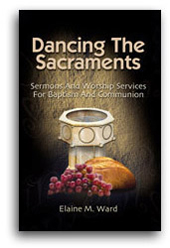
Dancing The Sacraments
Sermons And Worship Services For Baptism And Communion
In the 1930s I grew up feeding on words. An only child in a household of three adults, books were my best friends, words my companions, for the three adults with whom I lived were strict German Lutherans who believed words were reserved, as holy communion, only for adults. "Children should be seen, not heard" was the rule at our house. So it was others' words, writers' words, that not only took me with them on their adventures, but held me in their lap, comforting, correcting and challenging me.
Without words, without a voice, I was without an identity. Therefore, stumbling into Robert Louis Stevenson's A Child's Garden of Verses, I discovered "the secret garden" that gave me nourishment and beauty, the garden of poetry, of poets' words.
Poets like hanging around words, as the prophets of the Old Testament did. The prophets were God's poets, offering their words as priests offer "bread and wine" for the body, mind, and spirit.
The prophet Jeremiah "ate" God's words (15:16), for Jeremiah was God's poet. "What do you see, Jeremiah?" God asked. Jeremiah said, "I see an almond branch." God replied, "You have seen well, Jeremiah, for I am watching over my word to perform it."
Early peoples believed in the power of words to create. God spoke creation into being, for in the speaking of words, words are given life, as are those who hear the words. The psalmist said, "The word runs swiftly" (147:15). It accomplishes what it was sent to do. The word of the Lord stands forever, but it does not stand still. The word puts on its running shoes, as the loving father who ran to greet the prodigal son. Isaiah wrote, "How beautiful are the feet of those who bring good news!" And Jesus said, "Heaven and earth shall pass away, but my words will never pass away. Take, eat." Therefore we call holy communion a service of "word and table."
A sacrament is the good news of God's presence. The word, the gift of heaven, like bread and wine, the gifts of earth, is a source of God's revelation. Sacraments live on when they provoke an emotive force and a sense of personal and communal communion. They bring us into communion and community.
"Come, eat," he said. Jesus fed the people twice in the Gospel of Mark and twice in the Gospel of John. He told a story about God's great banquet to which all are invited, and provided hope and wisdom when he broke bread with his friends after his resurrection. Giving food to the hungry in body and spirit was at the top of his list for entering the kingdom of God, saying, "I am the bread." Words paint pictures, like Vincent Van Gogh's painting The Potato Eaters, which shows the Belgian coal miners' "eucharistic" meal, potatoes as small loaves of bread passed from one person to another, for the language of sacrament is metaphor. Theological language is metaphoric because it is the language of transformation.
The minister asked in his sermon, "How many of you are hungry?" All of the children raised their hands, and some of the adults. "Paul said, 'Then go home and fill your belly. What I offer you is imperishable food.' " The preacher asked again, "How many of you like rich, gooey, double chocolate brownies?" Now all of the hands were raised. He continued, "How many of you who are not hungry would be 'drawn to' those rich, gooey, double chocolate brownies in the Friendship Hall after worship?"1
Through the metaphor the congregation became involved in the sermon. That Sunday I understood "drawn in" because of the metaphor. Now whenever I hear or see or think of rich, gooey, double chocolate brownies, I remember being "drawn in" to God.
Jesus spoke in metaphor. He painted a picture of a 2 by 4 plank stuck in the eye of the one plucking out a speck of sawdust from the other's eyes, and a camel going through the eye of a needle! He said, "With what should I compare the kingdom of God? It is like ..." That is the clue that the metaphor is on its way. When Jesus identified himself, he said, "I am the Bread, the light of the world, the door, the gate, the good shepherd, the way, the truth, the Lamb of God, the Lion of Judah, the Word." Isaiah said his name would be "Wonderful Counselor, Mighty God, Everlasting Father, Prince of Peace."
God in great wisdom, having spoken through the prophets, the psalmists, the priests, "spoke" God's word in Jesus the Christ to show us. "The Word became flesh and lived among us." And God said again and again, "Come to the table." This is your watering place. Drink and be whole again beyond confusion.
We need our metaphors, even when they lose some of their meaning, because they state spiritual truths. I would substitute other words at times, more modern words, but a word, being a symbol, is wrapped in layers and layers of meaning and memories. How the word sounded the first time it was heard, the feelings associated with hearing it, the images seen, who said it, when, where, and why.
God's words are alive. They move us to the altar, the hospital, the ghetto. They help us see and feel and experience love, hope, and healing, becoming aware to appreciate and praise God, responding with compassion in place of control.
A poet wrote, "We sat around the holy bread and wine, each by himself, cool strangers in a line...."
How often, walking in a line toward the communion rail, I have felt like a "cool stranger" wondering, "Will God be here today?"
The film Places In The Heart is a story about central Texas in the 1930s, with all the customs and prejudices accompanying that time and place. It was a preview held for a sophisticated audience, part of a Dallas Film Festival. Therefore I was curious about what their reaction would be to the closing scene, where holy communion and the singing of "Amazing Grace" heal the brokenness of the leading characters. At the conclusion of the film there was absolute silence. No one in the audience stirred. Then the thunderous roar of applause as member by member stood to honor the film and its message, for people come to "the table," to nourish their souls:
Two men on a spiritual retreat
one of them reading a book of poetry.
The other said,
"That book will never save your soul."
His rapier words pierced the silence.
You could smell the sacramental blood
and taste the system's fear.
He meant it well,
he meant no offense, he was into salvation,
so the reader said, agreeing with his companion,
"But it will make my soul worth saving."
Words whisper in the darkness of the small chapel while the snow falls outside, covering the tracks of the noisy throng on the crowded city streets. Words shout triumphantly in silver, chandeliered cathedrals among the fragrant smells of incense and perfume. Words are silent by the baby's screams of hunger in rat--infested huts.
We feel words in our bones and come to the table to be transformed into the "bread" by their presence, for we are sojourners "on the way," telling others where to find the bread, as Jesus said, "Come, eat, inflesh my word through the sacrament of the word and table."
____________
1. With appreciation to Terry Dowdy, pastor of Hyde Park United Methodist Church, Austin, Texas.
Without words, without a voice, I was without an identity. Therefore, stumbling into Robert Louis Stevenson's A Child's Garden of Verses, I discovered "the secret garden" that gave me nourishment and beauty, the garden of poetry, of poets' words.
Poets like hanging around words, as the prophets of the Old Testament did. The prophets were God's poets, offering their words as priests offer "bread and wine" for the body, mind, and spirit.
The prophet Jeremiah "ate" God's words (15:16), for Jeremiah was God's poet. "What do you see, Jeremiah?" God asked. Jeremiah said, "I see an almond branch." God replied, "You have seen well, Jeremiah, for I am watching over my word to perform it."
Early peoples believed in the power of words to create. God spoke creation into being, for in the speaking of words, words are given life, as are those who hear the words. The psalmist said, "The word runs swiftly" (147:15). It accomplishes what it was sent to do. The word of the Lord stands forever, but it does not stand still. The word puts on its running shoes, as the loving father who ran to greet the prodigal son. Isaiah wrote, "How beautiful are the feet of those who bring good news!" And Jesus said, "Heaven and earth shall pass away, but my words will never pass away. Take, eat." Therefore we call holy communion a service of "word and table."
A sacrament is the good news of God's presence. The word, the gift of heaven, like bread and wine, the gifts of earth, is a source of God's revelation. Sacraments live on when they provoke an emotive force and a sense of personal and communal communion. They bring us into communion and community.
"Come, eat," he said. Jesus fed the people twice in the Gospel of Mark and twice in the Gospel of John. He told a story about God's great banquet to which all are invited, and provided hope and wisdom when he broke bread with his friends after his resurrection. Giving food to the hungry in body and spirit was at the top of his list for entering the kingdom of God, saying, "I am the bread." Words paint pictures, like Vincent Van Gogh's painting The Potato Eaters, which shows the Belgian coal miners' "eucharistic" meal, potatoes as small loaves of bread passed from one person to another, for the language of sacrament is metaphor. Theological language is metaphoric because it is the language of transformation.
The minister asked in his sermon, "How many of you are hungry?" All of the children raised their hands, and some of the adults. "Paul said, 'Then go home and fill your belly. What I offer you is imperishable food.' " The preacher asked again, "How many of you like rich, gooey, double chocolate brownies?" Now all of the hands were raised. He continued, "How many of you who are not hungry would be 'drawn to' those rich, gooey, double chocolate brownies in the Friendship Hall after worship?"1
Through the metaphor the congregation became involved in the sermon. That Sunday I understood "drawn in" because of the metaphor. Now whenever I hear or see or think of rich, gooey, double chocolate brownies, I remember being "drawn in" to God.
Jesus spoke in metaphor. He painted a picture of a 2 by 4 plank stuck in the eye of the one plucking out a speck of sawdust from the other's eyes, and a camel going through the eye of a needle! He said, "With what should I compare the kingdom of God? It is like ..." That is the clue that the metaphor is on its way. When Jesus identified himself, he said, "I am the Bread, the light of the world, the door, the gate, the good shepherd, the way, the truth, the Lamb of God, the Lion of Judah, the Word." Isaiah said his name would be "Wonderful Counselor, Mighty God, Everlasting Father, Prince of Peace."
God in great wisdom, having spoken through the prophets, the psalmists, the priests, "spoke" God's word in Jesus the Christ to show us. "The Word became flesh and lived among us." And God said again and again, "Come to the table." This is your watering place. Drink and be whole again beyond confusion.
We need our metaphors, even when they lose some of their meaning, because they state spiritual truths. I would substitute other words at times, more modern words, but a word, being a symbol, is wrapped in layers and layers of meaning and memories. How the word sounded the first time it was heard, the feelings associated with hearing it, the images seen, who said it, when, where, and why.
God's words are alive. They move us to the altar, the hospital, the ghetto. They help us see and feel and experience love, hope, and healing, becoming aware to appreciate and praise God, responding with compassion in place of control.
A poet wrote, "We sat around the holy bread and wine, each by himself, cool strangers in a line...."
How often, walking in a line toward the communion rail, I have felt like a "cool stranger" wondering, "Will God be here today?"
The film Places In The Heart is a story about central Texas in the 1930s, with all the customs and prejudices accompanying that time and place. It was a preview held for a sophisticated audience, part of a Dallas Film Festival. Therefore I was curious about what their reaction would be to the closing scene, where holy communion and the singing of "Amazing Grace" heal the brokenness of the leading characters. At the conclusion of the film there was absolute silence. No one in the audience stirred. Then the thunderous roar of applause as member by member stood to honor the film and its message, for people come to "the table," to nourish their souls:
Two men on a spiritual retreat
one of them reading a book of poetry.
The other said,
"That book will never save your soul."
His rapier words pierced the silence.
You could smell the sacramental blood
and taste the system's fear.
He meant it well,
he meant no offense, he was into salvation,
so the reader said, agreeing with his companion,
"But it will make my soul worth saving."
Words whisper in the darkness of the small chapel while the snow falls outside, covering the tracks of the noisy throng on the crowded city streets. Words shout triumphantly in silver, chandeliered cathedrals among the fragrant smells of incense and perfume. Words are silent by the baby's screams of hunger in rat--infested huts.
We feel words in our bones and come to the table to be transformed into the "bread" by their presence, for we are sojourners "on the way," telling others where to find the bread, as Jesus said, "Come, eat, inflesh my word through the sacrament of the word and table."
____________
1. With appreciation to Terry Dowdy, pastor of Hyde Park United Methodist Church, Austin, Texas.

