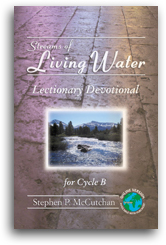
Epiphany 2
Devotional
Streams of Living Water
Lectionary Devotional for Cycle B
1 Samuel 3:1-10 (11-20)
Go, lie down; and if he calls you, you shall say, "Speak, Lord, for your servant is listening."
-- 1 Samuel 3:9b
The call of Samuel and the necessary preparation for his ministry is reflective of the call and nurture of Jesus in preparation for his ministry. At the same time, it illustrates a state of religion that creates a caution for all of us. "The word of the Lord was rare in those days; visions were not widespread" (v. 1). When our community of faith falls into a routine in the practice of our faith, it results in little expectation that God will speak through our lives at all. When that is the condition, even when God does speak, most people, like Samuel and Eli, will fail to recognize it as the voice of God. Samuel assumed it was Eli that was calling him, and Eli assumed it was just the precocious act of a child. Neither was prepared to recognize the call as a divine voice. It is a credit to Eli that once he recognized that it was God speaking, he insisted on hearing the message even when it was a message of judgment.
While it is easy to become cynical about the state of the church and suggest that it is unable to hear God's voice when it is spoken, it is important to recognize that the community of faith is still where God chose to speak. God was persistent in this scripture and spoke on four different occasions, and it was Eli, the keeper of the faith, who finally recognized what was happening. It is a vital question to ask whether God is trying to speak through our church today and no one is listening. It is equally important to recognize that our preparation to hear God speak comes through that same church. Consider what part of the faith you need to examine more deeply so that you might be open to hearing the voice of God.
Psalm 139:1-6, 13-18
O Lord, you have searched me and known me.
-- Psalm 139:1
Consider the possibility that your life, with all its experiences, has been a continual experience of the presence of God nurturing and guiding you. Reflect back on some of the significant moments in your life and notice the impact of now seeing them as moments when God was nurturing or challenging you. You may recall the story in Genesis 12 where Abram was asked to leave behind all that gave his life security and was familiar to accompany God to a land that God would show him. Abram had to trust that God knew him better than he knew himself and could be trusted to assist him in facing an unfamiliar future.
It is often only upon reflection of our own lives that we can notice that our lives have been a series of "leaving behind that which was familiar" events in order to discover again and again that God is our true companion. How often in your life did you think it was going in one direction only to discover a sharp turn in the road that led you into a totally new experience that only later would you discover to be an urge to be true to the person God wanted you to be? What are the decisions that you are now trying to make in your life? Are you tempted to stick with the familiar and resist exploring new territory? If God is inviting you to leave the familiar behind and go in a new direction, what part of your character is God aware of that now needs to be developed? Can you trust that God will be your faithful companion as you pursue this new direction in your journey?
1 Corinthians 6:12-20
Or do you not know that your body is a temple of the Holy Spirit within you, which you have from God, and that you are not your own?
-- 1 Corinthians 6:19
Paul uses the vivid image of sexual relations with a prostitute to illustrate a truth that is increasingly foreign to our modern age. The truth is that we are not our own. That is, we are accountable to a reality outside of ourselves. For most people, if they were loaned a very expensive car to drive or invited to wear a very expensive piece of jewelry, while they might be excited, they would also be a little nervous because what they had was not their own. They would likely take extra care that nothing happened that would damage the gift. What would be the effect of taking that same attitude toward your own body? There are some basic truths about taking care of your body. Your body can be damaged by continuous lack of sleep, improper diet, lack of proper exercise, or a regimen of stress that does not recognize the need for a proper rhythm of rest and recreation to be part of your routine.
While there may be some health issues that are still in dispute, these are almost universally accepted. If your body is a precious jewel that is on loan to you by God, are you treating this gift with the proper respect that honors the one who loaned it to you? It is a very practical and concrete issue of the faith that is worthy of more consideration.
John 1:43-51
Nathaniel said to him, "Can anything good come out of Nazareth?"
-- John 1:46
Because we are reading scripture, Nathaniel's question jars us. Upon reflection, we can recognize that we are accustomed to making initial judgments about people based on their place of origin, residence, family, education, and status in society. It would be natural to assume that the Messiah would come from Jerusalem and be a person of religious prominence. People do not just come out of nowhere but develop in a recognizable fashion; except the Bible keeps bringing people onto the scene without any preamble as to their background. We are never told why Jesus chose who he did as disciples or why God chose Abraham to be the father of his people.
God's mysterious way of making choices in our world forces us to stop and listen to everyone so that we do not overlook the one through whom God is speaking. It is also noteworthy that Philip's response to Nathaniel's question was not to try to convince him through argument but to ask him to "come and see" (v. 46). The Christian faith is rarely conveyed through argument and most powerfully is conveyed through experience. One of the most powerful means of witnessing to the faith is to live a life that reflects the love and grace of Christ and trust that God will enable people to experience Christ through you. Consider how the next person you meet will know Christ through you. What will their impression be? Consider, as well, that you might meet Christ through them.
Go, lie down; and if he calls you, you shall say, "Speak, Lord, for your servant is listening."
-- 1 Samuel 3:9b
The call of Samuel and the necessary preparation for his ministry is reflective of the call and nurture of Jesus in preparation for his ministry. At the same time, it illustrates a state of religion that creates a caution for all of us. "The word of the Lord was rare in those days; visions were not widespread" (v. 1). When our community of faith falls into a routine in the practice of our faith, it results in little expectation that God will speak through our lives at all. When that is the condition, even when God does speak, most people, like Samuel and Eli, will fail to recognize it as the voice of God. Samuel assumed it was Eli that was calling him, and Eli assumed it was just the precocious act of a child. Neither was prepared to recognize the call as a divine voice. It is a credit to Eli that once he recognized that it was God speaking, he insisted on hearing the message even when it was a message of judgment.
While it is easy to become cynical about the state of the church and suggest that it is unable to hear God's voice when it is spoken, it is important to recognize that the community of faith is still where God chose to speak. God was persistent in this scripture and spoke on four different occasions, and it was Eli, the keeper of the faith, who finally recognized what was happening. It is a vital question to ask whether God is trying to speak through our church today and no one is listening. It is equally important to recognize that our preparation to hear God speak comes through that same church. Consider what part of the faith you need to examine more deeply so that you might be open to hearing the voice of God.
Psalm 139:1-6, 13-18
O Lord, you have searched me and known me.
-- Psalm 139:1
Consider the possibility that your life, with all its experiences, has been a continual experience of the presence of God nurturing and guiding you. Reflect back on some of the significant moments in your life and notice the impact of now seeing them as moments when God was nurturing or challenging you. You may recall the story in Genesis 12 where Abram was asked to leave behind all that gave his life security and was familiar to accompany God to a land that God would show him. Abram had to trust that God knew him better than he knew himself and could be trusted to assist him in facing an unfamiliar future.
It is often only upon reflection of our own lives that we can notice that our lives have been a series of "leaving behind that which was familiar" events in order to discover again and again that God is our true companion. How often in your life did you think it was going in one direction only to discover a sharp turn in the road that led you into a totally new experience that only later would you discover to be an urge to be true to the person God wanted you to be? What are the decisions that you are now trying to make in your life? Are you tempted to stick with the familiar and resist exploring new territory? If God is inviting you to leave the familiar behind and go in a new direction, what part of your character is God aware of that now needs to be developed? Can you trust that God will be your faithful companion as you pursue this new direction in your journey?
1 Corinthians 6:12-20
Or do you not know that your body is a temple of the Holy Spirit within you, which you have from God, and that you are not your own?
-- 1 Corinthians 6:19
Paul uses the vivid image of sexual relations with a prostitute to illustrate a truth that is increasingly foreign to our modern age. The truth is that we are not our own. That is, we are accountable to a reality outside of ourselves. For most people, if they were loaned a very expensive car to drive or invited to wear a very expensive piece of jewelry, while they might be excited, they would also be a little nervous because what they had was not their own. They would likely take extra care that nothing happened that would damage the gift. What would be the effect of taking that same attitude toward your own body? There are some basic truths about taking care of your body. Your body can be damaged by continuous lack of sleep, improper diet, lack of proper exercise, or a regimen of stress that does not recognize the need for a proper rhythm of rest and recreation to be part of your routine.
While there may be some health issues that are still in dispute, these are almost universally accepted. If your body is a precious jewel that is on loan to you by God, are you treating this gift with the proper respect that honors the one who loaned it to you? It is a very practical and concrete issue of the faith that is worthy of more consideration.
John 1:43-51
Nathaniel said to him, "Can anything good come out of Nazareth?"
-- John 1:46
Because we are reading scripture, Nathaniel's question jars us. Upon reflection, we can recognize that we are accustomed to making initial judgments about people based on their place of origin, residence, family, education, and status in society. It would be natural to assume that the Messiah would come from Jerusalem and be a person of religious prominence. People do not just come out of nowhere but develop in a recognizable fashion; except the Bible keeps bringing people onto the scene without any preamble as to their background. We are never told why Jesus chose who he did as disciples or why God chose Abraham to be the father of his people.
God's mysterious way of making choices in our world forces us to stop and listen to everyone so that we do not overlook the one through whom God is speaking. It is also noteworthy that Philip's response to Nathaniel's question was not to try to convince him through argument but to ask him to "come and see" (v. 46). The Christian faith is rarely conveyed through argument and most powerfully is conveyed through experience. One of the most powerful means of witnessing to the faith is to live a life that reflects the love and grace of Christ and trust that God will enable people to experience Christ through you. Consider how the next person you meet will know Christ through you. What will their impression be? Consider, as well, that you might meet Christ through them.