Epiphany 2/Ordinary Time 2
Preaching
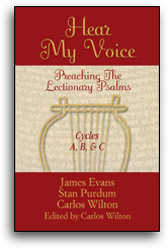
Hear My Voice
Preaching The Lectionary Psalms for Cycles A, B, C
Object:
Psalm 40 is possibly a combination of two psalms. Verses 1-11 are a song of thanksgiving while 12-17 (or possibly 13-17) are a lament. Our lection for today is the thanksgiving portion, and what the psalmist is grateful for is deliverance -- though from what, specifically, we cannot know. Whatever it was, the deliverance so impressed the psalmist that he is not satisfied to express thanks with his words alone. He also intends to live thankfully, delighting to do God's will (v. 8).
Preaching possibilities:
1. It apparently took a long time for God to answer the psalmist's plea for help and draw him up from "the desolate pit." It took a while until God put his feet on solid ground once more. The psalmist says he "waited patiently," but we wonder. Can any of us do that? Don't we want our heavenly help right now? But often our answering God seems to demand patience. The psalmist does not indicate how he spent his time while waiting, but he may have wondered if he had placed his "one phone call" to the wrong party. Possibly he considered whether he should have called to one of the other gods. But he waited, and was delivered so dramatically that it placed a new song in his mouth. A helpful sermon could be composed on the theme, "What do we do while waiting for God's answer?"
2. Verse 9, "I have told the glad news of deliverance in the great congregation," is a powerful statement of the importance of testimony. What's the point of keeping one's thankfulness bottled up in one's own heart? Our love for God should motivate us to proclaim that he first loved us. The sermon idea is "News that shouldn't be kept quiet."
3. Verses 6-8, about the Lord's preference for an "open ear" over sacrifice and offering, is quoted by the author of Hebrews (10:5-10) as evidence that Christ, the once-for-all sacrifice, replaces the old cultic sacrifices. In his day, of course, the psalmist was not repudiating the cultic practices, but was seeing the bigger picture: that only the offering of the self gave any meaning to burnt sacrifices. The "you have given me an open ear" is literally, "you have bored ears for me." Is the sacrifice God wants from us today a listening ear -- inclined to both the people around us and to God?
-- S. P.
Preaching possibilities:
1. It apparently took a long time for God to answer the psalmist's plea for help and draw him up from "the desolate pit." It took a while until God put his feet on solid ground once more. The psalmist says he "waited patiently," but we wonder. Can any of us do that? Don't we want our heavenly help right now? But often our answering God seems to demand patience. The psalmist does not indicate how he spent his time while waiting, but he may have wondered if he had placed his "one phone call" to the wrong party. Possibly he considered whether he should have called to one of the other gods. But he waited, and was delivered so dramatically that it placed a new song in his mouth. A helpful sermon could be composed on the theme, "What do we do while waiting for God's answer?"
2. Verse 9, "I have told the glad news of deliverance in the great congregation," is a powerful statement of the importance of testimony. What's the point of keeping one's thankfulness bottled up in one's own heart? Our love for God should motivate us to proclaim that he first loved us. The sermon idea is "News that shouldn't be kept quiet."
3. Verses 6-8, about the Lord's preference for an "open ear" over sacrifice and offering, is quoted by the author of Hebrews (10:5-10) as evidence that Christ, the once-for-all sacrifice, replaces the old cultic sacrifices. In his day, of course, the psalmist was not repudiating the cultic practices, but was seeing the bigger picture: that only the offering of the self gave any meaning to burnt sacrifices. The "you have given me an open ear" is literally, "you have bored ears for me." Is the sacrifice God wants from us today a listening ear -- inclined to both the people around us and to God?
-- S. P.