Epiphany 3/Ordinary Time 3
Preaching
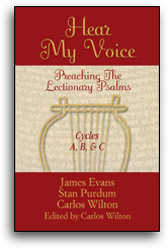
Hear My Voice
Preaching The Lectionary Psalms for Cycles A, B, C
Object:
(See Lent 2, Cycle C for an alternative approach.)
The theme of this psalm is trust in the Lord. Verses 1-6 and 13-14 are expressions of that trust, stated to others. Verses 7-12 are a prayer to the God in whom this psalmist trusts. The reading for today includes verses from both the statements and the prayer.
Preaching possibilities:
1. Expressions of trust and prayers for help belong together. Trust stated without an appeal to God sounds incomplete, like mere bravado. In our human condition, trust is not a static thing, announced once and for all. Prayer for God's ongoing help is the discipline by which trust is nurtured.
2. In times of trouble, the psalmist knows where to go: to the temple of the Lord (v. 4). For us, the equivalent is not a physical building, but the place within us where we "center down" on God.
How different we are when God is not in that center! When Ralph Waldo Emerson finished reading Gibbon's Decline and Fall of the Roman Empire, he observed, "That man has no shrine" -- no center. But we each need an inner sanctuary, or shrine, a place inside ourselves where we can bask in the light of God's love for renewal and guidance and growth and, as this psalmist tells us, safety.
This internal holy place is what Paul referred to when he prayed for the Ephesians that "Christ may dwell in your hearts through faith" (3:17).
This psalm reminds us that when we relate to the world around us through the central focusing commitment to God, we tap into a confidence that lifts our heads, enables us to make melody to the Lord (v. 6) and helps us to "see the goodness of the Lord in the land of the living" (v. 13, which surely should have been included in the psalm lection).
-- S. P.
The theme of this psalm is trust in the Lord. Verses 1-6 and 13-14 are expressions of that trust, stated to others. Verses 7-12 are a prayer to the God in whom this psalmist trusts. The reading for today includes verses from both the statements and the prayer.
Preaching possibilities:
1. Expressions of trust and prayers for help belong together. Trust stated without an appeal to God sounds incomplete, like mere bravado. In our human condition, trust is not a static thing, announced once and for all. Prayer for God's ongoing help is the discipline by which trust is nurtured.
2. In times of trouble, the psalmist knows where to go: to the temple of the Lord (v. 4). For us, the equivalent is not a physical building, but the place within us where we "center down" on God.
How different we are when God is not in that center! When Ralph Waldo Emerson finished reading Gibbon's Decline and Fall of the Roman Empire, he observed, "That man has no shrine" -- no center. But we each need an inner sanctuary, or shrine, a place inside ourselves where we can bask in the light of God's love for renewal and guidance and growth and, as this psalmist tells us, safety.
This internal holy place is what Paul referred to when he prayed for the Ephesians that "Christ may dwell in your hearts through faith" (3:17).
This psalm reminds us that when we relate to the world around us through the central focusing commitment to God, we tap into a confidence that lifts our heads, enables us to make melody to the Lord (v. 6) and helps us to "see the goodness of the Lord in the land of the living" (v. 13, which surely should have been included in the psalm lection).
-- S. P.