Proper 11
Devotional
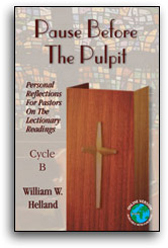
Pause Before The Pulpit
Personal Reflections For Pastors On The Lectionary Readings
Mark 6:30-34, 53-56
This week's lesson consists of both the introduction and conclusion to the familiar accounts of Jesus feeding the 5,000 and calming the storm. Pastors can identify well with this text, for it describes what we need at times.
In verses 7-13, we see that Jesus had sent the disciples out in groups of two. Their mission was to proclaim repentance, cast out demons, and heal the sick. As our text opens, we read that they had returned and were excitedly reporting to Jesus all that had taken place as a result of their ministry. It reminds me of a church convention, where pastors are excitedly reporting to others the great things God has been doing through them and their churches.
Ministry is exhausting, even when things are going well. Jesus recognized fatigue in his disciples and said to them: Come away to a deserted place all by yourselves and rest a while. How desperately we need that, too, for the very same reason that Mark identified: For many were coming and going, and they had no leisure even to eat. There are those days when it seems that the hectic pace of appointments, phone calls, meetings, and visitation prevent us from catching our breath, much less getting a chance to eat. Thank God for summers and the opportunities that vacations afford us to come away to a deserted place all by yourselves and rest a while.
As great as vacations are, I found that they don't come often enough to keep me rested. I had to plan time away in my weekly schedule. So I set Saturdays aside as my day for my wife and children. All my calls were screened. I still dealt with emergencies and did those occasional weekend weddings and funerals, but for the most part, that day was for my family, where they knew they would have my undivided attention.
However, that still wasn't enough to keep me going. I needed time away during the week to reflect on my ministry, to pray for God's wisdom and guidance, and to just listen. I informed my church board that I would be taking approximately four hours per week to do this. I would then retreat to solitary places, such as a state park, a friend's home, or somewhere that I could be all alone without interruption (with the cell phone off!). With an open Bible and notebook, I would listen to what God might be trying to tell me, whether about myself, other people, or the ministry of our church. As I read, prayed, and let my mind wander, I often sensed God leading me toward ideas and decisions that I may never have arrived at in any other way. Pastors need to get away in order to stay fresh and avoid burnout.
Verses 32-34 remind me of a movie titled, What About Bob? The main character, Bob, was a psychologically needy person. His psychiatrist became so exhausted from his clients that he took some time off. This threw Bob into a panic. He managed to find out where his doctor had retreated to, and, much to the doctor's shock and anger, Bob showed up on his doorstep. The balance of the movie is about Bob overcoming many of his phobias at the expense of the doctor going slowly insane!
I've never fully understood why Jesus took the disciples to a deserted place by themselves, only to allow thousands of needy "Bobs" to crowd in on them. Then, as if that wasn't enough, he capped off their day by sending them out on a lake where they encountered a violent storm. The best explanation I know is that only in a state of complete human exhaustion, when the disciples had come to the end of themselves, could Jesus' power be fully manifest. So it is with us. It isn't until we have come to the end of our physical and mental resources that it seems Jesus is free to do some astounding, even miraculous, things in our ministries.
Thank God he doesn't push us that hard every day, but when he does, know that he will get you through, and you might even see a miracle or two along the way. Just make sure that your fatigue is due to Christ's schedule and not yours.
A Pastor's Prayer:
Dear Lord,
Thank you that you won't ask me to do more than what you will give me strength to do. Help me to recognize when my fatigue is caused by my schedule and not yours. Help me to make time to get away to a solitary place and to make good use of that time to be alone with you. Amen.
Ephesians 2:11-22
What a powerful passage this is for the church. It is good to be reminded that Christ not only died for our sins, but that he has also broken down the dividing wall between Jews and Gentiles.
Those of us who are Gentile Christians were separated from God on two fronts: our sin and our race. The Apostle Paul described us as being, by birth ... without Christ, being aliens from the commonwealth of Israel, and strangers to the covenants of promise, having no hope and without God in the world. That's a pretty dismal picture, isn't it? I suppose one could say we were doubly damned, for not only were we victims of the Fall, but also aliens and strangers, due to being Gentiles.
This ought to give the Gentile church all the more reason to be thankful for God's grace. Our salvation is completely the result of God's decision. He chose to die for our sins and he chose to include us in the new covenant. Our inclusion is not the result of bargaining, peace talks, or negotiations. It is only the result of God's unmerited grace.
If God could bring down the dividing wall between man and God, and between Jew and Gentile, imagine what he can do in our churches. Tragically, there are many dividing walls in churches. Some walls are between family members, others are between people within the church, and there are those between pastors and parishioners. Jesus can tear down our walls. Nothing is too hard for him!
What hostilities exist in your church? Some of them we can do very little about. I've dealt with some bitter hostilities between people in the church. When one (or both) are unwilling to budge, most often one of them leaves the church. Other hostilities involve us. Are we being humble? Are we listening well to the other person's opinions? Or, are we being stubborn and insisting on having our way? Are we letting pride stand in the way of admitting we are wrong?
There are things we can do when the hostilities involve us; such as sitting down with those who are opposed to us and trying to talk out our differences. It is often helpful to have a third, independent party present -- someone that you and your opponent trust. If we have wronged the individual, we can (and should) apologize to them, asking them to forgive us. We can be humble and warm, rather than proud and cold.
However, we can't do it all. The person we are at odds with has responsibilities, too. If they refuse to meet with us, or to forgive us, or to admit they were wrong, then there's little else we can do but pray for them.
It is in our church conflicts that this text is helpful, for there exists no dividing wall in the church that God cannot tear down. The key is in getting God involved. As we go back to the basics of who we are and what we have in common, we can realize, as Paul pointed out, that in Christ Jesus you who once were far off have been brought near by the blood of Christ. If this does not soften the hearts of those in conflict, then perhaps at least one of the parties is not in a right relationship with God.
The only true answer for peace in our relationships, in and out of the church, is in Christ: For he is our peace; in his flesh he has made both groups into one and has broken down the dividing wall, that is, the hostility between us. It is not an accident that he is called the Prince of Peace. For us to try make peace without him is a waste of time and breath.
The next time there is dissension in your church or division between you and someone else, remember this text and how God dealt with division. Ask him to do this again in your life and your church. If all parties will yield to him, peace and unity will come to all involved and your relationships will become stronger than ever before.
A Pastor's Prayer:
Dear Lord,
Thank you for removing the "double damnation" that hung over me. Thank you for bringing peace between you and me. Lord, where there is strife in my church, help me to lead us in your approach to bringing peace and unity. Wherever I am at fault, please forgive me and give me courage and humility to admit my faults and ask forgiveness. Thank you. Amen.
This week's lesson consists of both the introduction and conclusion to the familiar accounts of Jesus feeding the 5,000 and calming the storm. Pastors can identify well with this text, for it describes what we need at times.
In verses 7-13, we see that Jesus had sent the disciples out in groups of two. Their mission was to proclaim repentance, cast out demons, and heal the sick. As our text opens, we read that they had returned and were excitedly reporting to Jesus all that had taken place as a result of their ministry. It reminds me of a church convention, where pastors are excitedly reporting to others the great things God has been doing through them and their churches.
Ministry is exhausting, even when things are going well. Jesus recognized fatigue in his disciples and said to them: Come away to a deserted place all by yourselves and rest a while. How desperately we need that, too, for the very same reason that Mark identified: For many were coming and going, and they had no leisure even to eat. There are those days when it seems that the hectic pace of appointments, phone calls, meetings, and visitation prevent us from catching our breath, much less getting a chance to eat. Thank God for summers and the opportunities that vacations afford us to come away to a deserted place all by yourselves and rest a while.
As great as vacations are, I found that they don't come often enough to keep me rested. I had to plan time away in my weekly schedule. So I set Saturdays aside as my day for my wife and children. All my calls were screened. I still dealt with emergencies and did those occasional weekend weddings and funerals, but for the most part, that day was for my family, where they knew they would have my undivided attention.
However, that still wasn't enough to keep me going. I needed time away during the week to reflect on my ministry, to pray for God's wisdom and guidance, and to just listen. I informed my church board that I would be taking approximately four hours per week to do this. I would then retreat to solitary places, such as a state park, a friend's home, or somewhere that I could be all alone without interruption (with the cell phone off!). With an open Bible and notebook, I would listen to what God might be trying to tell me, whether about myself, other people, or the ministry of our church. As I read, prayed, and let my mind wander, I often sensed God leading me toward ideas and decisions that I may never have arrived at in any other way. Pastors need to get away in order to stay fresh and avoid burnout.
Verses 32-34 remind me of a movie titled, What About Bob? The main character, Bob, was a psychologically needy person. His psychiatrist became so exhausted from his clients that he took some time off. This threw Bob into a panic. He managed to find out where his doctor had retreated to, and, much to the doctor's shock and anger, Bob showed up on his doorstep. The balance of the movie is about Bob overcoming many of his phobias at the expense of the doctor going slowly insane!
I've never fully understood why Jesus took the disciples to a deserted place by themselves, only to allow thousands of needy "Bobs" to crowd in on them. Then, as if that wasn't enough, he capped off their day by sending them out on a lake where they encountered a violent storm. The best explanation I know is that only in a state of complete human exhaustion, when the disciples had come to the end of themselves, could Jesus' power be fully manifest. So it is with us. It isn't until we have come to the end of our physical and mental resources that it seems Jesus is free to do some astounding, even miraculous, things in our ministries.
Thank God he doesn't push us that hard every day, but when he does, know that he will get you through, and you might even see a miracle or two along the way. Just make sure that your fatigue is due to Christ's schedule and not yours.
A Pastor's Prayer:
Dear Lord,
Thank you that you won't ask me to do more than what you will give me strength to do. Help me to recognize when my fatigue is caused by my schedule and not yours. Help me to make time to get away to a solitary place and to make good use of that time to be alone with you. Amen.
Ephesians 2:11-22
What a powerful passage this is for the church. It is good to be reminded that Christ not only died for our sins, but that he has also broken down the dividing wall between Jews and Gentiles.
Those of us who are Gentile Christians were separated from God on two fronts: our sin and our race. The Apostle Paul described us as being, by birth ... without Christ, being aliens from the commonwealth of Israel, and strangers to the covenants of promise, having no hope and without God in the world. That's a pretty dismal picture, isn't it? I suppose one could say we were doubly damned, for not only were we victims of the Fall, but also aliens and strangers, due to being Gentiles.
This ought to give the Gentile church all the more reason to be thankful for God's grace. Our salvation is completely the result of God's decision. He chose to die for our sins and he chose to include us in the new covenant. Our inclusion is not the result of bargaining, peace talks, or negotiations. It is only the result of God's unmerited grace.
If God could bring down the dividing wall between man and God, and between Jew and Gentile, imagine what he can do in our churches. Tragically, there are many dividing walls in churches. Some walls are between family members, others are between people within the church, and there are those between pastors and parishioners. Jesus can tear down our walls. Nothing is too hard for him!
What hostilities exist in your church? Some of them we can do very little about. I've dealt with some bitter hostilities between people in the church. When one (or both) are unwilling to budge, most often one of them leaves the church. Other hostilities involve us. Are we being humble? Are we listening well to the other person's opinions? Or, are we being stubborn and insisting on having our way? Are we letting pride stand in the way of admitting we are wrong?
There are things we can do when the hostilities involve us; such as sitting down with those who are opposed to us and trying to talk out our differences. It is often helpful to have a third, independent party present -- someone that you and your opponent trust. If we have wronged the individual, we can (and should) apologize to them, asking them to forgive us. We can be humble and warm, rather than proud and cold.
However, we can't do it all. The person we are at odds with has responsibilities, too. If they refuse to meet with us, or to forgive us, or to admit they were wrong, then there's little else we can do but pray for them.
It is in our church conflicts that this text is helpful, for there exists no dividing wall in the church that God cannot tear down. The key is in getting God involved. As we go back to the basics of who we are and what we have in common, we can realize, as Paul pointed out, that in Christ Jesus you who once were far off have been brought near by the blood of Christ. If this does not soften the hearts of those in conflict, then perhaps at least one of the parties is not in a right relationship with God.
The only true answer for peace in our relationships, in and out of the church, is in Christ: For he is our peace; in his flesh he has made both groups into one and has broken down the dividing wall, that is, the hostility between us. It is not an accident that he is called the Prince of Peace. For us to try make peace without him is a waste of time and breath.
The next time there is dissension in your church or division between you and someone else, remember this text and how God dealt with division. Ask him to do this again in your life and your church. If all parties will yield to him, peace and unity will come to all involved and your relationships will become stronger than ever before.
A Pastor's Prayer:
Dear Lord,
Thank you for removing the "double damnation" that hung over me. Thank you for bringing peace between you and me. Lord, where there is strife in my church, help me to lead us in your approach to bringing peace and unity. Wherever I am at fault, please forgive me and give me courage and humility to admit my faults and ask forgiveness. Thank you. Amen.