
Proper 16/Pentecost 14/Ordinary Time 21
Preaching
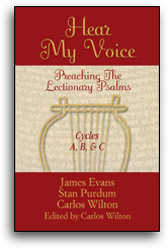
Hear My Voice
Preaching The Lectionary Psalms for Cycles A, B, C
Object:
(See Epiphany 4/Ordinary Time 4, Cycle C, for an alternative approach.)
The old saying, "experience is the best teacher," could serve as a subtitle for this psalm. Written as a prayer for help in a time of distress or oppression, the psalm subtly hints at a recognition and awareness that only comes with time. There is a track record, so to speak, that the psalmist is aware of: God's record of dependability. Based on God's proven record of saving power and grace, the psalmist is able to pray for salvation, but at the same time celebrate the certainty of its arrival.
The phrase that suggests the psalmist has some reservoir of experience from which to draw is this one: "For you, O Lord, are my hope and my trust, from my youth" (v. 5). It is not the sort of thing a young person would say. A young man wanting to affirm an exuberant relationship with God would likely say, "I've always hoped in God."
But when youth is far enough removed from us to allow a perspective on having been a youth, then we begin to reference that time as a separate and unique moment in our development. We hear it comically used in stereotypical scenes where a parent addresses a wayward child with the words, "Well, when I was young...."
That's not exactly what the psalmist means, though it does reveal a certain view of youth as a time gone by. What the psalmist is doing is appealing to God's own record of faithfulness as part of his appeal for help in the present. The psalmist tells God, in effect, "I have a long memory." Since God was faithful and helped in the past, surely God will be faithful again. God, after all, does have a reputation to consider.
Of course, the prayer is offered in the context of worship. It is prayer offered by one who has had some experience with God in the presence of those who may not have had so much experience. In that setting, the prayer is deliberately offered so as to be overheard by other worshipers. In this manner, the prayer becomes a vehicle for engendering hope. It perhaps accomplishes the same effect as an elder lecturing a younger on the way it was "when I was young." Yet, cast in the form of a prayer, these words invite those whose experience does not readily admit to hope to embrace a testimony that affirms the goodness and dependability of God.
In this the psalmist offers his own personal testimony as well. Not only is God dependable as savior and provider, but the psalmist presents himself as a reliable witness to these things. While it is true that the young cannot attain experiences they have not had, they can, if they choose, learn wisdom from those who have had experience. And what is that but the passing along of tradition -- which is part of the legitimate function of worship anyway? Instead of creeds or doctrines, however, this psalm offers a vivid example of how we pass along not so much what to believe, but how faith itself comes alive.
It is something only learned over time, with much trial and error.
-- J. E.
The old saying, "experience is the best teacher," could serve as a subtitle for this psalm. Written as a prayer for help in a time of distress or oppression, the psalm subtly hints at a recognition and awareness that only comes with time. There is a track record, so to speak, that the psalmist is aware of: God's record of dependability. Based on God's proven record of saving power and grace, the psalmist is able to pray for salvation, but at the same time celebrate the certainty of its arrival.
The phrase that suggests the psalmist has some reservoir of experience from which to draw is this one: "For you, O Lord, are my hope and my trust, from my youth" (v. 5). It is not the sort of thing a young person would say. A young man wanting to affirm an exuberant relationship with God would likely say, "I've always hoped in God."
But when youth is far enough removed from us to allow a perspective on having been a youth, then we begin to reference that time as a separate and unique moment in our development. We hear it comically used in stereotypical scenes where a parent addresses a wayward child with the words, "Well, when I was young...."
That's not exactly what the psalmist means, though it does reveal a certain view of youth as a time gone by. What the psalmist is doing is appealing to God's own record of faithfulness as part of his appeal for help in the present. The psalmist tells God, in effect, "I have a long memory." Since God was faithful and helped in the past, surely God will be faithful again. God, after all, does have a reputation to consider.
Of course, the prayer is offered in the context of worship. It is prayer offered by one who has had some experience with God in the presence of those who may not have had so much experience. In that setting, the prayer is deliberately offered so as to be overheard by other worshipers. In this manner, the prayer becomes a vehicle for engendering hope. It perhaps accomplishes the same effect as an elder lecturing a younger on the way it was "when I was young." Yet, cast in the form of a prayer, these words invite those whose experience does not readily admit to hope to embrace a testimony that affirms the goodness and dependability of God.
In this the psalmist offers his own personal testimony as well. Not only is God dependable as savior and provider, but the psalmist presents himself as a reliable witness to these things. While it is true that the young cannot attain experiences they have not had, they can, if they choose, learn wisdom from those who have had experience. And what is that but the passing along of tradition -- which is part of the legitimate function of worship anyway? Instead of creeds or doctrines, however, this psalm offers a vivid example of how we pass along not so much what to believe, but how faith itself comes alive.
It is something only learned over time, with much trial and error.
-- J. E.

