Proper 27 / Ordinary Time 32
Preaching
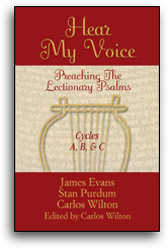
Hear My Voice
Preaching The Lectionary Psalms for Cycles A, B, C
(See Proper 21/Pentecost 19/Ordinary Time 26, Cycle A, for an alternative approach to vv. 1-4 and 12-16.)
This is the second time in this lectionary cycle that Psalm 78 has made an appearance. Using verses 1-4 and 12-16, Psalm 78 was the psalter for Proper 21/Pentecost 19/Ordinary Time 26, and there we noted that this "Wisdom Psalm" touts the importance of telling our children about our faith.
That theme is no different when reading verses 1-7; if anything, the addition of verses 5-7 strengthens it. Those verses tell of God's decree that the ancestors of the psalmist's generation were to teach their children the deeds and Law of God (Deuteronomy 6:1-9, especially v. 7), "that the next generation might know them ... and rise up and tell them to their children, so that they should set their hope in God."
Someone has rightly pointed out that "Christianity is always only one generation away from extinction," and this psalm affords a good opportunity to remind our hearers of that stark reality. If our own children don't hear the testimony of faith, how will their children know to "set their hope in God"?
When I was a child growing up in the Salvation Army, which was my church then, we had an item in the Sunday evening services called "testimonies." That was a time when worshipers were invited to stand up and speak about what God had done in their lives. Some people never spoke, others spoke almost every week and still others only occasionally, but the point was, we were encouraged to talk about our experiences of God so that others present might be helped in their own faith journeys.
I remember one older man named Larry Waldron. He had little formal education and had worked most of his adult life in the rough and tumble world of a paper mill in upstate New York. Evidently it had been a tough place to work. At one point, Larry had seen a fellow employee thrown to his death into one of the chemical vats during a labor dispute.
Late in his life, Larry found God, and his life changed. During those Sunday evening testimony times, he would sometimes speak about the difference in his life since he had committed himself to Christ. I really don't remember his words, but I remember the sincerity and the conviction with which he spoke, and his witness had a bearing on my own Christian journey. In fact, one thing that helped me as a Christian was that I heard the adults around me, including my parents, talk about their faith.
In Scott Peck's introduction to his 1997 book, The Road Less Traveled and Beyond. There, Peck, though only sixty at the time, says he is not in the best of health and feels worn out. He confesses a need to set his affairs in order and to share what he has learned. In the body of the book, he explains what life and faith have taught him. Although he does not say so in so many words, his book is a witness to readers of his own generation and those following.
Most of us will not have the opportunity to leave behind a published corpus of Christian testimony for succeeding generations, but we can learn to talk comfortably about our faith at the dinner table, where younger people are listening. I would change one word in the old gospel song:
If you cannot preach like Peter,
if you cannot pray like Paul,
go home and tell your neighbor [children]
that he died to save us all.
-- S. P.
This is the second time in this lectionary cycle that Psalm 78 has made an appearance. Using verses 1-4 and 12-16, Psalm 78 was the psalter for Proper 21/Pentecost 19/Ordinary Time 26, and there we noted that this "Wisdom Psalm" touts the importance of telling our children about our faith.
That theme is no different when reading verses 1-7; if anything, the addition of verses 5-7 strengthens it. Those verses tell of God's decree that the ancestors of the psalmist's generation were to teach their children the deeds and Law of God (Deuteronomy 6:1-9, especially v. 7), "that the next generation might know them ... and rise up and tell them to their children, so that they should set their hope in God."
Someone has rightly pointed out that "Christianity is always only one generation away from extinction," and this psalm affords a good opportunity to remind our hearers of that stark reality. If our own children don't hear the testimony of faith, how will their children know to "set their hope in God"?
When I was a child growing up in the Salvation Army, which was my church then, we had an item in the Sunday evening services called "testimonies." That was a time when worshipers were invited to stand up and speak about what God had done in their lives. Some people never spoke, others spoke almost every week and still others only occasionally, but the point was, we were encouraged to talk about our experiences of God so that others present might be helped in their own faith journeys.
I remember one older man named Larry Waldron. He had little formal education and had worked most of his adult life in the rough and tumble world of a paper mill in upstate New York. Evidently it had been a tough place to work. At one point, Larry had seen a fellow employee thrown to his death into one of the chemical vats during a labor dispute.
Late in his life, Larry found God, and his life changed. During those Sunday evening testimony times, he would sometimes speak about the difference in his life since he had committed himself to Christ. I really don't remember his words, but I remember the sincerity and the conviction with which he spoke, and his witness had a bearing on my own Christian journey. In fact, one thing that helped me as a Christian was that I heard the adults around me, including my parents, talk about their faith.
In Scott Peck's introduction to his 1997 book, The Road Less Traveled and Beyond. There, Peck, though only sixty at the time, says he is not in the best of health and feels worn out. He confesses a need to set his affairs in order and to share what he has learned. In the body of the book, he explains what life and faith have taught him. Although he does not say so in so many words, his book is a witness to readers of his own generation and those following.
Most of us will not have the opportunity to leave behind a published corpus of Christian testimony for succeeding generations, but we can learn to talk comfortably about our faith at the dinner table, where younger people are listening. I would change one word in the old gospel song:
If you cannot preach like Peter,
if you cannot pray like Paul,
go home and tell your neighbor [children]
that he died to save us all.
-- S. P.