Psalm 111
Preaching
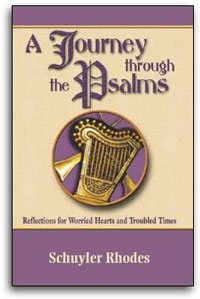
A Journey Through the Psalms: Reflections for Worried Hearts and Troubled Times
Preaching the Psalms Cycles A, B, C
Convincing someone of an idea is not an easy task. Anyone who has worked in politics can vouch for this. Teachers, preachers, community leaders, all know how hard it is to convince people to rally behind an idea or a concept. Harder still, is the effort to get people to act on something.
There is, however, one magic trick that works almost every time, and that is fear. As German writer Bertolt Brecht put it: "Magic fear puts the world at your command!" A people who are afraid will do most anything. Adolf Hitler knew this very well, as he brilliantly manipulated and manufactured a fear of Jews. Countless leaders, both religious and political, have relied on this magic fear for centuries. From fomenting fears of Christians in the Roman Empire to stirring up fear of "terrorists" today, the manipulation of people through fear continues unabated.
Upon reading this psalm, one might get the idea that the fear game is being played here as well. We praise God, the psalm asserts, for all of God's mighty works. But in the end, it's because of fear that God gives food (v. 5). Moreover, fear of God is the "beginning of wisdom."
The evidence is strong. Follow God, or else. Indeed, it causes shudders down the spine to imagine how our ancestors in the faith made use of such fear.
However, it's worth noting that the translators of holy scriptures have made a bit of a slip here. It seems that the Hebrew words that have been translated into the English word "fear," do not in fact mean "fear." In both cases a more accurate translation would be "reverence."
It doesn't take a rocket scientist to notice that there's a good bit of distance between "fear" and "reverence." A given person or people may well do something as a result of being made afraid. However, true reverence arises from a different location.
It is reverence that gives this psalm its depth and beauty, not fear. Praising God because of God's wonderful works is something we can manage. Who can stand on top of Half Dome at Yosemite and not feel reverence? Falling down in worship because of God's faithfulness to the covenant is something we can get our minds and hearts around. It is not so hard to revere a God who will not abandon us.
While our traditions, both religious and political, opt too often for fear as a primary motivator, might we perhaps take a step toward reverence? Worship and praise induced by a humble acknowledgment of God's utter greatness will lead us in a very different direction than praise motivated by fear. Let us begin together by pausing to revere our God in worship and in the rest of our lives.
There is, however, one magic trick that works almost every time, and that is fear. As German writer Bertolt Brecht put it: "Magic fear puts the world at your command!" A people who are afraid will do most anything. Adolf Hitler knew this very well, as he brilliantly manipulated and manufactured a fear of Jews. Countless leaders, both religious and political, have relied on this magic fear for centuries. From fomenting fears of Christians in the Roman Empire to stirring up fear of "terrorists" today, the manipulation of people through fear continues unabated.
Upon reading this psalm, one might get the idea that the fear game is being played here as well. We praise God, the psalm asserts, for all of God's mighty works. But in the end, it's because of fear that God gives food (v. 5). Moreover, fear of God is the "beginning of wisdom."
The evidence is strong. Follow God, or else. Indeed, it causes shudders down the spine to imagine how our ancestors in the faith made use of such fear.
However, it's worth noting that the translators of holy scriptures have made a bit of a slip here. It seems that the Hebrew words that have been translated into the English word "fear," do not in fact mean "fear." In both cases a more accurate translation would be "reverence."
It doesn't take a rocket scientist to notice that there's a good bit of distance between "fear" and "reverence." A given person or people may well do something as a result of being made afraid. However, true reverence arises from a different location.
It is reverence that gives this psalm its depth and beauty, not fear. Praising God because of God's wonderful works is something we can manage. Who can stand on top of Half Dome at Yosemite and not feel reverence? Falling down in worship because of God's faithfulness to the covenant is something we can get our minds and hearts around. It is not so hard to revere a God who will not abandon us.
While our traditions, both religious and political, opt too often for fear as a primary motivator, might we perhaps take a step toward reverence? Worship and praise induced by a humble acknowledgment of God's utter greatness will lead us in a very different direction than praise motivated by fear. Let us begin together by pausing to revere our God in worship and in the rest of our lives.